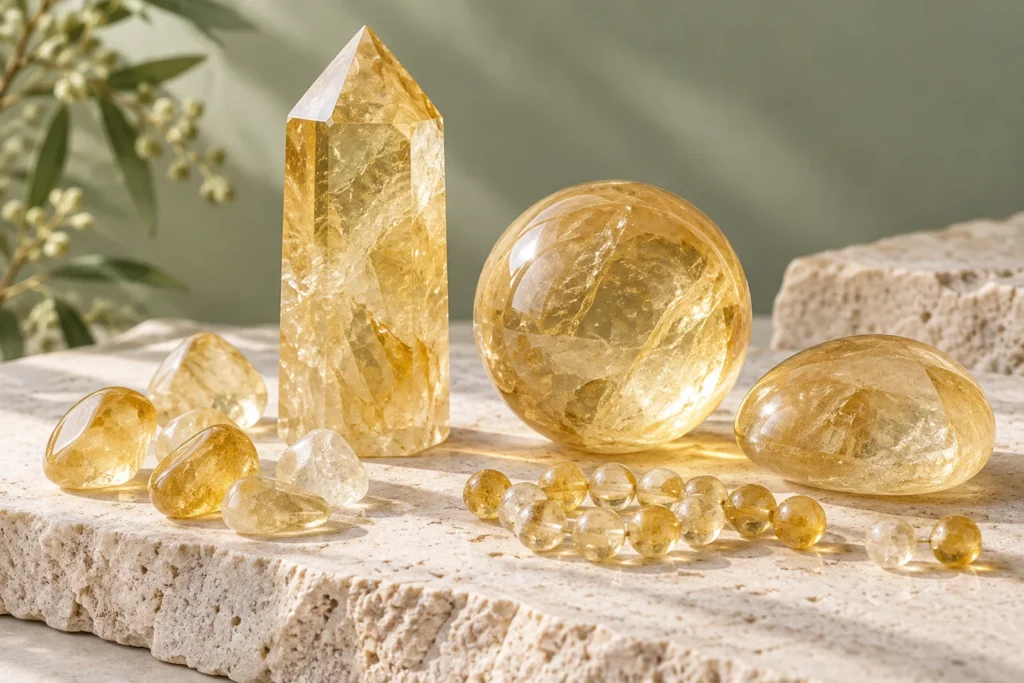
If you've been browsing supplier catalogs or mineral trade listings, you've probably noticed "rare yellow quartz" appearing in product descriptions with increasing frequency. The label sounds compelling — it suggests scarcity, higher value, and strong retail appeal. But before you build a purchase order around that claim, it's worth asking what "yellow quartz" actually refers to and whether rarity is even the right question for a wholesale buyer.
How rare is yellow quartz? The honest answer depends entirely on what specific material the term describes, how its color was produced, and what batch is currently available. Some natural yellow quartz varieties are genuinely uncommon in high-quality form, while others are abundant, treated, or synthesized. For B2B buyers, rarity matters far less than verifiable supply details — material identity, treatment disclosure, batch photos, and reorder consistency.
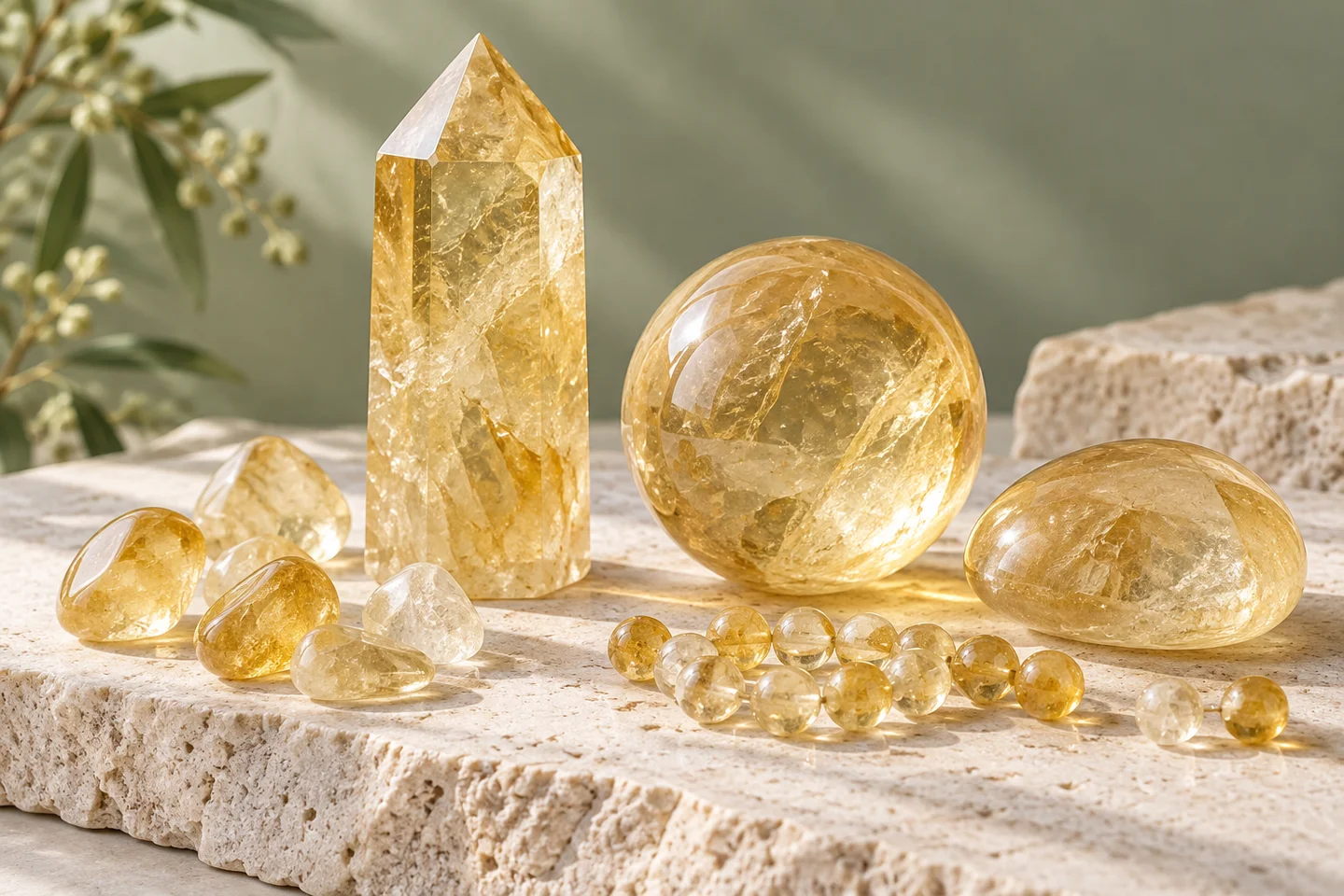
The gap between a marketing adjective and a purchasing decision is where real money is at risk. Below, I'll walk through what "yellow quartz" actually covers as a trade term, why color alone doesn't indicate rarity, how treatment and naming confusion create sourcing pitfalls, and what verification steps protect your business when you're buying for resale.
What does "yellow quartz" actually mean in wholesale trade?
The first problem with evaluating how rare yellow quartz is? The term itself doesn't point to one single product. Different sellers use "yellow quartz" to describe materials that vary significantly in origin, color mechanism, and market value — and that inconsistency creates real procurement risk.
"Yellow quartz" is a broad market descriptor, not a precise gemological classification.1 In B2B sourcing, it can refer to natural citrine, heat-treated amethyst, lemon quartz, dyed quartz, or even synthetic material2. Without clarification from the supplier, the term alone tells a buyer almost nothing about what they're actually purchasing.
- Natural citrine
- Heat-treated quartz
- Lemon quartz
- Dyed quartz
- Synthetic yellow quartz
The naming overlap problem
In my experience working with crystal product procurement and processing for over 15 years, I've seen "yellow quartz" applied to at least five distinct product categories in supplier communications:
| Common Trade Name | Typical Color Source | Relative Supply Level | Price Range Impact |
|---|---|---|---|
| Natural citrine | Natural iron-based coloring in quartz | Uncommon in saturated, clean form | Higher per-unit cost |
| Heat-treated amethyst/smoky quartz | Thermal treatment changes color to yellow/orange | Very abundant | Lower to moderate cost |
| Lemon quartz (oro verde) | Treated quartz, often irradiated + heated | Moderate supply | Moderate cost |
| Dyed quartz | Artificial dye applied to clear or low-grade quartz | Abundant | Low cost |
| Synthetic yellow quartz | Lab-grown or reconstructed material | Unlimited supply | Lowest cost |
When a supplier lists "yellow quartz towers" or "yellow quartz spheres," any of these could be the underlying material. If you assume the listing means natural citrine and price your retail inventory accordingly, you may face customer complaints, return requests, or worse — accusations of misrepresentation.
Why this matters for your buying decisions
The naming confusion isn't just academic. It directly affects:
- Your retail product descriptions — Can you legally and ethically call it "natural citrine"? Or should you use "heated citrine" or simply "yellow quartz"?
- Your cost basis — Natural citrine in clean, saturated grades commands significantly higher prices than heat-treated material. Overpaying for treated product erodes margin.
- Your reorder reliability — If you don't know exactly what you bought the first time, matching the next batch becomes guesswork.
The practical lesson is straightforward: when you see "yellow quartz" in a supplier listing, treat it as a starting point for questions, not as a complete product specification. Ask for the specific material name, color origin, and treatment status before committing to an order.
Does strong yellow color mean the quartz is rarer or more natural?
It's a natural assumption — deeper, more vivid yellow must mean the stone is higher quality, more natural, and therefore rarer. In crystal retail, color intensity often drives customer willingness to pay. But in B2B sourcing, color and rarity have a far more complicated relationship than most product listings suggest.
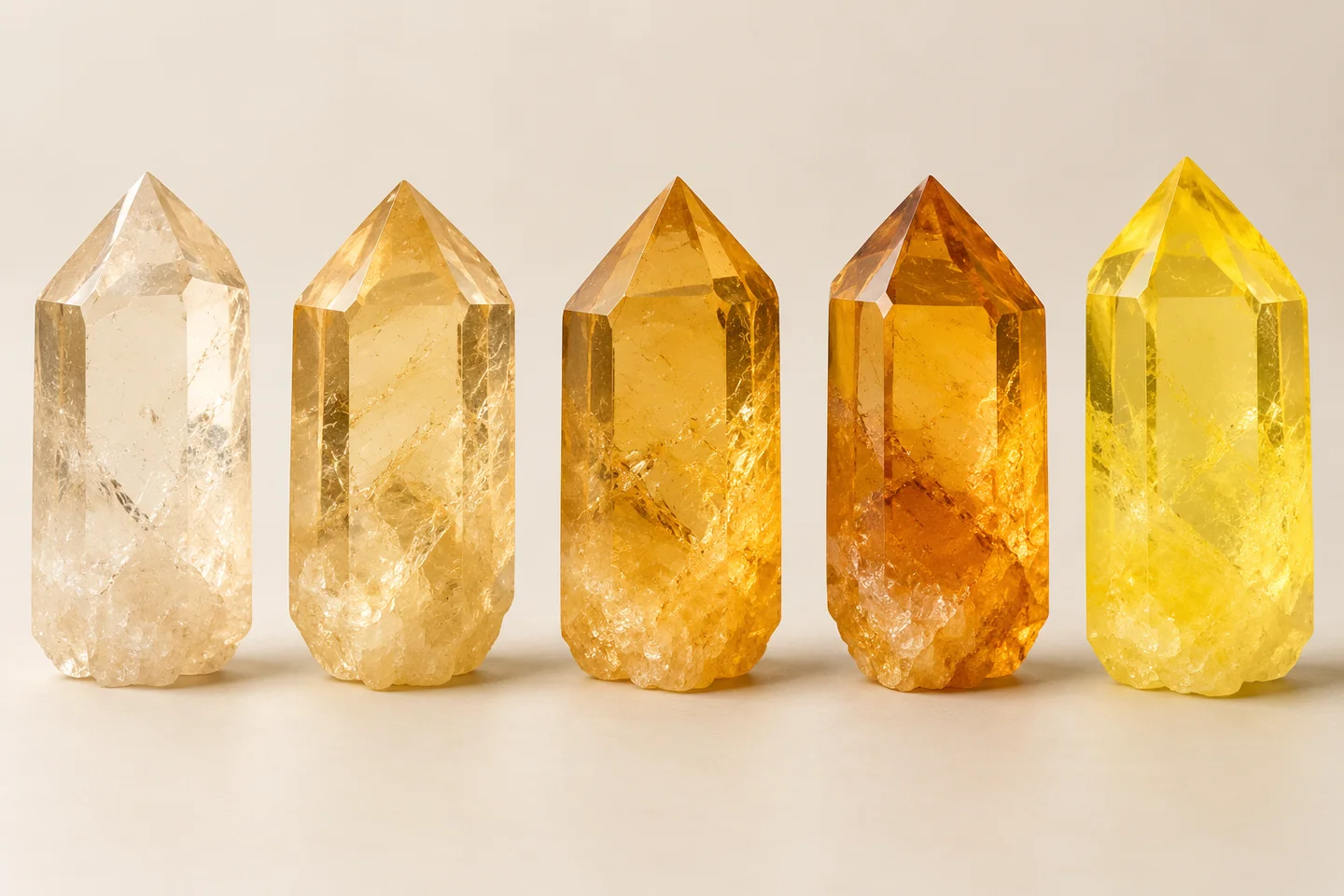
Strong yellow color in quartz does not automatically indicate natural origin or rarity. In fact, the most vivid, saturated yellows in the wholesale market are frequently the result of heat treatment, irradiation, or dyeing. Natural yellow quartz tends toward paler, smoky, or subtly warm tones rather than the bright, uniform golden hues that dominate supplier catalogs.
How color is produced in yellow quartz
Understanding the color mechanism helps buyers calibrate their expectations:
- Natural citrine derives its yellow from trace iron impurities and specific formation conditions. The color is typically pale to moderate — think warm champagne, light gold, or soft honey tones. Deeply saturated natural citrine exists but is uncommon and commands premium pricing.
- Heat-treated amethyst is by far the most common source of vivid yellow-to-orange quartz on the market. When amethyst (purple quartz) is heated to approximately 400–500°C, its iron impurities restructure, producing orange, golden, or reddish-brown tones.3 This treatment is permanent and widespread — industry sources estimate that the majority of "citrine" on the global market is actually heated amethyst4.
- Irradiation + heat (lemon quartz) produces clean, bright lemon-yellow colors. This process is applied to colorless or pale quartz to create a commercial product sometimes called "oro verde" or "green gold quartz."
- Dyed quartz can be any color the manufacturer chooses. Bright, uniform, almost neon yellows are a telltale sign. The dye may be surface-applied or penetrate along fractures.
What this means for procurement
The takeaway for buyers evaluating yellow quartz products:
- Don't equate color intensity with value or naturalness. The most vivid pieces in a supplier's catalog may be the most heavily treated.
- Ask specifically about treatment. A responsible supplier should be able to tell you whether the material is natural-color, heated, irradiated, or dyed. If they can't or won't answer, that's a red flag.
- Calibrate your retail pricing accordingly. Heat-treated citrine is a legitimate, widely accepted product — but it shouldn't be priced or described as if it were rare natural citrine.
In our experience at GD Crystal, we communicate treatment status and material identity as part of the quoting process. Buyers should expect this level of transparency and request it if it's not offered.
Is natural citrine actually rare?
This is the question most buyers are really asking when they search "how rare is yellow quartz." Natural citrine carries a reputation for scarcity in crystal retail communities. But how much of that reputation is based on geological fact, and how much is marketing?
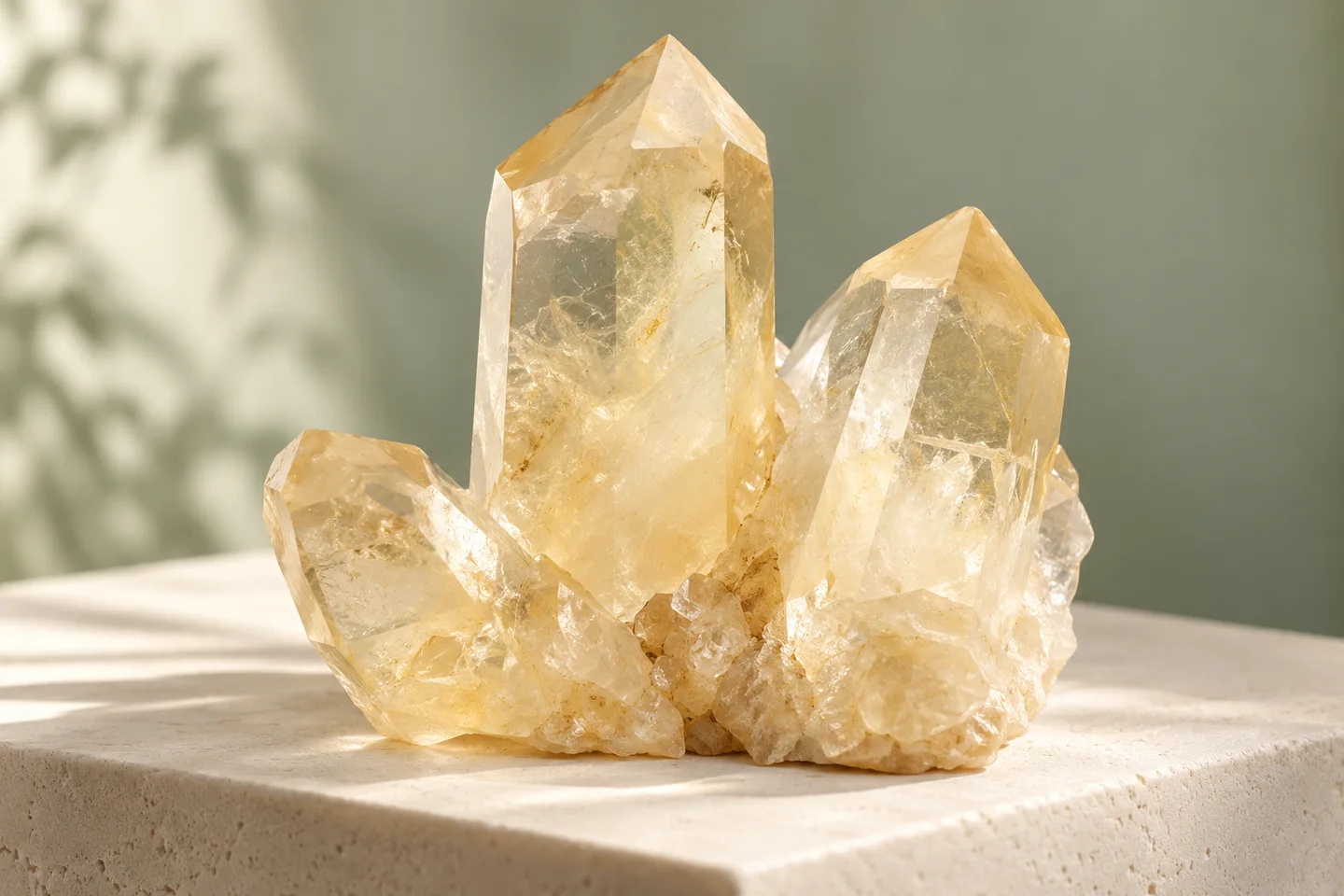
Natural citrine — meaning quartz that developed its yellow color during formation without any post-mining treatment — is genuinely less common than many other quartz varieties.5 However, "less common" is not the same as "extremely rare." The practical rarity for wholesale buyers depends on the specific grade, size, and origin being sourced, and it varies significantly batch by batch.
Geological context (briefly)
Natural citrine occurs in a limited number of geological environments. Known sources include certain deposits in Brazil, Madagascar, Zambia, the Democratic Republic of Congo, and parts of Spain and Scotland.6 Compared to amethyst — which is mined in enormous quantities — naturally yellow quartz represents a small fraction of global quartz production.7
That said, "rare" in geology and "rare" in commerce mean different things. A mineral can be geologically uncommon yet commercially available in workable quantities if mining is active and supply chains function. Conversely, a material can become commercially scarce if mines close, export policies change, or demand spikes — regardless of how much exists underground.
What wholesale buyers should focus on
Rather than debating whether natural citrine is "rare" in the abstract, I'd encourage buyers to focus on these practical supply questions:
| Question | Why It Matters |
|---|---|
| Is the supplier's current batch actually natural citrine? | Prevents mislabeling in your own retail descriptions |
| What size range, weight range, and quantity are available now? | Determines whether you can fill your planned SKUs |
| Can the supplier provide current batch photos? | Lets you evaluate color, clarity, and consistency before ordering |
| What is the MOQ for this specific material? | Natural citrine may have higher MOQs or stricter per-piece pricing |
| Can the supplier support repeat orders in similar quality? | Rarer materials may have inconsistent restock — know this before listing as a core product |
| Is third-party identification available or recommended? | For high-value batches, lab reports add buyer protection |
A note on "rare" as a supplier claim
In B2B communication, I've seen "rare" used as a factual observation by some suppliers and as a pure marketing adjective by others. My recommendation: treat any supplier's use of "rare" as a claim that requires investigation, not a fact you can copy into your product listing. If you're reselling to end consumers, you need enough verifiable information to back up every descriptor in your listing. "Rare" without evidence is a liability, not a selling point.
How should buyers verify yellow quartz claims before purchasing?
Knowing that "yellow quartz" is a broad term and that color doesn't equal rarity is useful — but what do you actually do with that knowledge when you're evaluating a supplier or placing an order? The verification process doesn't need to be complicated, but it does need to be deliberate.
Buyers should verify yellow quartz products by requesting specific material identification, treatment disclosure, current batch photos with size and weight references, and clear MOQ and pricing terms. For higher-value natural citrine purchases, third-party gemological identification may be worth the cost.8 The goal is to gather enough evidence to describe and price the product responsibly for resale.
- Material name and treatment disclosure
- Photos and video of the actual lot
- Size, weight, quantity and MOQ
- Independent laboratory documentation when appropriate
A practical verification workflow
Here's the process I recommend based on years of handling procurement conversations:
Step 1: Clarify the material identity.
Ask the supplier directly: "Is this natural citrine, heat-treated citrine, lemon quartz, or another yellow quartz material?" A supplier who can't answer this question clearly may not be the right sourcing partner for this product.
Step 2: Request treatment disclosure.
Heat treatment in quartz is common, permanent, and widely accepted in the trade9 — there's no stigma in selling heated citrine as long as it's disclosed. The risk comes from undisclosed treatment. Ask, and document the answer.
Step 3: Request current batch photos.
This is critical. Historical photos, catalog images from previous years, and stock photography are not the same as current inventory. At GD Crystal, we provide batch-specific photos so buyers can evaluate the actual products they'll receive. I'd encourage any buyer to insist on this.
Step 4: Confirm specifications.
For each batch, you should know:
- Size range (e.g., 50–70mm height for towers)
- Weight range (e.g., 80–150g per piece)
- Sales unit (per piece, per kilogram, per lot)
- Quantity available
- MOQ and mixing terms
Step 5: Evaluate consistency for reorders.
If you plan to make this a recurring SKU, ask about restock timelines and whether the supplier expects similar quality in future batches. For genuinely scarce materials, the honest answer might be "we can't guarantee the same grade next time" — and that's valuable information for your business planning.
Step 6: Consider third-party identification for high-value orders.
If you're purchasing material described as natural, untreated citrine at premium pricing, a gemological lab report can provide an additional layer of verification. This is especially relevant if your retail customers or platform policies require documentation.
Red flags to watch for
- Supplier describes everything simply as "yellow quartz" or "citrine" with no further detail
- Prices are dramatically lower than market benchmarks for natural citrine
- Photos show unusually uniform, vivid color across large batches (may indicate treatment or dye)
- Supplier cannot or will not answer treatment questions
- "Rare" is used repeatedly in the listing with no supporting detail
How does yellow quartz rarity affect pricing and resale strategy?
Understanding rarity (or the lack of it) directly impacts how you price yellow quartz products for resale and how you position them to your customers. Getting this wrong can mean either leaving margin on the table or overpromising and underdelivering.
The perceived rarity of yellow quartz should influence your pricing strategy only to the extent that it's supported by verifiable supply details. Natural, untreated citrine in high-quality grades can justify premium retail pricing. Heat-treated or dyed yellow quartz should be priced competitively and described transparently. In both cases, honest product descriptions protect your brand long-term.
- Use the most specific name you can verify
- Disclose known treatments
- Compare quotations on equivalent specifications
- Avoid unsupported rarity claims
Pricing tiers in practice
Based on what I see in wholesale trade, yellow quartz products generally fall into these pricing tiers:
| Material | Typical Wholesale Cost Level | Suggested Retail Positioning |
|---|---|---|
| Natural citrine (high saturation, clean) | Premium | Position as natural, verified; higher price point justified |
| Natural citrine (pale, included) | Moderate to premium | Position as natural; set expectations on color range |
| Heat-treated citrine (ex-amethyst) | Low to moderate | Transparent description; competitive pricing; volume play |
| Lemon quartz (treated) | Moderate | Describe treatment; appeal to buyers seeking bright, clean yellow |
| Dyed yellow quartz | Low | Clearly disclose dye; position as decorative/budget-friendly |
Building a responsible product listing
Your retail listing is where procurement decisions meet customer trust. For yellow quartz products, I'd recommend:
- Use the most specific accurate name you can verify. "Heat-treated citrine" is more responsible than "natural citrine" if you haven't confirmed natural origin. "Yellow quartz" is safer than "citrine" if you're unsure of the color mechanism.
- Disclose known treatments. Many crystal buyers actively appreciate transparency. It builds repeat business.
- Avoid copying supplier claims verbatim. If your supplier says "rare natural citrine" and you can't independently verify that, don't pass the claim through to your customers.
- Use measured language. Phrases like "naturally colored" require evidence. "Warm golden tones" describes what the customer can see without making an origin claim.
Frequently Asked Questions
Is all citrine on the market natural?
No. Industry estimates suggest that the majority of commercial citrine is produced by heat-treating amethyst or smoky quartz. Natural citrine exists but represents a smaller share of overall supply. Buyers should confirm treatment status with their supplier before describing product as "natural" in retail listings.
Can you tell natural citrine from heated citrine by appearance alone?
Not reliably. While natural citrine often shows paler, smokier yellow tones and heated citrine may appear more orange or reddish, these are tendencies rather than definitive rules. For confident identification, gemological testing by a qualified laboratory is the most dependable method.
What MOQ should I expect when sourcing yellow quartz wholesale?
MOQ varies by material type, product form, and supplier. Heat-treated citrine towers or tumbles may be available at lower MOQs due to abundant supply. Natural citrine in specific sizes may require higher per-piece minimums or lot purchases. At GD Crystal, we discuss MOQ and mixing terms on a per-product basis during the quoting process.
Should I avoid heat-treated yellow quartz entirely?
Not at all. Heat treatment in quartz is a long-established, permanent, and widely accepted practice. The issue isn't the treatment itself — it's undisclosed treatment. As long as you know what you're buying and describe it accurately to your customers, heat-treated citrine is a legitimate and popular product category.
How do I request a quote for yellow quartz products?
Specify the product form (towers, spheres, tumbles, etc.), preferred size and weight range, estimated quantity, and any packaging or shipping requirements. Mention whether you need natural citrine specifically or are open to treated material. The more detail you provide upfront, the faster and more accurate the quote will be.
Conclusion
So, how rare is yellow quartz? The answer depends entirely on which material the term actually describes, how its color was produced, and what specific grade and batch you're evaluating. Natural citrine in high-quality form is genuinely less common than its treated counterparts — but "less common" should be verified, not assumed from color or a supplier’s marketing claim.
References
- "Citrine Gemstone | Natural Citrine Stone", https://www.gia.edu/citrine. A mineralogical reference identifying citrine as the yellow-to-orange variety of quartz would support the distinction between formal gem names and the broader descriptive phrase "yellow quartz." Evidence role: definition; source type: encyclopedia. Supports: A neutral mineralogical or gemological reference should show that citrine is the recognized yellow-to-orange variety of quartz, while "yellow quartz" is a descriptive phrase rather than a formal classification.. Scope note: Such a source would define mineral terminology, but may not directly address wholesale catalog usage. ↩
- "Citrine Gemstone | Natural Citrine Stone", https://www.gia.edu/citrine. Gemological references on quartz varieties and treatments support that yellow quartz products may derive from natural citrine, treated quartz, dyed material, or synthetic quartz rather than a single mineral category. Evidence role: general_support; source type: institution. Supports: A gemological institution source should document that quartz occurs in yellow citrine colors and can also be modified by heat, irradiation, dyeing, or laboratory growth.. Scope note: The source would support the categories generally, not prove how any specific supplier uses the label. ↩
- "Study on the effect of heat treatment on amethyst color … – PMC", https://pmc.ncbi.nlm.nih.gov/articles/PMC7483767/. Experimental studies of amethyst heat treatment show that heating can transform iron-related color centers and generate yellow to orange citrine-like colors, including in the several-hundred-degree Celsius range. Evidence role: mechanism; source type: paper. Supports: A peer-reviewed mineralogy study should document the thermal conversion of amethyst color centers and the temperature range associated with citrine-like colors.. Scope note: Published temperatures vary by deposit and experimental conditions, so the citation would support the approximate range rather than a universal threshold. ↩
- "Citrine Gemstone | Natural Citrine Stone", https://www.gia.edu/citrine. Gemological trade references commonly note that a large share of commercial citrine is produced by heat-treating amethyst, supporting the article's caution that citrine labels often indicate treated material. Evidence role: expert_consensus; source type: institution. Supports: A gemological institution should state that much or most citrine sold commercially is produced by heating amethyst.. Scope note: Many sources describe this as "much" or "most" without publishing audited global market percentages. ↩
- "Citrine Gemstone | Natural Citrine Stone", https://www.gia.edu/citrine. Gemological references describe naturally colored citrine as less common than many familiar quartz varieties, supporting the article's distinction between geological uncommonness and commercial rarity. Evidence role: expert_consensus; source type: institution. Supports: A gemological or mineralogical institution should describe natural citrine as less common than other common quartz varieties, especially compared with amethyst or rock crystal.. Scope note: The source may not provide a quantitative global abundance ratio. ↩
- "Citrine: Mineral information, data and localities.", https://www.mindat.org/min-1054.html. Mineral locality records document citrine occurrences in several of the countries named here, supporting the article's examples of known source regions. Evidence role: case_reference; source type: encyclopedia. Supports: A mineral locality database should document citrine occurrences in the listed countries or regions.. Scope note: Locality records establish occurrence, not current commercial production volume or availability. ↩
- "Mineral Resources – SCDNR", https://www.dnr.sc.gov/geology/minerals.html. Mineral production reports showing large-scale amethyst output and the absence or small scale of separately reported natural citrine production would provide context for the article's comparison. Evidence role: statistic; source type: government. Supports: A government or institutional minerals report should provide production context for quartz gemstones or amethyst and allow comparison with the much more limited reporting on citrine.. Scope note: Official statistics may aggregate quartz varieties and may not directly quantify natural citrine as a separate category. ↩
- "How GIA Analyzes Colored Stones from Start to Finish", https://www.gia.edu/gia-news-research/guide-how-gia-analyzes-colored-stones. Gemological laboratory guidance supports the use of professional identification to verify gemstone species and evaluate treatment evidence in higher-value transactions. Evidence role: general_support; source type: institution. Supports: A gemological laboratory or institution should explain that laboratory testing can identify gemstone species and sometimes provide evidence relevant to treatment or origin claims.. Scope note: Testing may not always determine every aspect of geographic origin or treatment history with certainty. ↩
- "An Introduction to Gem Treatments", https://www.gia.edu/gem-treatment. Gemological treatment references describe heating as a common and generally stable treatment for quartz varieties such as citrine, supporting the article's distinction between accepted treatment and undisclosed treatment. Evidence role: expert_consensus; source type: institution. Supports: A gemological institution should describe quartz heat treatment as a common and generally stable treatment, while disclosure standards address proper representation.. Scope note: Acceptance depends on accurate disclosure and jurisdiction-specific trade rules. ↩