If you search "who should not use clear quartz," you will find dozens of articles listing zodiac signs, medical conditions, and personality types that supposedly must avoid this stone. These lists create fear, drive returns, and put retailers in awkward positions. The real answer is more nuanced — and far more useful for anyone selling clear quartz to end customers.
No one is categorically prohibited from using clear quartz. The question is not about the stone itself but about how it is presented, who is handling it, and what expectations surround it. Retailers should focus on honest product descriptions, physical safety considerations for vulnerable users, and responsible language that avoids guaranteed outcomes — not on building fear-based "forbidden" lists.
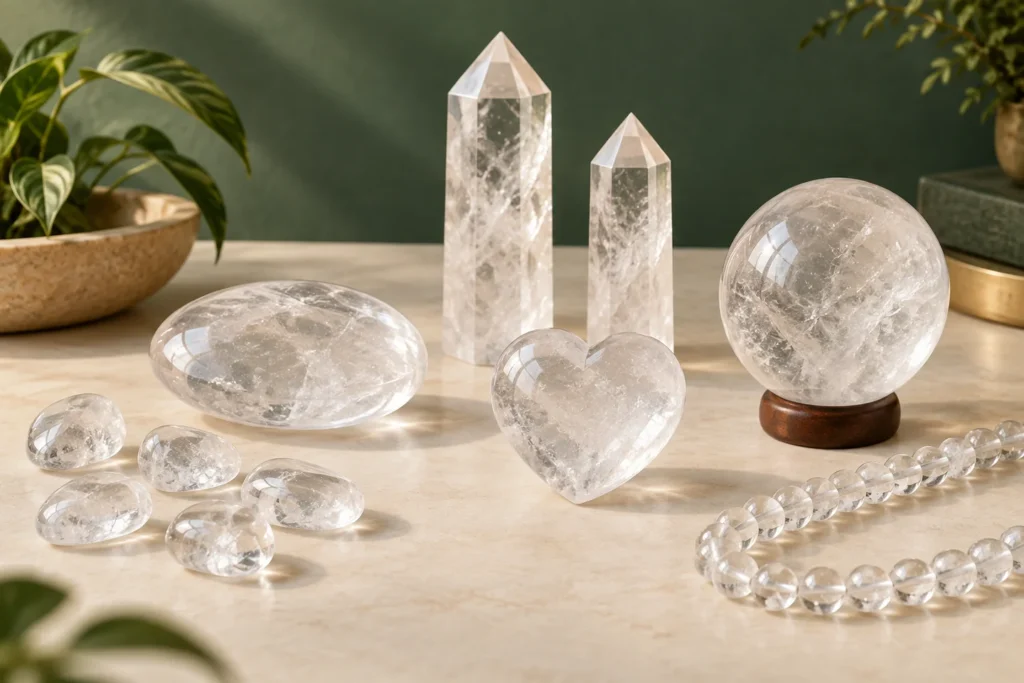
The rest of this article breaks down the specific scenarios where caution matters — not because clear quartz is dangerous, but because customer expectations, product form factors, and marketing language can all create problems. Whether you run a crystal shop, an online store, or a growing brand, this guide will help you communicate about clear quartz responsibly and reduce after-sales friction.
Why Do People Ask "Who Should Not Use Clear Quartz"?
The question itself reveals a gap in how the crystal industry communicates. End customers encounter conflicting information online — some sites promise miraculous benefits, others warn of dire consequences for the "wrong" user. Caught in between, they turn to their retailer for a straight answer.
From a retail communication perspective, the search query "who should not use clear quartz" almost always stems from anxiety created by exaggerated claims — not from any verified risk of the mineral itself. When sellers understand the root of this question, they can respond with confidence instead of adding more confusion.
The "Forbidden List" Problem
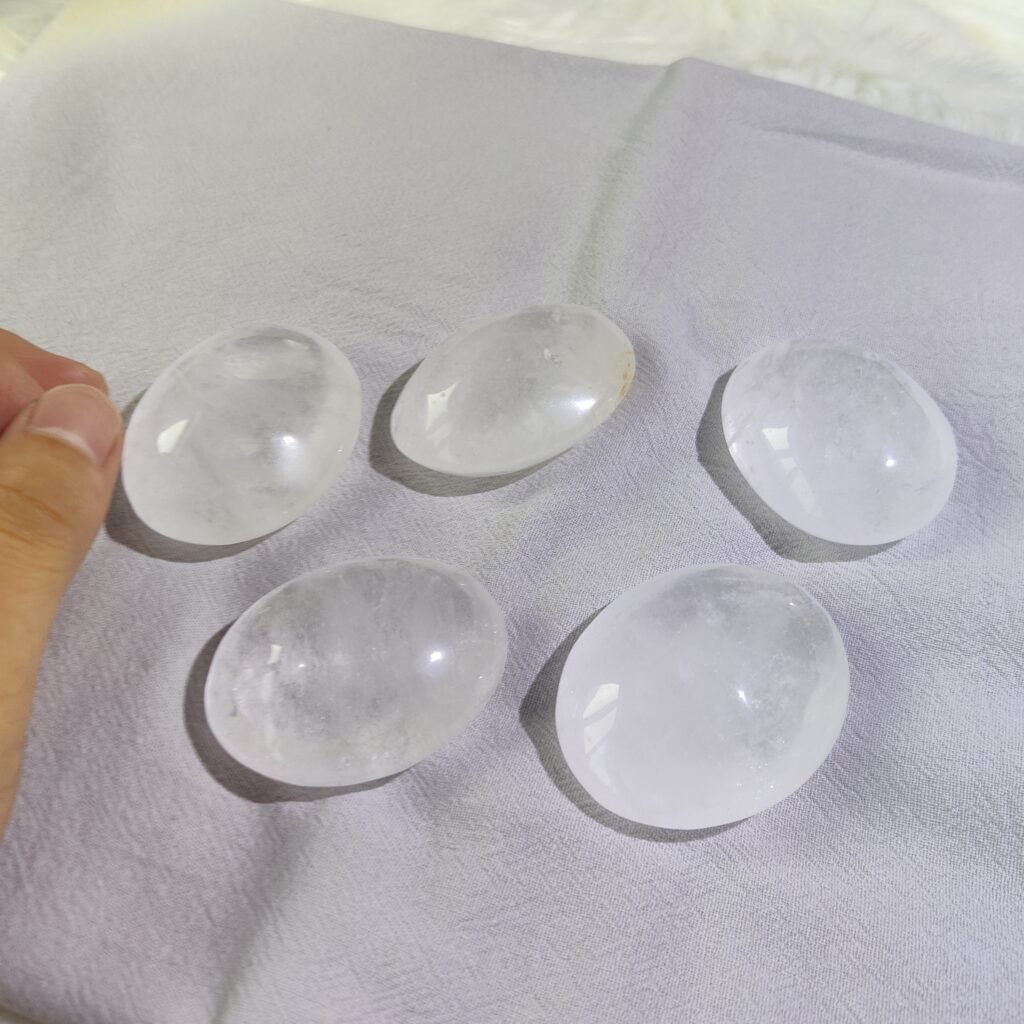
Over the past fifteen years supplying crystal products, I have seen buyer after buyer ask us: "Are there people who should avoid clear quartz? My customers keep asking." The honest answer is that clear quartz — silicon dioxide in crystalline form — is one of the most abundant minerals on earth1. It has no inherent property that makes it unsuitable for a particular zodiac sign, blood type, or personality profile.2
Yet the internet is full of articles claiming otherwise. These "forbidden lists" typically originate from:
- Unverified astrological correlations — asserting that certain signs conflict with quartz energy
- Misinterpreted traditional beliefs — taking cultural symbolism out of context and presenting it as universal law
- Content marketing tactics — writers creating dramatic headlines to capture search traffic
The problem for retailers is real. When an end customer reads that their zodiac sign is "incompatible" with clear quartz and then buys one from your shop, you face a potential return, a negative review, or an uncomfortable conversation. The solution is not to build a competing forbidden list. It is to reframe the entire conversation.
What Buyers Actually Need
Your customers are not looking for a prohibition. They are looking for reassurance and guidance. Most people asking this question want to know:
| What They Ask | What They Actually Mean |
|---|---|
| "Should Virgos avoid clear quartz?" | "Is this stone right for me?" |
| "Can clear quartz cause bad energy?" | "Will I have a negative experience?" |
| "Is clear quartz too strong for sensitive people?" | "Am I making a safe purchase?" |
When you understand the underlying concern, your product descriptions, FAQ pages, and customer service responses can address the real question — without making claims you cannot support.
Should People With Anxiety or Sensitivity Avoid Clear Quartz?
This is one of the most frequently cited "caution" groups in crystal content. Many articles suggest that people who are emotionally sensitive, anxious, or overwhelmed should not use clear quartz because it "amplifies energy." This framing creates a real customer-service challenge for retailers.
The responsible answer is that clear quartz does not have clinically verified effects on anxiety or emotional states3. What does matter is how your marketing language sets expectations. If product descriptions promise intense energy amplification, some customers may interpret their own anxiety as a reaction to the stone4 — and blame your product.
The Expectation Effect in Crystal Retail
Here is where it gets practical for anyone selling clear quartz at wholesale or retail scale. The risk is not the stone. The risk is the narrative you attach to it.
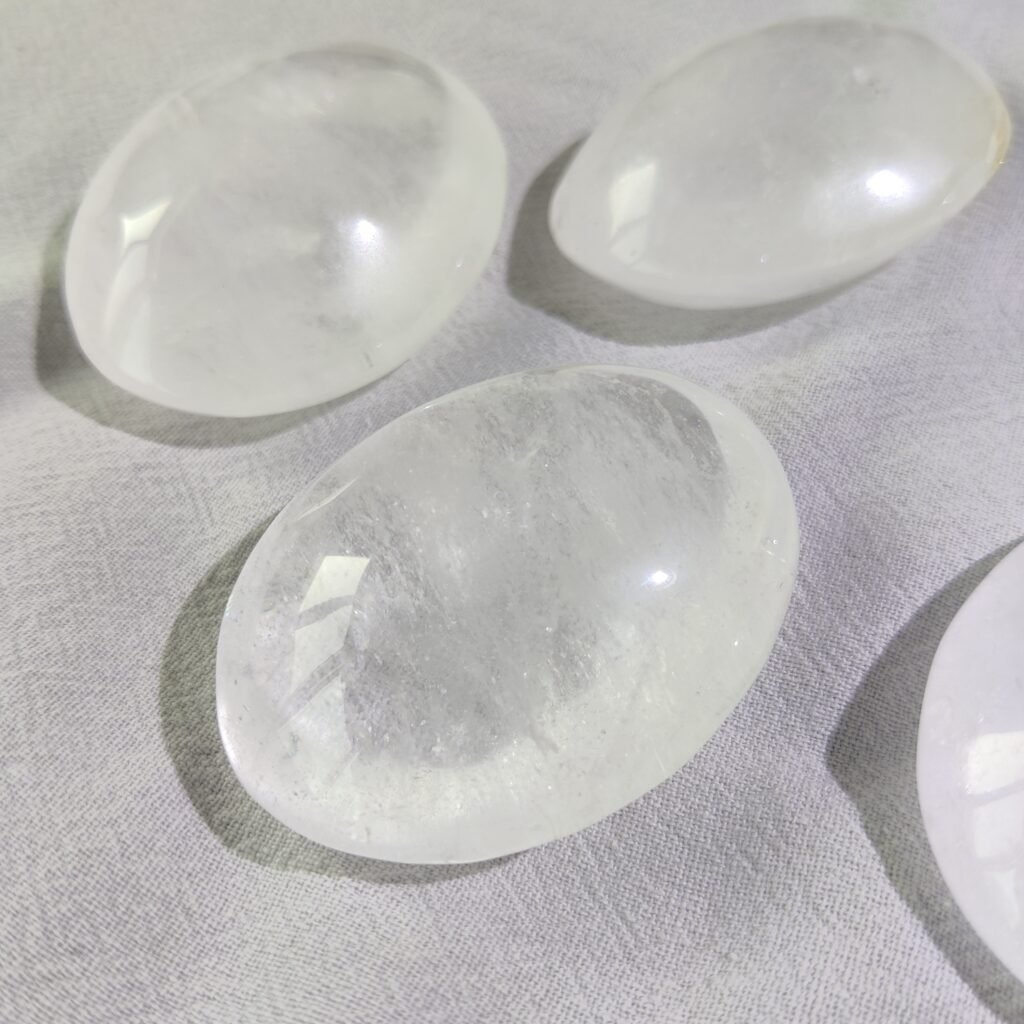
Consider two product descriptions for the same clear quartz sphere:
Version A: "This powerful clear quartz sphere radiates intense amplifying energy that magnifies everything around it. Not recommended for sensitive individuals."
Version B: "Many customers associate clear quartz with clarity and focus. This polished sphere makes a beautiful display piece or meditation companion."
Version A sets up two problems. First, it promises a guaranteed energetic effect. Second, it plants the idea that the product could harm certain people. Both claims are unsupported, and both increase your return and complaint risk.
Version B acknowledges the symbolic associations that make clear quartz popular — clarity, focus, intention — while keeping the language grounded. It uses attribution phrasing like "many customers associate" instead of absolute statements like "this stone will."
Practical Language Guidelines for Retailers
If you are writing product listings, training staff, or building a brand voice around clear quartz, consider these principles:
- Use attribution language. "Traditionally associated with…" or "Many crystal enthusiasts value clear quartz for…" This respects customer beliefs without making claims.
- Avoid medical or psychological framing. Never suggest clear quartz treats anxiety, depression, insomnia, or any medical condition.5
- Do not create exclusion lists. Telling customers they "should not" use a product based on personality type or emotional state creates liability and alienates buyers.
- Offer choice, not warnings. If a customer asks whether clear quartz is "too strong," suggest they might also enjoy a softer-looking stone like rose quartz — framing it as a preference, not a prohibition.
In retail communication, the goal is to help customers feel confident about their purchase. Fear-based exclusion does the opposite.
Is Clear Quartz Unsafe for Children, Pets, or Public Spaces?
This is where the conversation shifts from symbolic concerns to genuine product-safety considerations. While the metaphysical "who should not use clear quartz" question has no verified answer, the physical safety question absolutely does — and it is one that every retailer and wholesaler should take seriously.
Clear quartz products come in many forms, and some of those forms present real hazards in certain environments. The concern here is not mystical incompatibility. It is choking risk, breakage, sharp edges, and placement.
Children and Small Parts
Any crystal product small enough to fit in a child's mouth is a potential choking hazard.6 This is a basic product-safety principle that applies to all minerals, not just clear quartz. Retailers who sell tumbled stones, small chips, or crystal chips in jars should consider:
- Labeling. Include "not suitable for children under 3" or equivalent safety notices where legally required.7
- Display placement. Keep small loose stones away from child-accessible areas in physical shops.
- Online listings. Specify dimensions clearly so parents or gift buyers understand the size of the product.
For wholesalers like us at GD Crystal, this means providing accurate size and weight ranges for each batch so our retail buyers can make informed decisions about which products to stock in family-friendly environments.
Pets and Household Placement
Pets — especially cats and dogs — may knock over crystal displays, chew on small stones, or cut themselves on broken pieces. Clear quartz is relatively hard (7 on the Mohs scale)8, but it can chip or fracture when dropped, creating sharp fragments9. Practical advice for retailers to pass along to customers:
| Product Form | Potential Risk | Mitigation |
|---|---|---|
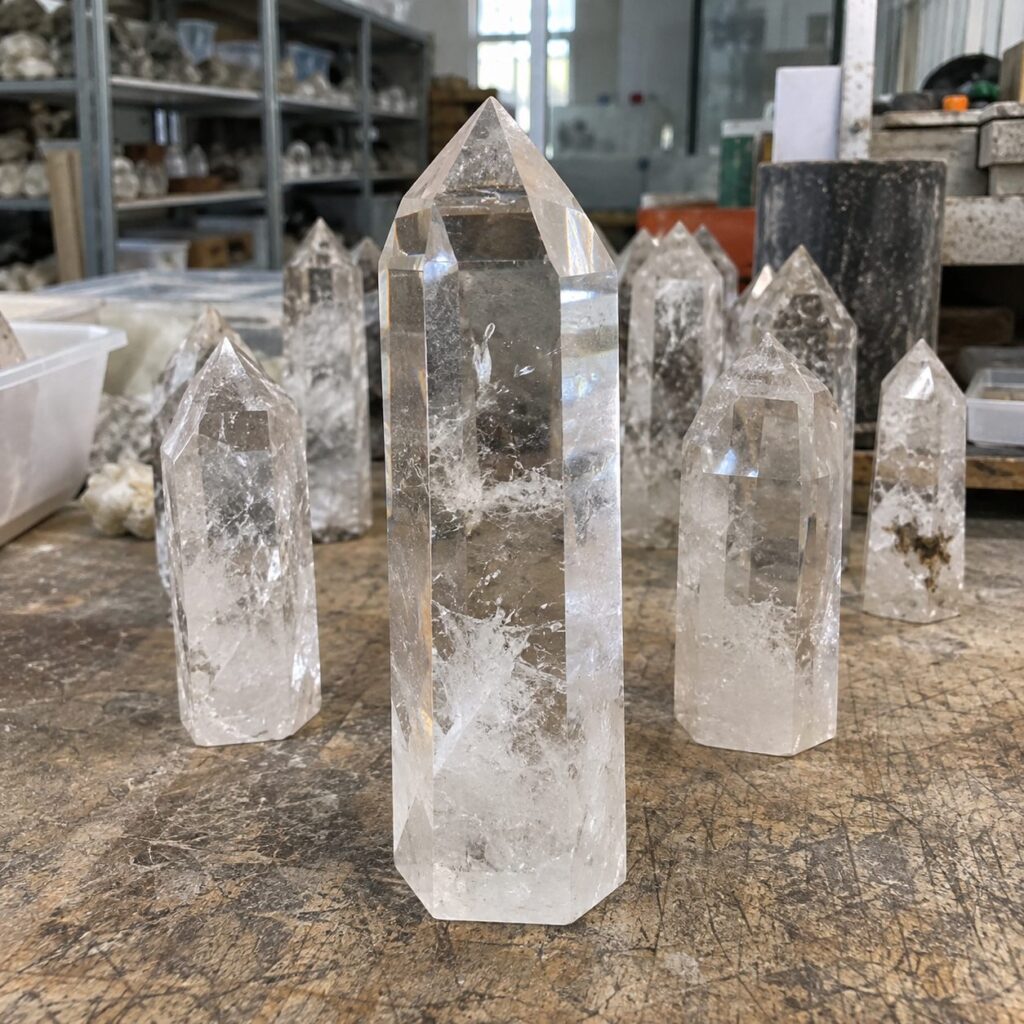
| Tower points | Sharp tip, can topple | Place on stable surface, away from edges |
| Spheres | Rolling hazard, heavy | Use a display stand or ring base |
| Tumbled stones | Choking risk for pets/children | Store in closed containers |
| Raw clusters | Irregular edges, fragile points | Display behind glass or on high shelves |
| Crystal chips/gravel | Ingestion risk | Keep in sealed jars or bags |
Public Display and Commercial Spaces
If your customers include spas, yoga studios, hotel gift shops, or wellness centers, they may place clear quartz in public areas. In these settings, breakage and liability are the real concerns. Large clear quartz pieces should be secured to prevent tipping10, and sharp-pointed products like tower points or wands should be positioned where foot traffic will not knock them over.
None of this has anything to do with who "should not" use clear quartz in a spiritual sense. It is straightforward product-safety thinking — and it is the kind of guidance that builds trust with your wholesale buyers and their end customers alike.
How Should Crystal Retailers Talk About Clear Quartz Symbolism?
Symbolism sells. There is no denying that customers buy clear quartz partly because of what it represents — clarity, intention, new beginnings, amplification. Dismissing these associations entirely would alienate your customer base. But overpromising creates a different kind of damage.
The most effective approach for crystal retailers is to acknowledge cultural and symbolic meanings without presenting them as guaranteed outcomes11. This protects your brand, reduces returns, and shows respect for diverse customer beliefs — all at the same time.
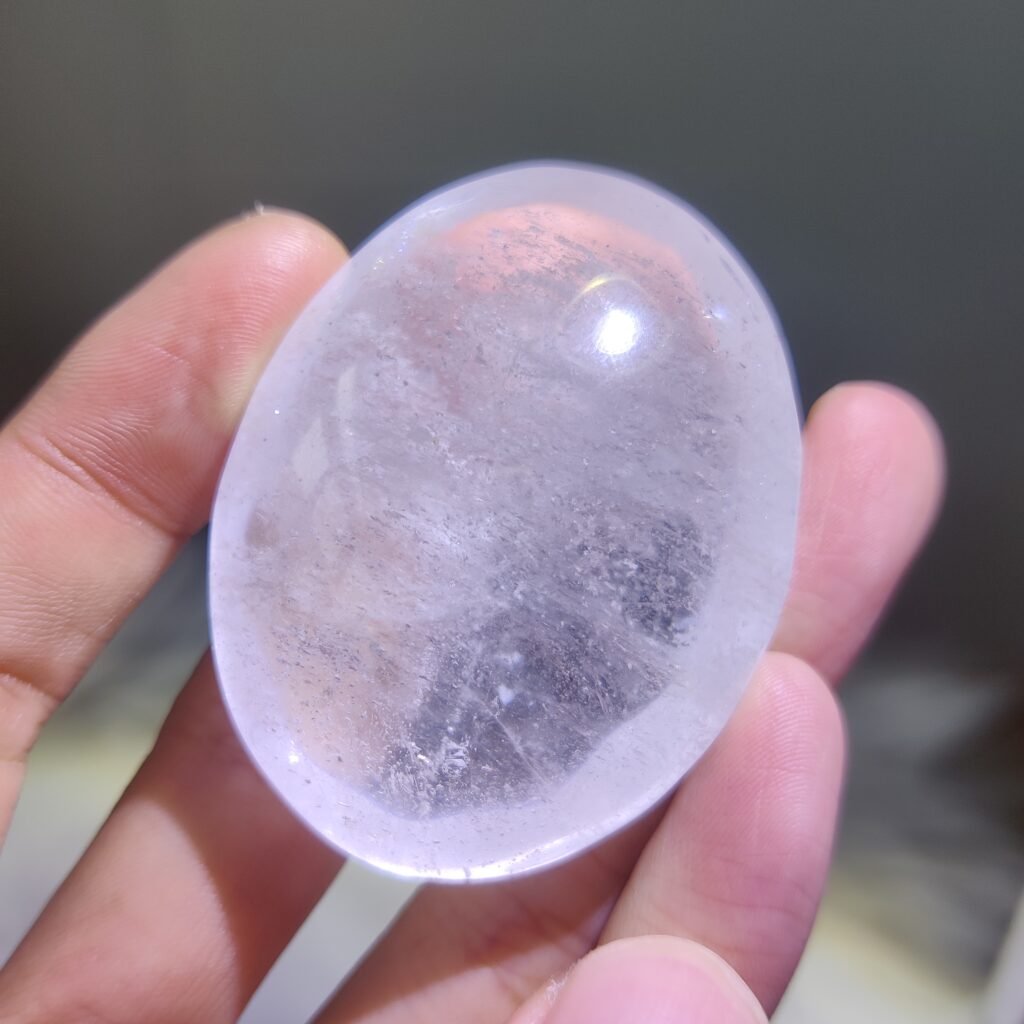
Balancing Belief and Responsibility
I have worked with crystal brand buyers who struggle with this balance. They want their product listings to feel meaningful and inspiring, but they also do not want to cross into health claims or pseudoscientific promises. Here is a framework that works well in practice:
Tier 1 — Safe and effective language:
- "Clear quartz is one of the most popular crystals in the world."
- "Many people choose clear quartz as a meditation companion."
- "Traditionally associated with clarity and focus."
- "A versatile addition to any crystal collection."
Tier 2 — Cautious but acceptable language:
- "Some crystal enthusiasts believe clear quartz amplifies intention."
- "In many cultural traditions, clear quartz is valued as a symbol of purity."
- "Customers often pair clear quartz with other stones for personal rituals."
Tier 3 — Language to avoid:
- "Clear quartz will boost your immune system."
- "This crystal heals emotional trauma."
- "Wearing clear quartz guarantees mental clarity."
- "Not suitable for [zodiac sign] — may cause negative energy."
The difference between Tier 2 and Tier 3 is attribution and certainty. Tier 2 attributes beliefs to people and traditions. Tier 3 makes direct claims about physical or psychological outcomes — claims that no crystal supplier, including us, can substantiate.
Why This Matters for Customer Retention
Retailers who use responsible language tend to see fewer after-sales disputes. When a customer buys a clear quartz piece because your listing said it "will bring mental clarity," and they do not feel clearer after a week, you have set yourself up for a complaint. When the same customer buys because "many crystal lovers value clear quartz as a symbol of clarity and focus," their expectation is appropriately framed. They bought a beautiful stone with a meaningful association, not a medical device.
This distinction is especially important for ecommerce sellers, where product descriptions are often the only communication a customer receives before purchasing. Every word on your listing page is doing customer-expectation management — whether you intend it to or not.
What Product Forms of Clear Quartz Deserve Extra Buyer Attention?
Not all clear quartz products carry the same resale considerations. The physical form of the product — tower point, sphere, tumbled stone, raw cluster — affects who it is appropriate for, how it should be displayed, and what guidance to include in listings.
As a supplier handling clear quartz in dozens of product forms, I can share what we commonly discuss with our wholesale buyers when they are selecting products for specific customer segments.
Matching Product Form to End Customer
| Product Form | Best For | Considerations |
|---|---|---|
| Tumbled stones | Gift shops, starter kits, children's collections (age-appropriate sizes) | Specify size range; note choking hazard for small pieces |
| Tower points | Collectors, display-focused customers | Sharp tips; recommend stable display surfaces |
| Spheres | Meditation users, home décor buyers | Need stands; rolling/weight hazard if large |
| Palm stones | Personal use, wellness retailers | Smooth and safe; low risk |
| Raw clusters | Mineral collectors, high-end display | Fragile points; may shed small fragments |
| Crystal chips/gravel | DIY crafters, jar displays, candle makers | Not suitable near children or pets unless contained |
| Carved figurines | Gift market, specialty retail | Check for small detachable parts |
Helping Your Buyers Choose Wisely
When a retail buyer places an order with us, we discuss intended use and customer base. A buyer stocking a family-friendly gift shop has different needs than one supplying a high-end mineral gallery. We provide size and weight ranges per batch so they can evaluate suitability for their specific retail environment.
This is the kind of practical "who should not use clear quartz" thinking that actually protects businesses. It is not about zodiac charts. It is about matching the right product form to the right retail context — and giving your end customers honest, helpful information about care, display, and handling.
Frequently Asked Questions
Is clear quartz dangerous for any zodiac sign?
There is no verified evidence that clear quartz is harmful or incompatible with any zodiac sign. These claims circulate online but lack credible sourcing. Retailers are better served by avoiding zodiac-based exclusion lists and instead highlighting clear quartz as a universally popular stone that customers of all backgrounds enjoy.
Can clear quartz cause negative side effects?
Clear quartz is a mineral — silicon dioxide — with no clinically documented negative side effects from normal handling or display. If customers report discomfort, the cause is more likely related to expectations set by exaggerated product claims than to the stone itself. Responsible product language reduces these complaints significantly.
Should I include disclaimers on my clear quartz product listings?
Yes, many experienced crystal retailers include a brief disclaimer such as "Crystal properties described here are based on popular tradition and are not intended as medical advice." This protects your business, sets appropriate customer expectations, and demonstrates professional integrity. Check your local regulations for any required product-safety disclosures.
What is the safest clear quartz product form for general retail?
Tumbled stones in medium to large sizes and polished palm stones are generally the safest forms for broad retail environments. They have no sharp edges, are less fragile than raw clusters or tower points, and are easy to handle. For children's products specifically, always verify that pieces exceed minimum size thresholds for your market's safety standards.
How should I respond when a customer asks if clear quartz is "right" for them?
Acknowledge their question respectfully. You might say, "Clear quartz is one of the most versatile and widely loved crystals — many of our customers choose it as a starting point for their collection." Avoid making personalized claims about what the stone will do for them, and instead focus on its beauty, popularity, and symbolic associations.
Conclusion
The question "who should not use clear quartz" is ultimately not about the stone — it is about how we talk about it, who is handling it, and what expectations we set. No verified evidence supports zodiac-based or personality-based exclusion lists. The real considerations are product safety for children and pets, responsible marketing language that avoids health claims, and customer-expectation management that reduces returns and disputes.
For crystal retailers and brand builders, the takeaway is clear: sell clear quartz with confidence, describe it with honesty, and focus your caution on practical safety — not fear-based mythology. If you are sourcing clear quartz in bulk and need a supplier who can discuss product forms, sizing, and batch details relevant to your retail context, reach out to GD Crystal for a quote tailored to your specific needs.
References
- "Silica Statistics and Information | U.S. Geological Survey", https://www.usgs.gov/centers/national-minerals-information-center/silica-statistics-and-information. The cited mineralogical source identifies quartz as crystalline silicon dioxide and describes quartz as one of the most common minerals in Earth's crust; this supports the geological description, not any metaphysical claim about clear quartz. Evidence role: definition; source type: encyclopedia. Supports: A neutral mineral reference should identify quartz as crystalline silicon dioxide and describe its abundance in Earth's crust.. Scope note: Supports the mineral identity and abundance of quartz generally, not the retail or symbolic claims in the article. ↩
- "Quartz – Common Minerals", https://commonminerals.esci.umn.edu/minerals-o-s/quartz. The cited scientific source characterizes quartz by its mineralogical and physical properties and does not identify zodiac sign, blood type, or personality profile as relevant safety categories; this supports the article's rejection of such exclusion lists as unsupported. Evidence role: general_support; source type: research. Supports: A scientific or medical source should show that quartz is described by physical and chemical properties rather than by zodiac sign, blood type, or personality traits.. Scope note: This is contextual support for the absence of recognized scientific categories, not direct proof that every claimed incompatibility is false. ↩
- "Placebo effects in alternative medical treatments for anxiety", https://pmc.ncbi.nlm.nih.gov/articles/PMC13064771/. The cited clinical or experimental source reports that purported effects of crystals have not been demonstrated as specific therapeutic effects beyond expectation-related responses, supporting the statement that clear quartz has no clinically verified effect on anxiety or emotional states. Evidence role: expert_consensus; source type: paper. Supports: A peer-reviewed study or health-institution summary should indicate that claimed psychological effects of crystals have not been clinically established beyond expectation or placebo mechanisms.. Scope note: The evidence is about crystal-healing claims generally and may not test clear quartz alone in every anxiety-related context. ↩
- "The nocebo effect and its relevance for clinical practice – PMC", https://pmc.ncbi.nlm.nih.gov/articles/PMC3167012/. The cited review on nocebo or expectancy effects explains that expectations can influence perceived symptoms and their attribution, supporting the article's claim that alarming product narratives may shape how customers interpret anxiety or discomfort. Evidence role: mechanism; source type: paper. Supports: A psychology or medical review should explain that negative expectations can shape symptom perception and attribution.. Scope note: This supports the psychological mechanism generally and does not directly measure customer responses to clear quartz listings. ↩
- "Health Products Compliance Guidance", https://www.ftc.gov/business-guidance/resources/health-products-compliance-guidance. The cited regulatory guidance states that health or disease-treatment claims in advertising require adequate scientific substantiation, supporting the article's caution against saying clear quartz treats anxiety, depression, insomnia, or other medical conditions. Evidence role: general_support; source type: government. Supports: A government regulator should state that health-related advertising claims require competent and reliable scientific evidence and may trigger medical-product regulation.. Scope note: Regulatory details vary by jurisdiction, so the source provides general support rather than market-specific legal advice. ↩
- "Small Parts Ban and Choking Hazard Labeling", https://www.cpsc.gov/Business–Manufacturing/Business-Education/Business-Guidance/Small-Parts-for-Toys-and-Childrens-Products. The cited consumer-safety guidance identifies small objects that fit within defined small-parts criteria as choking hazards for young children, supporting the article's warning about small crystal products. Evidence role: general_support; source type: government. Supports: A consumer-product safety source should define small parts as choking hazards for young children.. Scope note: The source addresses small objects generally, not clear quartz products specifically. ↩
- "Small Parts Ban and Choking Hazard Labeling", https://www.cpsc.gov/Business–Manufacturing/Business-Education/Business-Guidance/Small-Parts-for-Toys-and-Childrens-Products. The cited product-safety regulation or guidance describes small-parts warnings for products intended for or accessible to young children, supporting the article's advice to use age-related safety notices where required. Evidence role: general_support; source type: government. Supports: A product-safety regulator should document small-parts warning requirements or comparable warnings for children under three.. Scope note: The specific wording and applicability depend on jurisdiction and product classification. ↩
- "Mohs scale", https://en.wikipedia.org/wiki/Mohs_scale. The cited mineral reference lists quartz as having a Mohs hardness of 7, supporting the article's description of clear quartz as a relatively hard mineral. Evidence role: definition; source type: encyclopedia. Supports: A mineral reference should list quartz at hardness 7 on the Mohs scale.. ↩
- "Quartz – Common Minerals", https://commonminerals.esci.umn.edu/minerals-o-s/quartz. The cited geology source describes quartz as a brittle mineral with conchoidal fracture, supporting the article's statement that dropped quartz may chip or break into sharp fragments. Evidence role: mechanism; source type: education. Supports: A geology source should describe quartz as brittle and prone to conchoidal fracture, which can produce sharp edges.. Scope note: The source explains fracture behavior generally and does not quantify the risk for each retail product shape. ↩
- "Materials Handling – Heavy Lifting", http://www.osha.gov/etools/electrical-contractors/materials-handling/heavy. The cited safety guidance explains that heavy or unstable objects should be positioned or secured to prevent tipping and falling-object injuries, supporting the article's advice for large quartz displays in public spaces. Evidence role: general_support; source type: government. Supports: A workplace or public-safety source should advise securing heavy or unstable items to prevent tip-over or falling-object injuries.. Scope note: The source addresses display or workplace safety broadly rather than quartz products specifically. ↩
- "FTC Policy Statement Regarding Advertising Substantiation", https://www.ftc.gov/legal-library/browse/ftc-policy-statement-regarding-advertising-substantiation. The cited advertising guidance states that objective claims and promised outcomes in marketing must be substantiated and not misleading, supporting the article's distinction between attributed symbolic meanings and guaranteed effects. Evidence role: general_support; source type: government. Supports: A consumer-protection or advertising regulator should state that objective performance or health claims must be substantiated and not misleading.. Scope note: The source supports the communication principle generally and may not mention crystals or symbolic retail products directly. ↩