Quartz is the mineral most crystal buyers think they already understand — until a reorder arrives looking nothing like the first batch. The gap between "I know what quartz is" and "I can source quartz products confidently" costs retailers time, money, and customer trust. The fun facts about quartz that actually matter are the ones that change how you buy, describe, and sell it.
Quartz is one of the most abundant minerals on Earth, making up roughly 12% of the planet's crust1, yet no two batches of quartz products look identical. Its color, clarity, inclusions, and surface texture vary naturally from piece to piece and shipment to shipment. Understanding these variations is essential for any buyer who wants to source quartz products that meet retail expectations and can be reliably reordered.
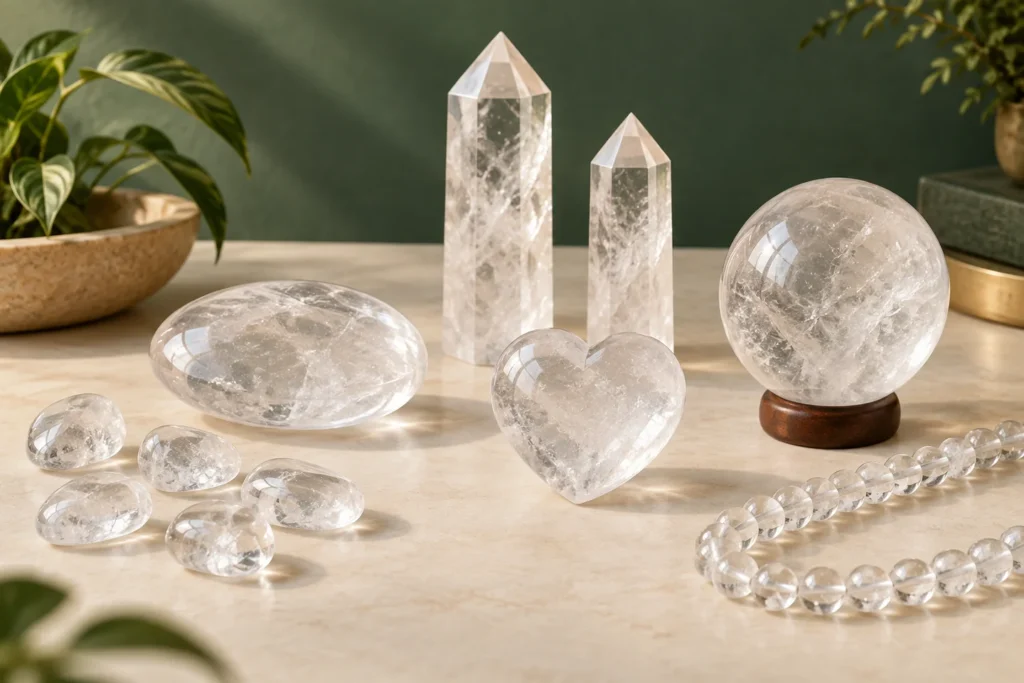
Most "fun fact" lists about quartz stop at trivia. This article goes further. Below, I walk through the facts that directly affect how you evaluate quartz products, communicate with suppliers, price your inventory, and explain your merchandise to end customers. Whether you stock clear quartz towers or rose quartz hearts, these details will sharpen your sourcing decisions.
Why Is the Quartz Family So Large — and Why Does That Matter for Buyers?
Many buyers send an inquiry for "quartz" without realizing the word covers dozens of visually distinct materials. When the sample arrives and looks nothing like the reference photo they found online, confusion and delays follow.
The quartz family includes both macrocrystalline varieties (like clear quartz, amethyst, citrine, smoky quartz, and rose quartz) and microcrystalline varieties (like chalcedony, agate, and jasper).2 This means a single mineral species can produce products that look completely different from one another — and each variety carries its own sourcing, pricing, and display considerations.
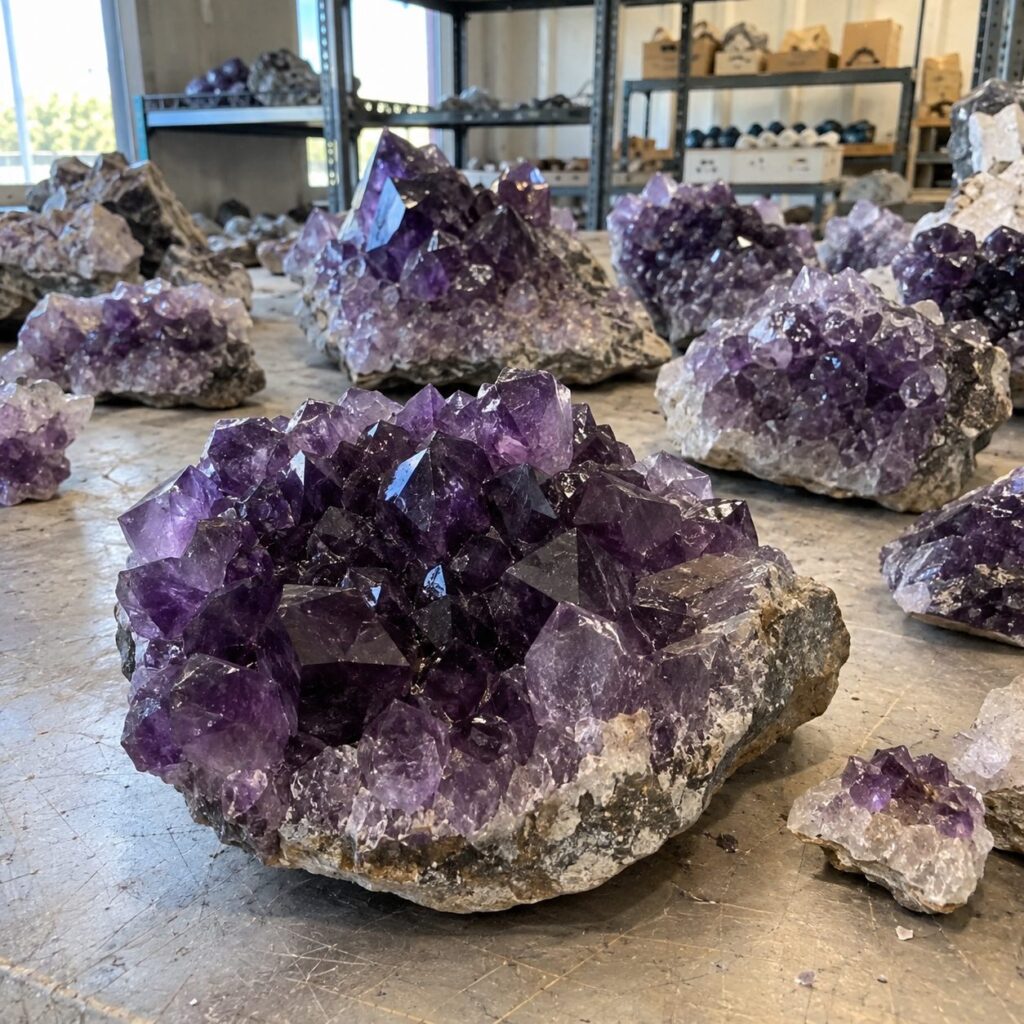
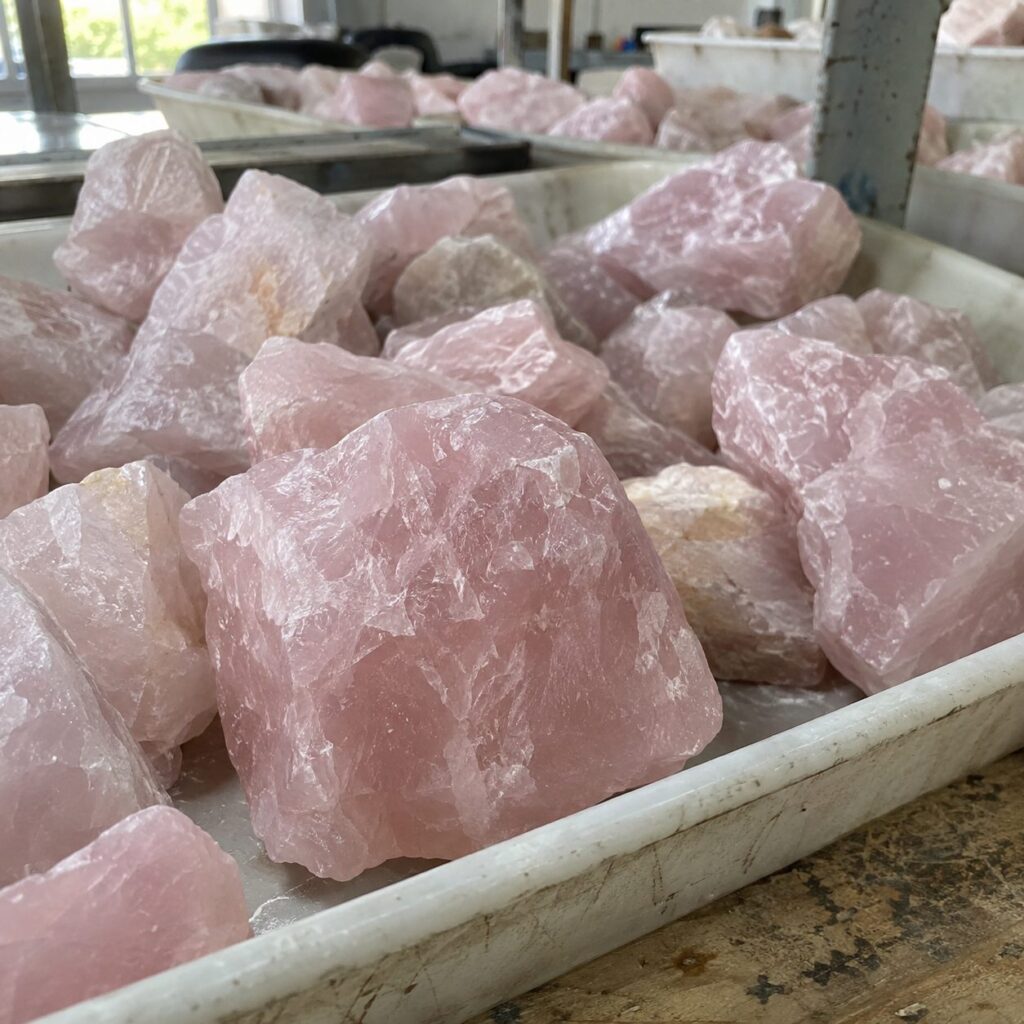
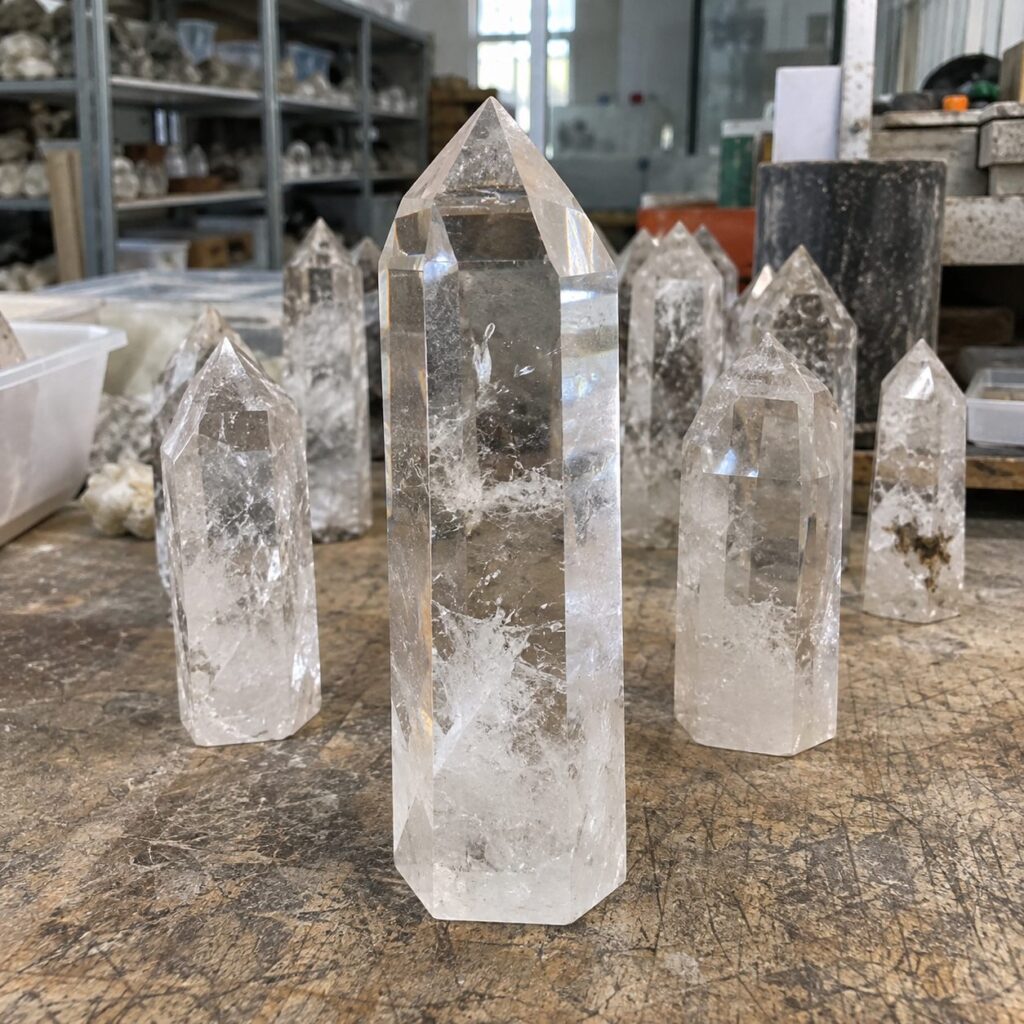
The Quartz Family Tree: A Buyer's Overview
From our daily experience fielding buyer inquiries, one of the most common misunderstandings is treating "quartz" as a single product. Here is a simplified breakdown of the major quartz varieties that appear in wholesale crystal catalogs:
| Variety | Color/Appearance | Common Product Forms | Key Buyer Consideration |
|---|---|---|---|
| Clear Quartz | Transparent to translucent | Towers, spheres, points, carvings | Clarity grade varies widely by batch |
| Rose Quartz | Pale pink to deep pink | Hearts, spheres, tumbled stones | Color saturation differs by source |
| Amethyst | Purple, light to deep | Clusters, towers, carvings | Color zoning is natural — not a defect |
| Smoky Quartz | Brown to near-black | Towers, freeforms, palm stones | Irradiation treatment is common; verify3 |
| Citrine | Yellow to orange-brown | Towers, points, tumbled stones | Much commercial citrine is heat-treated amethyst4 |
| Milky Quartz | White, opaque | Tumbled stones, spheres | Often confused with white jade or other stones |
| Agate / Chalcedony | Banded, translucent | Slices, bookends, carvings | Dyed agate is widespread; confirm treatment |
Why This Matters for Your Purchase Orders
When you request "quartz" from a supplier without specifying the variety, you are essentially asking for one of 20+ possible materials. I have seen buyers expect clear quartz and receive milky quartz, or expect natural citrine and receive heat-treated amethyst — not because the supplier was dishonest, but because the inquiry was not specific enough.
Practical takeaway: Always specify the quartz variety by name, reference a current product photo if possible, and confirm the material with your supplier before placing an order. This single step eliminates the most common sourcing mismatch in the quartz product category.
The breadth of the quartz family is genuinely a fun fact — it means your store can carry a wide range of colors, textures, and price points all from one mineral species. But that same breadth requires precision in communication. In my experience, buyers who learn to name the exact variety they want have far smoother transactions and fewer returns.
Did You Know That Quartz Color and Clarity Are Never Standardized?
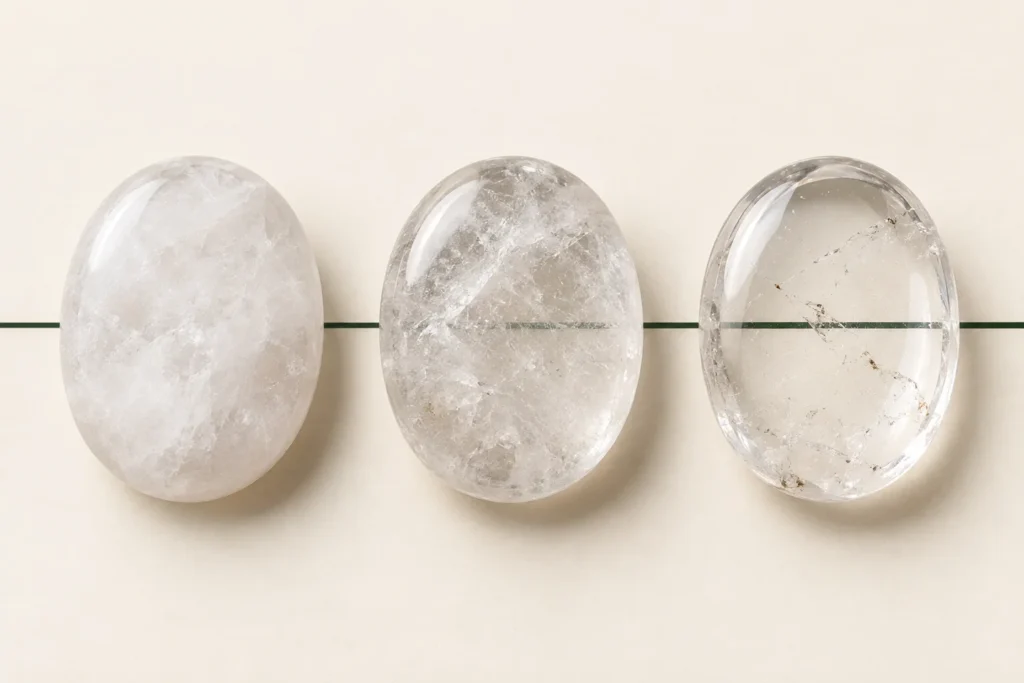
Retail buyers often select quartz from a supplier's listing photo, then expect every subsequent batch to match perfectly. This expectation leads to frustration because natural quartz color and clarity are inherently variable.
Quartz gets its color from trace elements, natural irradiation, or microscopic inclusions within the crystal structure.5 Clear quartz can range from water-clear to slightly cloudy within the same mine. Rose quartz owes its pink color to trace amounts of titanium, iron, or manganese6 — and the exact shade shifts from batch to batch. No two production runs will ever be perfectly identical in color or clarity.
What Causes Color Variation?
Here is what I explain to buyers who ask why their second order looks different:
- Trace elements: Tiny amounts of iron produce amethyst's purple.7 The concentration varies naturally, so purple depth is never uniform.
- Natural irradiation: Smoky quartz gets its color from natural radiation exposure underground. The duration and intensity vary, producing lighter or darker tones.
- Microscopic inclusions: Rose quartz contains microscopic fibrous inclusions (often identified as a type of dumortierite, though buyers should consult gemological references for specifics). These inclusions scatter light and create the pink hue, but their density varies.
- Heat and pressure history: The geological conditions each crystal experienced underground affect its final appearance. Two clear quartz pieces from the same mine can differ noticeably.
How This Affects Your Buying Decisions
Here are three practical implications for wholesale buyers:
- Request current-batch photos. Old product images are not reliable for setting expectations on a new order. I always recommend asking your supplier for photos of the actual batch available now.
- Define acceptable ranges. Rather than requesting "dark purple amethyst," specify a range: "medium to dark purple, no visible pale zones larger than 20% of the piece." This gives the supplier a clear sorting standard.
- Plan for natural variation in your retail display. Customers who buy crystals in person often appreciate natural variation — it makes each piece feel unique. But online sellers need consistent photos, so batch-to-batch variation matters more for e-commerce.
From our sourcing experience: Buyers who treat quartz color as a spectrum rather than a fixed point have much more realistic expectations and smoother reorder experiences. This fun fact about quartz — that its color is never truly standardized — is one of the most commercially important details in crystal wholesale.
How Does Product Form Change the Commercial Value of Quartz?
A raw chunk of clear quartz and a polished clear quartz sphere may contain the same mineral, but they serve completely different retail purposes and carry very different costs. Buyers who overlook product form often misjudge pricing, packaging, and market fit.
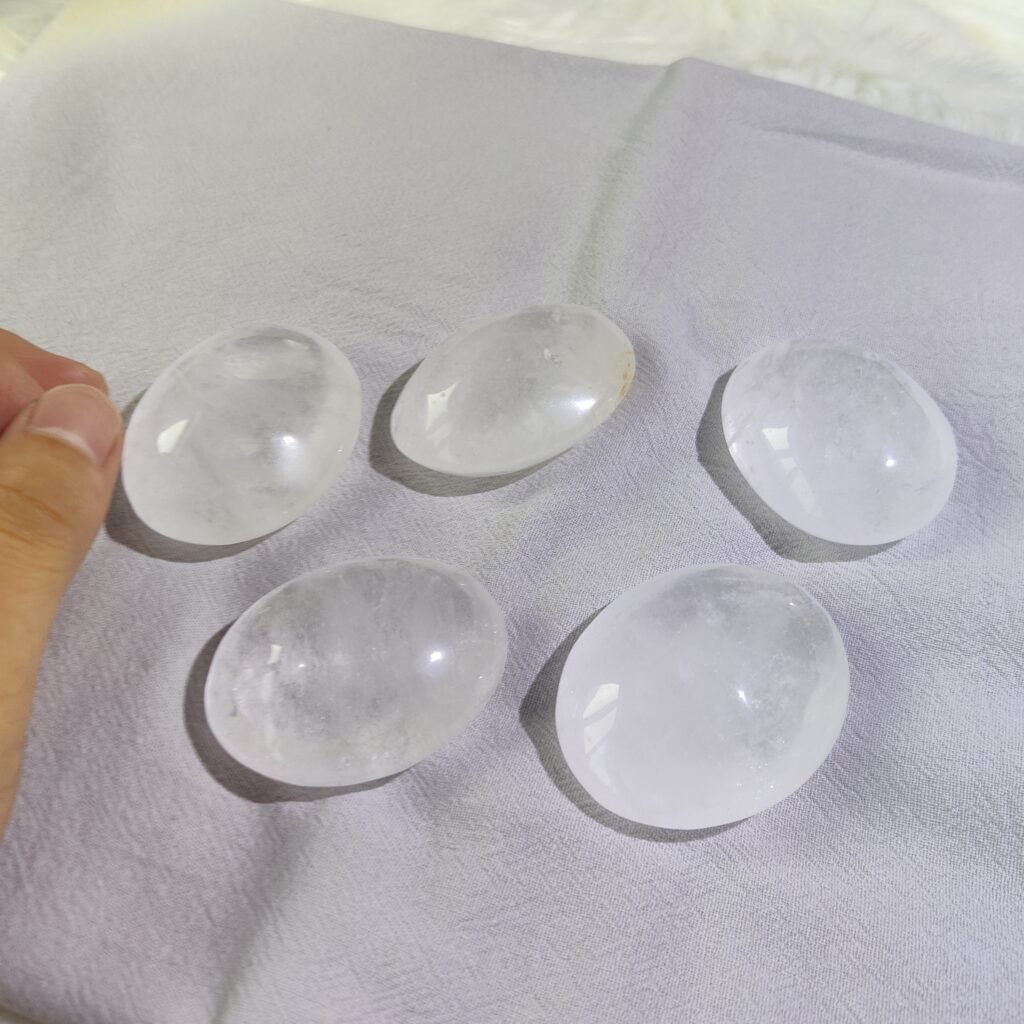
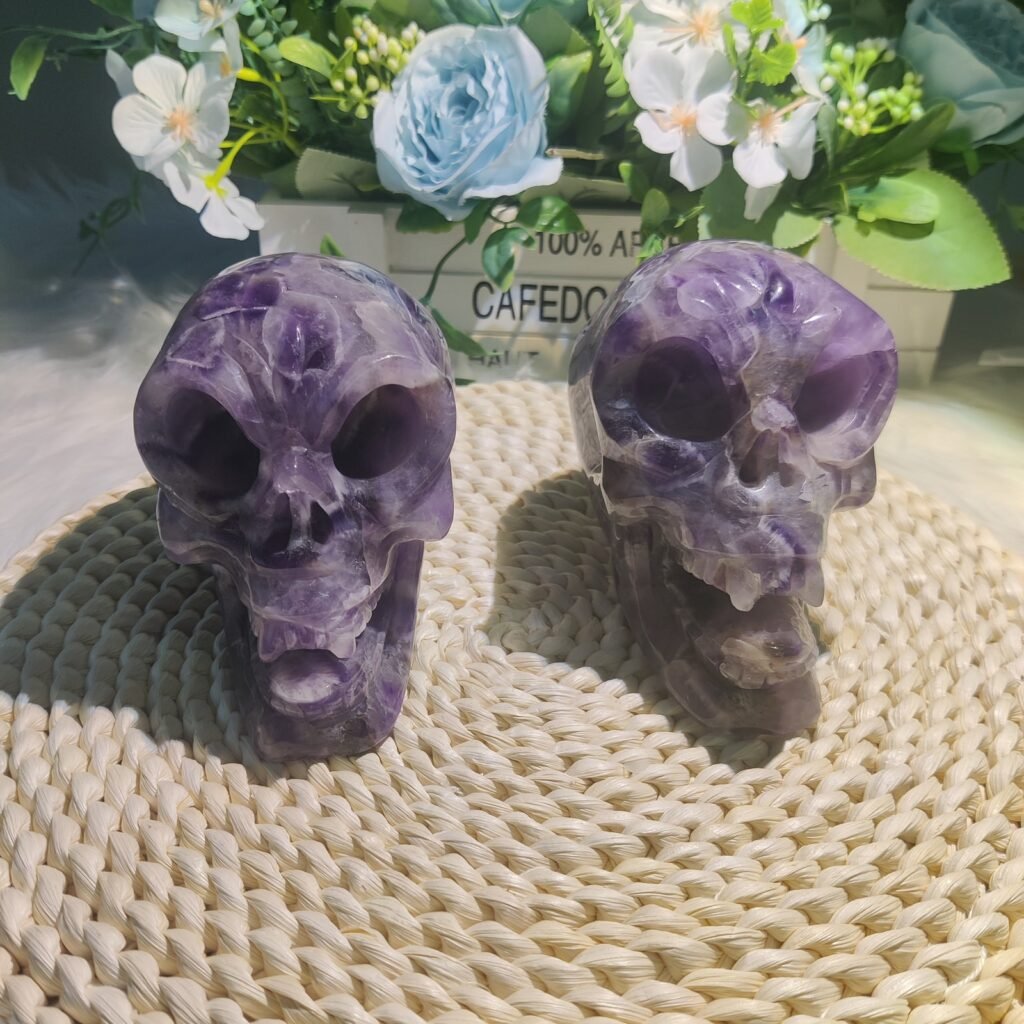
Product form — the shape a quartz piece is cut, carved, or polished into — directly affects material loss during processing, visual appeal, packaging requirements, shipping risk, and the retail price point the end customer will accept. A quartz tower, sphere, palm stone, and tumbled stone each represent a different product category even when the raw material is identical.
Processing Loss and Pricing
One fun fact about quartz that surprises many first-time buyers: a polished quartz sphere can waste 50–70% of the raw material during shaping.8 The rough block must be large enough and internally consistent enough to yield a clean sphere. This is why spheres are typically priced significantly higher per gram than tumbled stones or raw points.
| Product Form | Approximate Material Loss | Typical Packaging Needs | Retail Use Case |
|---|---|---|---|
| Raw points / clusters | Minimal (natural shape) | Padded box, foam wrap | Display pieces, collectors |
| Towers / obelisks | 20–40% | Individual bubble wrap, dividers | Centerpiece display, gifting |
| Spheres | 50–70% | Custom foam holders, rigid boxes | Premium display, meditation |
| Palm / worry stones | 30–50% | Pouches, trays | Impulse retail, self-care |
| Tumbled stones | 15–30% (batch tumbling) | Bulk bags, display bowls | Entry-level retail, kids' markets |
| Carvings / figurines | 40–60%+ (complex shapes) | Individual wrapping, rigid boxes | Gift market, themed retail |
Choosing the Right Form for Your Market
From working with buyers across different retail segments, I have noticed clear patterns in what sells where:
- Crystal shops and metaphysical stores tend to move towers, spheres, and palm stones quickly. Customers expect a curated, polished look.
- Gift shops and tourist retail do well with hearts, small carvings, and tumbled stones at accessible price points.
- Online sellers need forms that photograph consistently and ship safely. Towers and palm stones are forgiving; large spheres and delicate carvings carry higher breakage risk in transit.
- Wholesale distributors often prefer tumbled stones and small towers because these are easier to sort by size, pack in bulk, and redistribute.
Why Form Should Be Part of Your Initial Inquiry
When you contact a quartz supplier, specifying the product form is just as important as specifying the variety. A request for "rose quartz, 200 pieces" leaves almost everything open. A request for "rose quartz palm stones, approximately 5–6 cm, 200 pieces, current batch photos requested" gives your supplier everything needed to prepare an accurate quote.
This is one of those fun facts about quartz that does not appear in encyclopedia entries but has a direct impact on your bottom line: the same raw quartz, shaped differently, becomes a completely different product with different margins, different customers, and different logistics needs.
What Should Buyers Know About Treated vs. Natural Quartz?
Treatment is one of the most sensitive topics in crystal wholesale. Buyers who do not ask about treatment risk misrepresenting their products to end customers — which damages trust and can create legal issues in some markets.
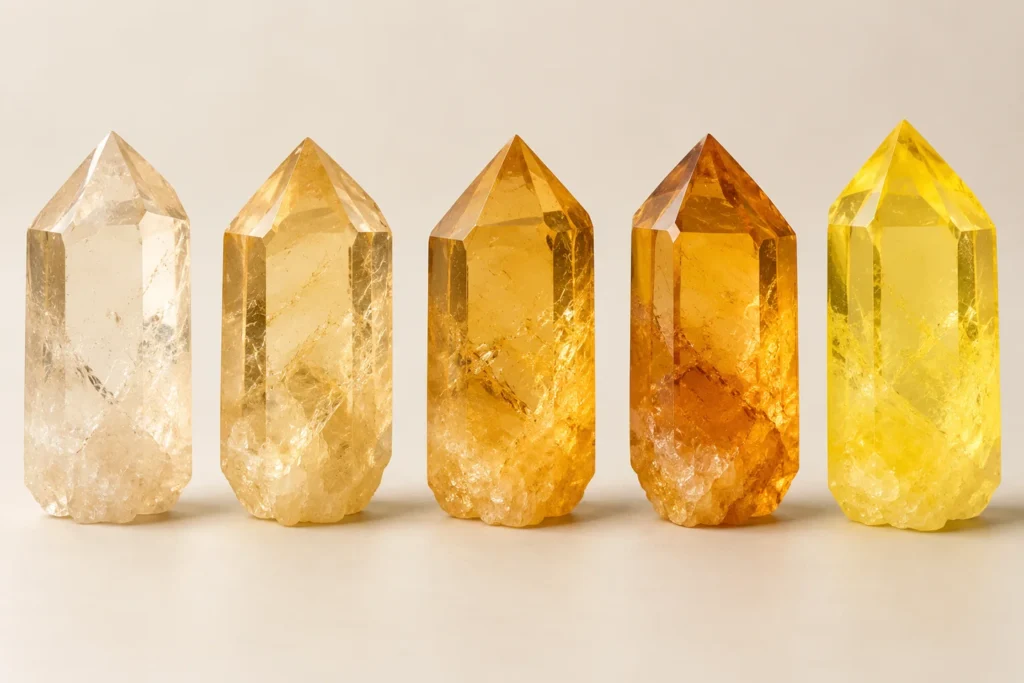
A significant portion of commercial quartz products have undergone some form of treatment.9 Heat treatment is extremely common (most commercial citrine is heat-treated amethyst). Irradiation is used to deepen smoky quartz color. Dyeing is widespread in agate products.10 These treatments are not inherently negative, but they must be disclosed11 — and buyers should confirm treatment status with their supplier before listing any quartz product for resale.
Common Treatments in Commercial Quartz
Here are the treatments I encounter most frequently in daily sourcing work:
- Heat treatment: Applied to amethyst to produce citrine (yellow-orange) or to lighten overly dark smoky quartz. This is the most common treatment in the quartz market and is widely accepted — but it should be declared.
- Irradiation: Used to darken smoky quartz or produce certain color effects. Some smoky quartz on the market was originally clear or lightly colored quartz that has been irradiated.
- Dyeing: Primarily affects agate, chalcedony, and sometimes crackled quartz. Brightly colored agate slices (hot pink, electric blue, vivid green) are almost always dyed.
- Coating: Some quartz products receive metallic coatings (often marketed as "aura quartz" or "angel aura"). These are quartz crystals bonded with metals like titanium or gold in a vapor deposition process.12
How to Handle Treatment Information as a Buyer
| Treatment | Detection Difficulty | Disclosure Expectation | Buyer Action |
|---|---|---|---|
| Heat treatment | Difficult without lab testing | Industry-standard disclosure | Ask supplier directly; confirm in writing |
| Irradiation | Very difficult to detect | Should be disclosed | Request treatment confirmation per item type |
| Dyeing | Often visible (unnatural color) | Must be disclosed | Visual inspection + supplier confirmation |
| Metallic coating | Visually obvious | Must be disclosed | Clearly label for end customers |
Important note: I am not a gemological laboratory, and neither are most wholesale suppliers. If you need certified identification of treatment status for high-value inventory, I recommend engaging a qualified gemological testing service. What a responsible supplier can do is tell you honestly what they know about the material and its processing history.
Why This Fun Fact Matters for Your Brand
End consumers are increasingly educated about crystal treatments. A retailer who sells heat-treated amethyst as "natural citrine" risks losing credibility the moment a customer does a quick internet search. On the other hand, being transparent about treatments — "This beautiful citrine gets its warm color from heat treatment of natural amethyst" — actually builds trust.
From a sourcing perspective, confirming treatment status should be part of every purchase inquiry. It takes one sentence in your message to your supplier, and it protects your business reputation long-term.
Why Is Natural Batch Variation Both the Value and the Risk in Quartz Sourcing?
Experienced crystal retailers know that natural variation is part of what makes quartz products appealing. But for buyers placing wholesale orders sight-unseen, that same variation represents real commercial risk if expectations are not managed.
Every batch of quartz products — whether towers, tumbled stones, or carved hearts — will contain natural variation in color intensity, clarity, inclusion patterns, size, and surface texture. This variation is inherent to natural stone products. It cannot be eliminated, only managed through clear communication, current-batch photography, size and weight ranges, and realistic acceptance criteria.
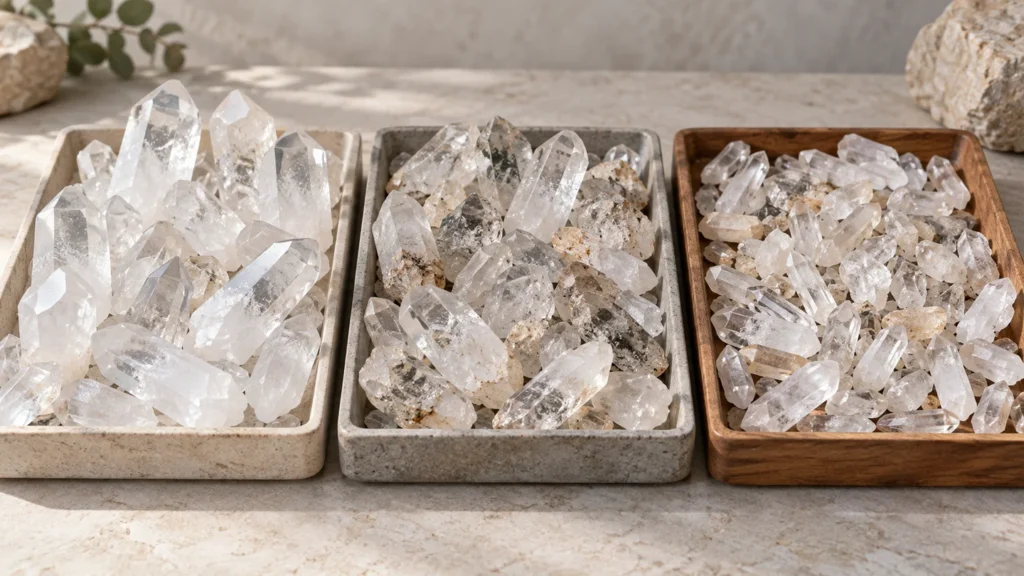
What Varies — and What You Can Control
Here is what I typically discuss with buyers to manage expectations:
What naturally varies (and cannot be fully standardized):
- Exact shade of color within a variety
- Distribution and type of natural inclusions
- Surface texture on natural faces vs. polished faces
- Internal clarity (cloudiness, veils, rainbows)
- Exact dimensions and weight of each piece
What you can specify and control:
- Target size range (e.g., 8–10 cm height for towers)
- Weight range per piece
- Acceptable color range (light/medium/dark)
- Surface finish (polished, matte, raw)
- Grading tier (A, AB, B — though grading systems vary by supplier)
Managing Reorder Expectations
One of the most frequent challenges I see is reorder disappointment. A buyer's first batch of smoky quartz towers was beautifully dark and translucent. Six months later, the available rough material has shifted, and the new batch is lighter with more inclusions. This is not a quality failure — it is the nature of natural stone sourcing.
Best practices for reorders:
- Always request current-batch photos before confirming a reorder.
- Keep reference photos from your previous order to share with your supplier.
- Discuss acceptable deviation upfront: "We need at least medium darkness; lighter pieces are not sellable for our market."
- Order samples from the new batch before committing to a large quantity if visual consistency is critical for your brand.
This fun fact about quartz — that natural variation is simultaneously its greatest selling point and its greatest sourcing challenge — is something every serious crystal buyer should internalize. The buyers who manage this well build sustainable businesses. Those who ignore it end up with inventory they cannot sell.
Frequently Asked Questions
Is all quartz the same hardness?
Yes, all varieties of quartz share a Mohs hardness of approximately 7, making quartz products durable enough for most retail and display purposes. However, surface finish (polished vs. raw), product form, and the presence of fractures or inclusions can affect practical durability during shipping and handling.
Can I mix different quartz varieties in one wholesale order?
Many suppliers, including us at GD Crystal, can accommodate mixed-variety orders depending on current stock and minimum order quantities per item. Specify each variety, product form, size, and quantity separately in your inquiry so the supplier can confirm availability and pricing for each line item.
How can I tell if a quartz product has been dyed or coated?
Dyed quartz and agate often show unnaturally vivid or uniform color, and dye may concentrate in surface cracks. Coated quartz (like aura quartz) has a visible iridescent or metallic surface. For definitive identification, consult a qualified gemological professional. For wholesale purchasing, ask your supplier directly about any treatments applied.
Why do quartz products from the same supplier look different between orders?
Natural quartz is sourced from mines where material quality, color, and clarity shift over time. Seasonal availability, different mining zones, and rough material batches all contribute to visual differences between orders. This is normal.
References
- "Rare Earths Statistics and Information", https://www.usgs.gov/centers/national-minerals-information-center/rare-earths-statistics-and-information. A mineralogical reference describes quartz as a major constituent of Earth's crust and gives abundance estimates close to 12%, supporting the article's quantitative statement about its geological prevalence. Evidence role: statistic; source type: encyclopedia. Supports: Quartz is a major rock-forming mineral and is commonly estimated to constitute roughly 12% of Earth's crust.. Scope note: Exact crustal abundance estimates vary by source and by whether continental crust, crust as a whole, or rock-forming minerals are being counted. ↩
- "Collection – All Sorts of Quartz", https://naturalhistory.si.edu/education/teaching-resources/featured-collections/all-sorts-quartz. Mineralogical references classify quartz into macrocrystalline forms, such as rock crystal, amethyst, citrine, smoky quartz, and rose quartz, and microcrystalline forms, including chalcedony, agate, and jasper. Evidence role: definition; source type: encyclopedia. Supports: Quartz varieties are commonly divided into macrocrystalline and microcrystalline forms, including the examples listed in the article.. ↩
- "Ametrine with Layers of Smoky Quartz | Gems & Gemology", https://www.gia.edu/gems-gemology/ametrine-smoky-quartz. Gemological references explain that smoky coloration in quartz is caused by radiation-related color centers and that irradiation can be used as a treatment to produce or intensify smoky color. Evidence role: mechanism; source type: institution. Supports: Smoky color in quartz can result from irradiation, and artificial irradiation is a recognized treatment relevant to gem identification.. Scope note: Such sources support the mechanism and treatment possibility, but they may not quantify how common the treatment is in any particular wholesale market. ↩
- "Citrine Gemstone | Natural Citrine Stone", https://www.gia.edu/citrine. Gemological sources note that amethyst is commonly heat treated to produce yellow, orange, or brownish citrine colors, supporting the article's warning that commercial citrine may be treated amethyst. Evidence role: general_support; source type: institution. Supports: Heat treatment of amethyst to produce yellow to orange citrine-like material is a widely recognized commercial practice.. Scope note: The source may support that the practice is common without proving the exact proportion represented by the word 'much' in a specific market. ↩
- "Colors in Minerals | Miles Mineral Museum", https://www.enmu.edu/about/general-information/local-events-and-info/arts-and-culture/miles-mineral-museum/colors-minerals. Mineralogy teaching materials describe quartz color as arising from impurities, radiation-induced color centers, and included microscopic phases, providing general support for the article's explanation of color variation. Evidence role: mechanism; source type: education. Supports: Different quartz colors are associated with impurities, radiation-induced color centers, and included mineral phases.. Scope note: The mechanisms differ by quartz variety, so a general source does not by itself establish the cause of color in every specimen. ↩
- "Fibrous nanoinclusions in massive rose quartz", https://www.its.caltech.edu/~chima/publications/2001_AM_rose_quartz.pdf. Research on rose quartz color indicates that the pink appearance of massive rose quartz is often associated with microscopic fibrous inclusions, while earlier or related explanations have discussed trace elements such as titanium, iron, or manganese. Evidence role: mechanism; source type: paper. Supports: Research has investigated the cause of rose quartz color, including trace elements and microscopic fibrous inclusions.. Scope note: The source may complicate rather than directly confirm the article's wording, because rose quartz color is not universally attributed only to Ti, Fe, or Mn. ↩
- "Iron oxidation states and their influence on amethyst color", http://ui.adsabs.harvard.edu/abs/2026RaPC..23913406D/abstract. Studies of amethyst color centers show that trace iron in quartz, together with irradiation-related structural defects, is responsible for the characteristic purple color. Evidence role: mechanism; source type: paper. Supports: Trace iron and irradiation-related color centers are central to the purple color of amethyst.. Scope note: This is more precise than the article's simplified wording because iron alone is not usually treated as the complete mechanism. ↩
- "How It's Made: A Stone Sphere", https://www.youtube.com/watch?v=MoV-emestnA. Technical lapidary sources on sphere cutting describe the process as requiring substantial removal of rough material to create a symmetrical polished sphere, giving contextual support for the article's claim of high material loss. Evidence role: statistic; source type: other. Supports: Sphere cutting requires substantial removal of rough material compared with less processed forms.. Scope note: A neutral source may support high wastage generally but may not verify the exact 50–70% range for quartz specifically. ↩
- "An Introduction to Gem Treatments", https://www.gia.edu/gem-treatment. Gemological treatment references list heating, irradiation, dyeing, and coating among recognized treatments for quartz or quartz-family materials, supporting the article's general statement that treated quartz products are common in commerce. Evidence role: general_support; source type: institution. Supports: Quartz and quartz-family gemstones are commonly subject to treatments including heating, irradiation, dyeing, and coating.. Scope note: The source supports the existence and recognition of these treatments, but may not provide a quantified share of all commercial quartz products. ↩
- "An Introduction to Gem Treatments", https://www.gia.edu/gem-treatment. Gemological references identify dyeing as a common treatment for agate and related chalcedony materials, supporting the article's caution that bright agate products may be treated. Evidence role: general_support; source type: institution. Supports: Agate and chalcedony are frequently dyed to produce vivid or uniform colors.. Scope note: The source may establish common practice without measuring prevalence across all agate products. ↩
- "In the Loupe: Advertising Diamond, Gemstones and Pearls", https://www.ftc.gov/business-guidance/resources/loupe-advertising-diamond-gemstones-pearls. Consumer-protection guidance for jewelry and gemstones states that treatments should be disclosed when they are not permanent, require special care, or significantly affect value, supporting the article's emphasis on treatment disclosure. Evidence role: expert_consensus; source type: government. Supports: Consumer-protection guidance requires or expects disclosure of gemstone treatments when they affect value, care, or consumer understanding.. Scope note: Specific legal duties vary by jurisdiction and by how the product is marketed. ↩
- "PVD for Decorative Applications: A Review – PMC – NIH", https://pmc.ncbi.nlm.nih.gov/articles/PMC10381906/. References on coated quartz describe aura-type quartz as natural quartz with a thin metallic coating, often produced by vapor deposition using metals such as gold or titanium. Evidence role: mechanism; source type: other. Supports: Metal-coated quartz products marketed as aura quartz are produced by depositing thin metallic films onto quartz crystals.. Scope note: Terminology and exact coating metals vary by product name, so the source may support the general process rather than every commercial label. ↩