If you're searching for the most powerful cleansing crystal to stock your shelves, you've probably noticed that every blog gives a different answer. The confusion multiplies when you're buying wholesale — because a crystal that "trends" on social media may be impossible to source consistently, fragile to ship, or hard to explain at the point of sale. The real answer depends less on metaphysical rankings and more on what actually sells for your specific store and customer base.
There is no single most powerful cleansing crystal that universally outperforms all others. For B2B buyers, the most "powerful" choice is the stone your customers already recognize, in a product format that's easy to display and ship, with a story that's simple to communicate at retail. Popular cleansing-themed crystals like clear quartz, selenite, black tourmaline, and amethyst each serve different price points, product forms, and customer segments — making the purchasing decision a merchandising question, not a spiritual ranking.
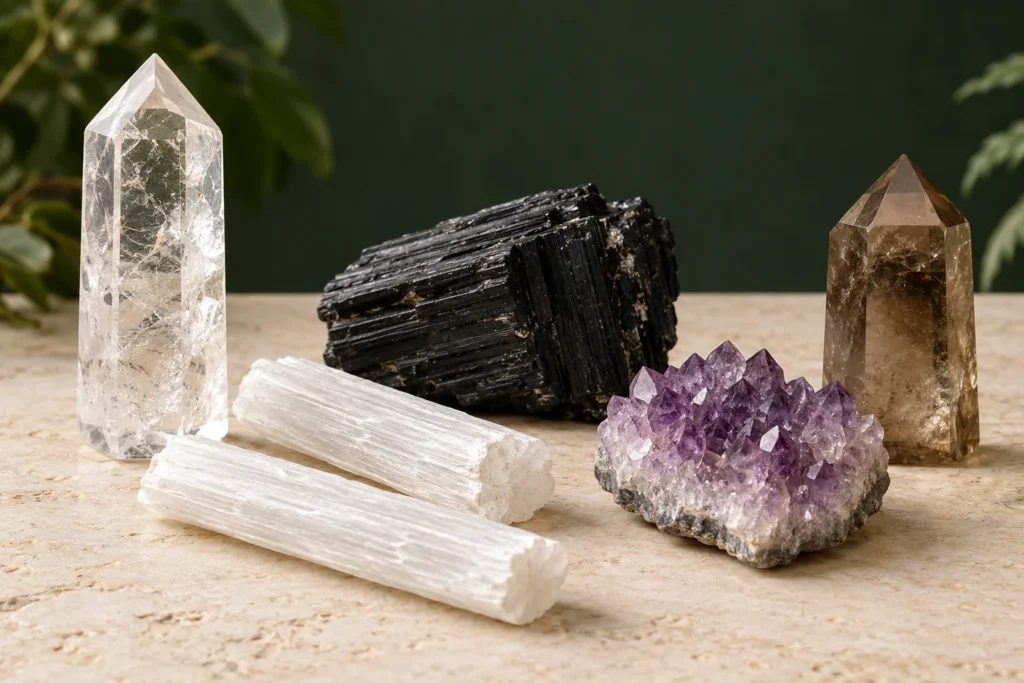
Choosing the right cleansing crystal for resale means weighing customer recognition, product format, supply consistency, packaging needs, and breakage risk. Below, I'll walk through the most commonly requested cleansing stones from a supplier's perspective, then break down the procurement factors that actually determine which one is "most powerful" for your bottom line.
Which cleansing crystals do retail customers recognize most?
Customer recognition drives sell-through.1 If a crystal shop visitor doesn't already associate a stone with cleansing, your staff spends extra time educating — which raises your cost per sale and slows inventory turnover.
In sourcing discussions with independent crystal shops and online sellers, a handful of stones come up repeatedly when buyers request "cleansing" product lines. The most commonly recognized include clear quartz, selenite, black tourmaline, amethyst, and smoky quartz. These are not ranked by objective cleansing ability — no such ranking exists2 — but by how frequently end consumers search for and purchase them under cleansing-related themes.
Clear Quartz — The Universal Baseline
Clear quartz is often called the "master healer" in retail crystal language, and it appears in nearly every cleansing-themed collection. From a sourcing standpoint, it offers several advantages:
- Wide availability: Clear quartz is one of the most abundant minerals3, which means relatively stable supply and pricing compared to rarer stones.
- Format versatility: It works across towers, spheres, palm stones, tumbles, chips, bracelets, raw points, and carved shapes.
- Customer familiarity: Most first-time crystal buyers recognize clear quartz on sight, reducing the educational burden on your sales team.
The trade-off is differentiation. Because it's so common, clear quartz SKUs can face heavy price competition, especially in tumbled and chip forms. Buyers who want to build margin around cleansing themes often pair clear quartz with less common stones or invest in larger, more visually striking formats like generator towers or polished spheres.
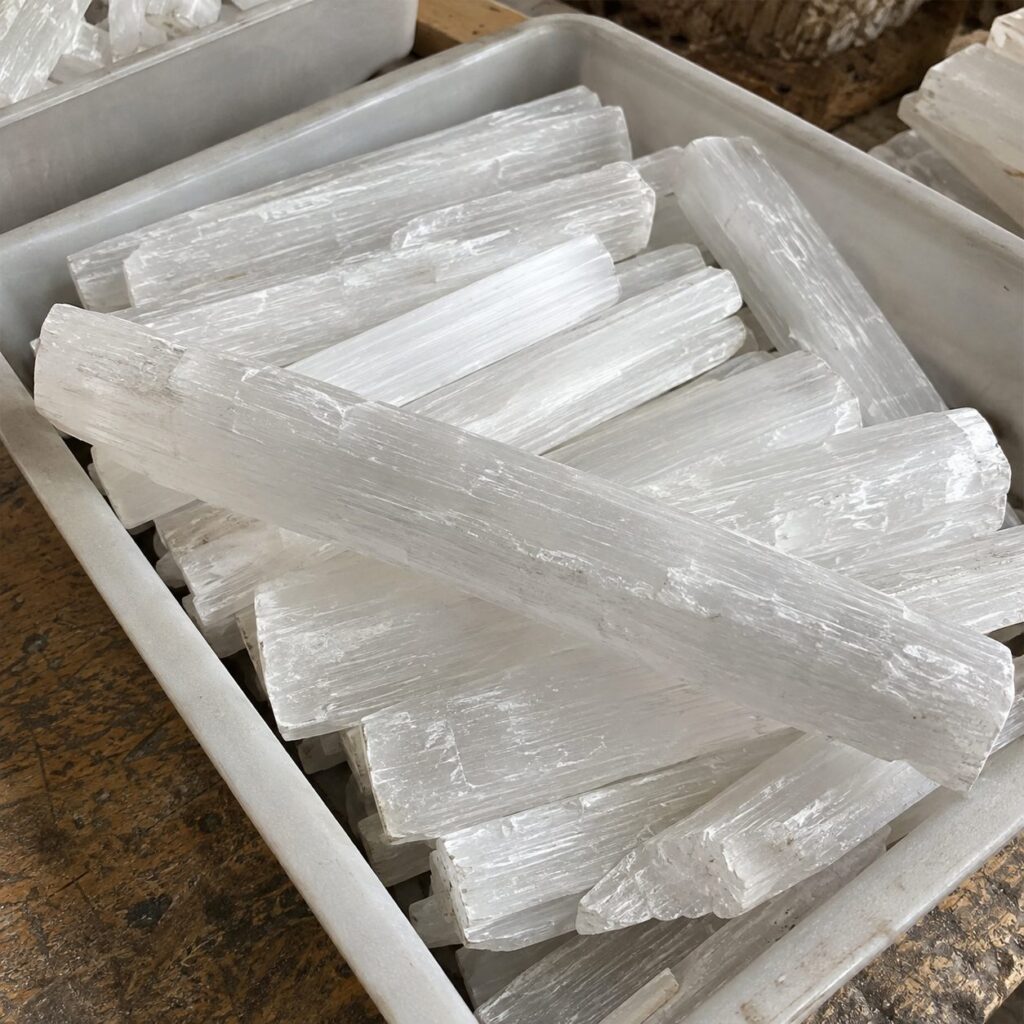
Selenite — High Demand, Higher Breakage Risk
Selenite has surged in popularity specifically for cleansing and "energy clearing." In retail, selenite wands, charging plates, and towers are strong sellers. However, buyers often ask us about selenite only to discover procurement realities they hadn't considered:
| Factor | Selenite Reality |
|---|---|
| Hardness | Mohs 2 — extremely soft, scratches easily4 |
| Water sensitivity | Dissolves in water; cannot be marketed for water-based rituals5 |
| Breakage in transit | Significantly higher than quartz; requires careful inner packaging6 |
| Packaging cost | Individual foam inserts or compartmented boxes recommended |
| Batch variation | Color, translucency, and surface texture vary between batches |
Selenite can be a very profitable cleansing crystal SKU, but only if you budget for packaging and accept a higher damage rate. I've seen buyers order large quantities of selenite sticks without specifying packaging — and then face 10–15% breakage on arrival7. That erases margin fast.
Black Tourmaline — The "Protection" Crossover
Black tourmaline is frequently marketed for both cleansing and protection, which gives it crossover appeal. Customers shopping for either theme may pick it up, effectively doubling its merchandising utility.
- Raw chunks and rough pieces suit stores with a "natural" or "earthy" aesthetic.
- Tumbled stones and palm stones work well for ecommerce and live selling.
- Bracelets are a high-turnover format, though buyers should confirm bead consistency (size, color depth, and inclusion levels vary across batches).
One procurement consideration: black tourmaline quality ranges widely. Low-grade material can look dull and indistinguishable from other black minerals, while higher-grade pieces show a glossy, striated surface8. Clarifying grade expectations with your supplier before ordering prevents customer complaints.
Amethyst and Smoky Quartz — Color-Driven Sellers
Both amethyst and smoky quartz benefit from strong visual appeal. Amethyst's purple and smoky quartz's warm brown-to-gray tones make them natural display anchors. In cleansing-themed product lines, they often function as the "upgrade" tier above clear quartz and tumbled black tourmaline.
For wholesale selection, keep in mind:
- Amethyst color saturation varies significantly by origin and batch. Buyers should request current batch photos rather than relying on catalog images from previous orders.
- Smoky quartz can be naturally irradiated or treated. If your customer base cares about treatment disclosure, confirm with your supplier whether specific batches are natural-color or enhanced.
Does product format matter more than the stone itself?
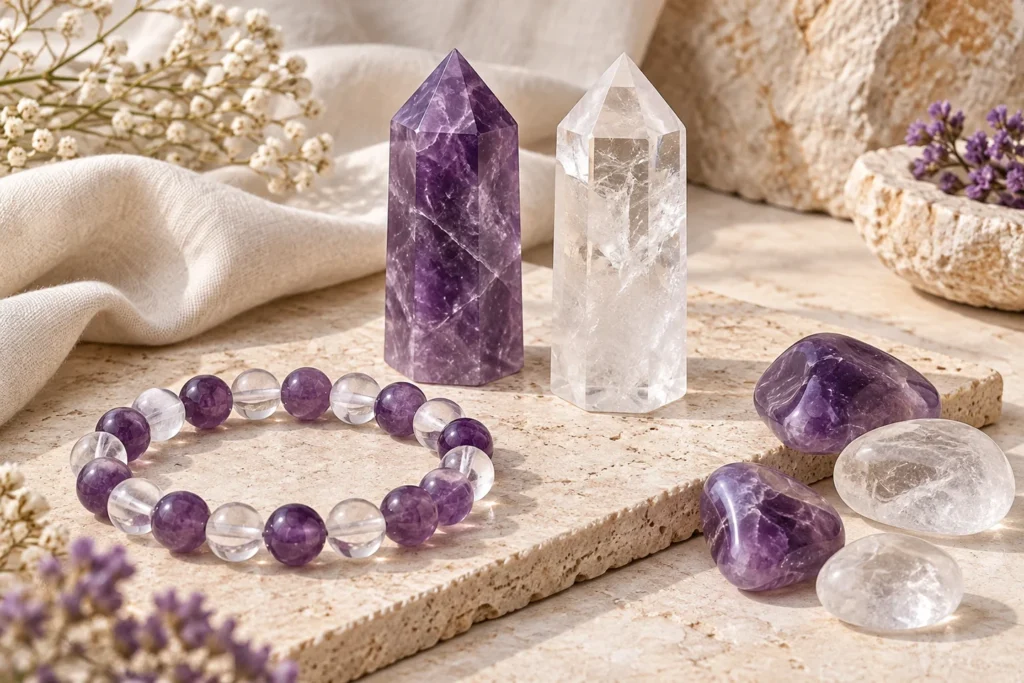
For many B2B buyers, the product format — tower, sphere, palm stone, tumble, bracelet, or raw piece — has a bigger impact on sales velocity and margin than which specific cleansing crystal they choose9. A selenite tower and a selenite tumble target completely different price points, display strategies, and customer segments.
The format you choose should match your sales channel, average order value, display space, and shipping logistics. A well-chosen format in a moderately popular stone often outperforms a trending stone in the wrong format for your business.
Matching Format to Sales Channel
Here's how I typically see buyers align product formats with their sales channels, based on years of wholesale discussions:
| Format | Best Channels | Avg. Price Point | Display Needs | Shipping Risk |
|---|---|---|---|---|
| Towers / Points | Brick-and-mortar, ecommerce | Medium–High | Shelf or riser display | Moderate (tip breakage) |
| Spheres | Boutique retail, gift market | Medium–High | Stands required | High (rolling, cracking) |
| Palm Stones | Ecommerce, live selling, subscription boxes | Low–Medium | Flat display or pouches | Low |
| Tumbled Stones | Impulse buy bins, starter sets, bundles | Low | Bowls, bags | Very low |
| Chips / Gravel | DIY kits, candle making, resin crafts | Very low (bulk) | Bags, jars | Very low |
| Bracelets | Ecommerce, market stalls, gift shops | Low–Medium | Cards, stands | Low |
| Raw / Rough Pieces | Collectors, mineral shops, display-heavy stores | Varies widely | Trays, specimen stands | Moderate |
| Carvings | Gift market, themed collections | Medium–High | Themed displays | Moderate–High |
| Gift Sets | Holiday retail, corporate gifts, subscription boxes | Medium–High | Boxed presentation | Low (pre-packed) |
Why Format Affects "Power" More Than You Think
In retail crystal language, a cleansing crystal's perceived "power" is partly shaped by its presentation. A large, well-polished amethyst tower on a display shelf communicates significance and commands a higher price than the same material sold as tumbled stones in a basket. The stone is identical — the format changes the customer's perception and your margin10.
This is why I encourage buyers to think about format strategy before locking in material selections. If your store sells primarily through Instagram Live, palm stones and tumbled stones photograph well, ship cheaply, and suit impulse purchasing. If you operate a high-end boutique, large towers and spheres justify premium pricing and anchor your cleansing crystal display.
The Packaging Layer
Format also determines packaging requirements — and therefore landed cost. A 6-inch selenite tower requires individual foam protection, while 50 tumbled clear quartz stones can ship together in a single padded bag. Buyers who overlook packaging when comparing per-unit prices across formats often underestimate true cost-to-shelf.
At GD Crystal, we discuss packaging options as part of the quoting process because they directly impact your per-unit economics. Custom boxes, branded pouches, or gift-ready packaging are available but change the cost structure. I always recommend buyers specify packaging needs upfront rather than discovering breakage issues after the first shipment arrives.
How should B2B buyers evaluate cleansing crystals beyond the name?
The biggest procurement mistake I see is buyers ordering by crystal name alone: "I want selenite" or "send me black tourmaline." Without specifying size, weight range, grade, format, treatment expectations, and quantity, the order process stalls — or worse, delivers product that doesn't match what the buyer envisioned.
For B2B purchasing, evaluating a cleansing crystal means confirming a checklist of tangible product specifications, not just choosing a popular metaphysical name. The goal is to reduce surprises between what you order and what arrives on your shelf.
The Procurement Checklist
Every cleansing crystal order — whether clear quartz, selenite, or amethyst — should address these factors before pricing:
- Material and grade: What stone, and what quality tier? "Clear quartz" spans from milky and included to water-clear and gem-grade.
- Treatment and enhancement: Is the color natural or treated? Smoky quartz, for example, can be heat-treated or irradiated. If your customers expect disclosure, you need this information.
- Product format: Tower, sphere, palm stone, tumble, raw, bracelet, carving, or gift set?
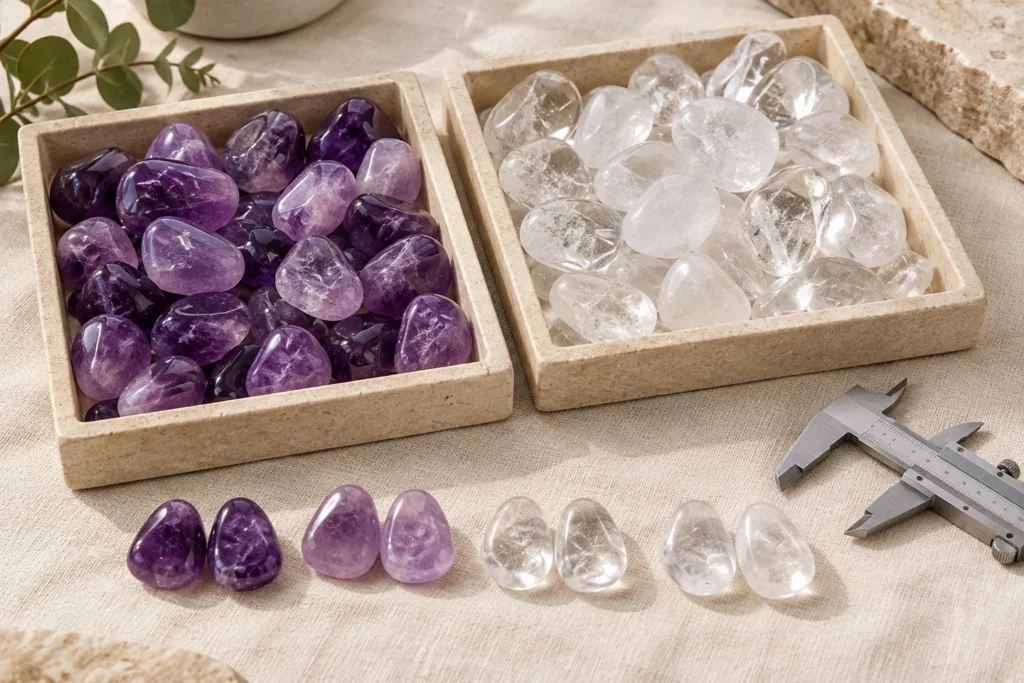
- Size and weight range: A "small palm stone" means different things to different suppliers. Specify dimensions (e.g., 40–50mm) and weight range (e.g., 30–50g).
- Quantity and MOQ: Minimum order quantities vary by format and material. Tumbled stones may have a 5kg MOQ; custom carvings may require 50–100 pieces.
- Batch variation tolerance: Natural stones vary. How much color, size, or inclusion variation is acceptable for your retail presentation?
- Packaging: Bulk bag, individual pouch, foam insert, branded box, or retail-ready card?
- Breakage and claims policy: Especially critical for selenite, thin towers, and spheres.
- Lead time and replenishment: Can the supplier restock this item consistently, or is it a one-time batch?
Why Replenishment Risk Matters for Cleansing Crystals
Imagine you build a "Crystal Cleansing Kit" around a specific variety of amethyst from a limited batch. The kit sells well. You reorder — but the next batch is lighter in color, smaller in average size, or simply unavailable. Now your bestselling product looks inconsistent, and your repeat customers notice.
In sourcing discussions, I always recommend buyers ask about replenishment stability before committing to a specific SKU as a core product. Stones like clear quartz and black tourmaline generally offer more consistent replenishment than rarer varieties. Selenite availability is usually good, but visual consistency between batches can shift.
Practical tip: For your first order of any cleansing crystal SKU, consider a trial quantity. Evaluate the actual product against your display standards, photograph it for your own listings, and test customer response before scaling up.
Can you build a profitable cleansing crystal product line?
Absolutely — and this is where the "most powerful cleansing crystal" question transforms from a metaphysical debate into a merchandising strategy. The strongest product line combines customer-recognized stones, a mix of price points, display-friendly formats, and reliable supply.
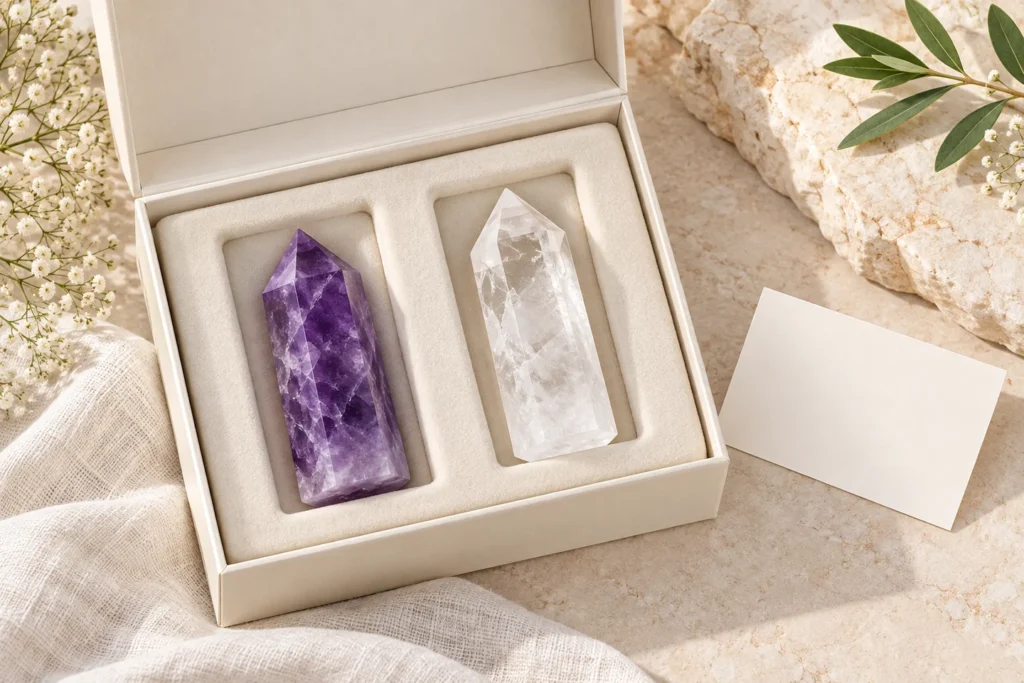
Building a profitable cleansing crystal product line means curating 3–5 stones across multiple formats and price tiers, so customers can enter at an affordable tumbled stone and trade up to a statement tower or gift set. This structure maximizes basket size and return visits.
A Sample Product Line Framework
Here's a framework I've seen work well for independent crystal shops and ecommerce sellers:
| Tier | Product Example | Format | Price Range (Retail) | Role in Line |
|---|---|---|---|---|
| Entry | Clear quartz tumbled stones | Tumble, 20–30mm | $2–$5 | Impulse buy, starter piece |
| Entry | Black tourmaline rough chunks | Raw, 30–50mm | $3–$6 | Affordable "protection + cleansing" |
| Mid | Selenite wand / stick | Polished stick, 15cm | $8–$15 | Signature cleansing tool |
| Mid | Amethyst palm stone | Polished, 50–60mm | $10–$20 | Upgrade piece, gift option |
| Premium | Clear quartz generator tower | Polished tower, 10–15cm | $25–$60 | Display anchor, high margin |
| Premium | Cleansing crystal gift set | Mixed stones, boxed | $30–$50 | Gifting, holiday seasonal push |
Cross-Selling and Bundling
Cleansing crystals lend themselves naturally to bundles. A "Cleansing Starter Kit" with one selenite stick, one clear quartz point, one black tourmaline rough, and a small amethyst tumble — packaged in a simple box with a printed card — can retail for significantly more than the stones sold individually. The perceived value of curation justifies the markup.
For wholesale selection, ask your supplier about mixed-item minimum orders. At GD Crystal, we can discuss mixed-batch arrangements where you combine several stone types and formats in one order, rather than hitting separate high MOQs for each individual SKU. This is especially useful for newer shops testing a cleansing crystal line for the first time.
Seasonal and Trend Considerations
Cleansing crystals see demand spikes around New Year (new beginnings, fresh energy themes), spring (spring cleaning crossover), and gifting holidays. Planning your purchasing calendar around these peaks — and placing orders with adequate lead time — helps you capture seasonal revenue without emergency air freight costs.
Frequently Asked Questions
Is selenite really the strongest cleansing crystal?
Selenite is widely marketed as a top cleansing crystal in retail, and many end consumers specifically seek it out. However, "strongest" has no objective measurement in this context. For B2B buyers, selenite's value depends on customer demand in your market, your willingness to manage its fragility, and your packaging budget.
Can I mix different cleansing crystals in one wholesale order?
Yes, many suppliers — including GD Crystal — can discuss mixed-item orders. This lets you test multiple cleansing crystal types and formats without committing to large quantities of a single SKU. Confirm mixed-order MOQs, pricing structure, and packing arrangements during the quoting process.
How do I know if a cleansing crystal has been treated or enhanced?
Ask your supplier directly for each batch. Treatments like dyeing, heating, or irradiation are common in certain stones (e.g., smoky quartz, some amethyst). A reputable supplier will disclose known treatments when asked. If treatment disclosure matters to your brand, make it a standard part of your purchasing communication.
What's the biggest risk when ordering cleansing crystals wholesale?
Breakage during shipping — especially for selenite, thin towers, and spheres — and batch inconsistency in color, size, or quality. Both risks can be managed by specifying packaging requirements, requesting current batch photos, ordering trial quantities first, and agreeing on size and weight ranges before production or packing.
Do I need large MOQs to start a cleansing crystal product line?
Not necessarily. Many suppliers offer trial order quantities for new buyers. At GD Crystal, we're open to discussing smaller first orders so you can evaluate product quality and customer response before committing to larger volumes. MOQs vary by format and material, so always confirm during the inquiry stage.
Conclusion
So, what is the most powerful cleansing crystal? The honest answer is: it's the one that your customers recognize, that you can source reliably, that ships without breaking, and that fits your price point strategy. Clear quartz, selenite, black tourmaline, amethyst, and smoky quartz all have strong retail recognition under cleansing themes — but none holds an objective "most powerful" title. Your real competitive advantage comes from choosing the right formats, packaging, and supplier relationship to support consistent sell-through.
If you're building or expanding a cleansing crystal product line for your shop or brand, I'd welcome a conversation about which stones, formats, and order structures fit your specific needs. Reach out to GD Crystal with your product requirements — including material, size, quantity, and packaging preferences — and we'll provide a current, detailed quote based on what's available today.
References
- "The Effects of Brand Familiarity on Perceived Risks, Attitudes …", https://scholarworks.uark.edu/cgi/viewcontent.cgi?article=2186&context=etd&httpsredir=1&referer=. Consumer-behavior research links familiarity with greater purchase confidence and purchase intention, providing contextual support for the claim that recognized products may sell through more readily in retail settings. Evidence role: general_support; source type: paper. Supports: Product or brand familiarity can influence consumer confidence, purchase intention, and retail choice.. Scope note: The evidence would support the general merchandising mechanism, not crystal-specific sell-through data. ↩
- "National Center for Complementary and Integrative Health", https://www.nccih.nih.gov/. A public-health or scientific review noting the lack of reliable clinical evidence for crystal-healing effects would support the statement that no objective ranking of cleansing crystals by metaphysical power has been established. Evidence role: expert_consensus; source type: government. Supports: Scientific or medical authorities do not recognize an objective empirical measure that ranks crystals by cleansing or healing power.. Scope note: This supports the absence of scientific validation, not consumer beliefs or retail demand. ↩
- "Quartz | U.S. Geological Survey", https://www.usgs.gov/media/images/quartz. A geology reference describing quartz as one of the most abundant minerals in the Earth's crust supports the article's statement about clear quartz's broad natural availability. Evidence role: definition; source type: education. Supports: Quartz is widely occurring and among the most abundant minerals in the Earth's crust.. Scope note: Mineral abundance does not directly prove stable wholesale pricing. ↩
- "Selenite (gypsum)", https://en.wikipedia.org/wiki/Selenite_(gypsum). Mineralogical references identify selenite as a gypsum variety with Mohs hardness near 2, supporting the claim that it is easily scratched compared with harder stones. Evidence role: definition; source type: education. Supports: Selenite, a variety of gypsum, has a Mohs hardness of approximately 2.. ↩
- "Gypsum", https://en.wikipedia.org/wiki/Gypsum. Geological and chemical references describe gypsum as a hydrated calcium sulfate mineral with measurable water solubility, supporting the caution that selenite products are unsuitable for water-based use. Evidence role: mechanism; source type: education. Supports: Gypsum/selenite is water-soluble enough to be damaged by prolonged water exposure.. Scope note: The source would support material sensitivity, not specific retail labeling rules. ↩
- "Transit Damage Is Not Inevitable: How Smart Packaging …", https://alom.com/packaging-transit-damage/. Packaging-engineering research shows that cushioning and protective inner packaging reduce shock and vibration damage in transit, providing contextual support for the recommendation to package fragile selenite items carefully. Evidence role: mechanism; source type: paper. Supports: Protective packaging and cushioning reduce mechanical damage to fragile goods during transport.. Scope note: The evidence is about fragile goods generally and may not quantify damage rates for selenite specifically. ↩
- "Minimize Shipping Damage in Your Ecommerce Deliveries", https://www.ecoenclose.com/blog/minimize-shipping-damage-in-your-ecommerce-deliveries/?srsltid=AYCX9vIecC5d01vEsgAZToQhGyGL0ulDl1Ol1RRlWX3g_N7FB-u1NIXI. A logistics or packaging-damage study documenting elevated damage rates for inadequately protected fragile goods would contextualize the cited 10–15% breakage figure for selenite shipments. Evidence role: statistic; source type: research. Supports: Shipping damage can be materially higher for fragile goods when protective packaging is inadequate.. Scope note: Unless based on the author's own shipment records, external sources are likely to support only the plausibility of the range, not verify this exact percentage. ↩
- "Tourmaline", https://en.wikipedia.org/wiki/Tourmaline. Mineralogical descriptions of schorl note its characteristic striated crystal habit and vitreous to subvitreous luster, supporting the article's discussion of visible quality cues in black tourmaline. Evidence role: definition; source type: encyclopedia. Supports: Schorl, the common black tourmaline species, is described as having longitudinal striations and a vitreous to subvitreous luster.. Scope note: Such references describe mineral appearance, not wholesale grading standards. ↩
- "Research on the mechanism of perceived value of cultural …", https://pmc.ncbi.nlm.nih.gov/articles/PMC12965538/. Retail and consumer-behavior studies show that product presentation and format influence perceived value and purchase intention, providing contextual support for the article's emphasis on format as a sales and margin driver. Evidence role: general_support; source type: paper. Supports: Product presentation, form, and merchandising context can influence perceived value, purchase intention, and willingness to pay.. Scope note: The evidence would not prove that format always matters more than mineral type for every crystal retailer. ↩
- "The Role of Sustainable Visual Merchandising Practices in …", https://dr.lib.iastate.edu/bitstreams/92ed3c8d-6aa0-4e5e-9883-ca62acb06146/download. Research on visual merchandising and product aesthetics indicates that presentation can influence perceived value and willingness to pay, supporting the article's claim that crystal format may change customer perception and margin. Evidence role: mechanism; source type: paper. Supports: Aesthetic presentation and visual merchandising can affect perceived value and willingness to pay.. Scope note: This is contextual support from retail research rather than direct evidence from crystal sales data. ↩