If you've ever tried to restock a bestselling clear quartz product only to find the next batch looks nothing like the first, you already know that "common mineral" doesn't mean "easy to source." The gap between geological abundance and procurement reality catches many buyers off guard. Understanding how rare clear quartz actually is — at the level that matters for your business — can save you time, money, and customer complaints.
Clear quartz as a mineral species is one of the most abundant on Earth, found on every continent. However, clear quartz that meets specific commercial standards — high transparency, minimal inclusions, larger sizes, and batch-to-batch consistency — is significantly harder to source. For B2B buyers, rarity is less about the mineral itself and more about the quality, size, shape, and restocking reliability you need.
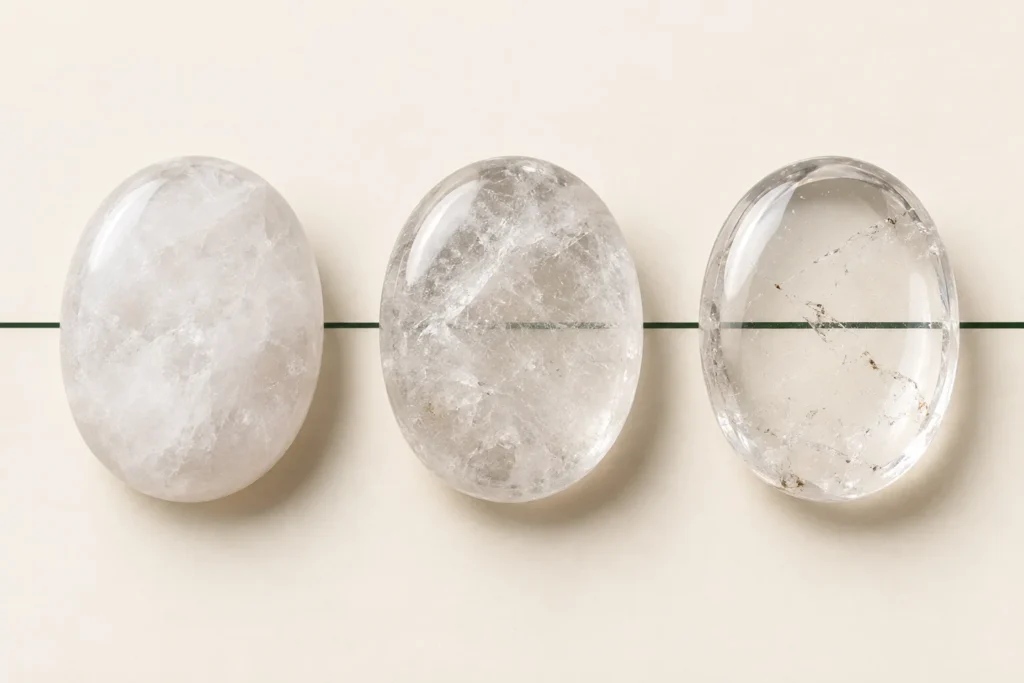
The distinction between mineral rarity and procurement rarity is the single most important concept for crystal retailers and brand owners to grasp. Below, I'll break down exactly what makes clear quartz easy or difficult to source, how quality variables affect pricing and availability, and what questions you should ask your supplier before placing an order.
Is Clear Quartz a Rare Mineral?
No. From a geological standpoint, quartz is anything but scarce. Yet the word "clear" in clear quartz creates an expectation that the raw material rarely fulfills on its own.
Clear quartz (silicon dioxide, SiO₂)1 is among the most common minerals in the Earth's crust2. According to widely cited geological references, quartz makes up roughly 10–15% of the continental crust by volume3. Major deposits exist in Brazil, Madagascar, China, the United States, and many other regions.4 As a mineral species, it is definitively not rare.
Why "Common" Doesn't Mean "Easy to Buy"
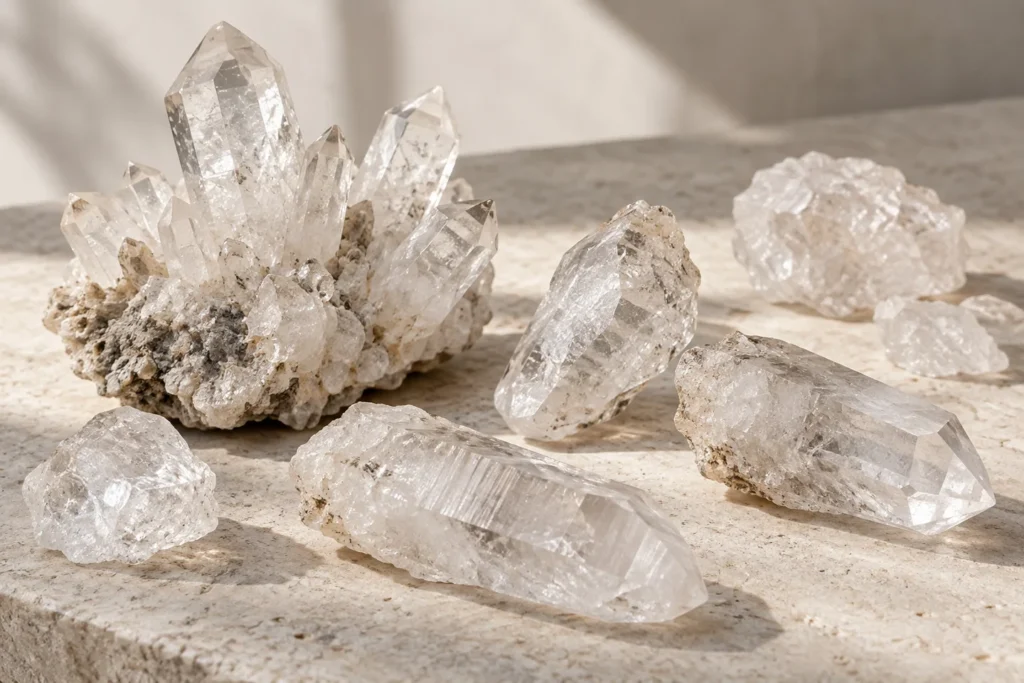
Here's where things get practical. When I say clear quartz is common, I mean rough quartz material is widely mined and traded. But the moment you add commercial requirements — a minimum transparency level, a specific size range, a particular shape, and the need to reorder the same quality next quarter — the supply picture changes dramatically.
Think of it this way: water is abundant, but clean, bottled, consistently labeled water still has a supply chain with real constraints. Clear quartz works similarly.
Mineral Rarity vs. Procurement Rarity
| Dimension | Mineral Rarity | Procurement Rarity |
|---|---|---|
| Definition | How scarce is quartz in the Earth's crust? | How hard is it to source specific quality at scale? |
| Answer for clear quartz | Very common | Depends on clarity, size, shape, and batch needs |
| Relevant to buyers? | Background knowledge only | Directly affects pricing, lead time, and restocking |
| Key variables | Geological distribution | Transparency, inclusions, dimensions, consistency |
For most B2B crystal buyers, mineral rarity is trivia. Procurement rarity is the number that shows up on your invoice.
What Drives Real Scarcity in Clear Quartz Supply?
Several factors turn an "abundant" mineral into a hard-to-source product:
- High-clarity rough material — Only a fraction of mined quartz is truly transparent.5 Most raw quartz contains cloudiness, milky zones, internal fractures, or inclusions.
- Larger sizes — A 3 cm tumbled stone is easy to source. A 10 cm sphere with near-optical clarity is a different story entirely. Larger pieces require larger sections of clean rough, which are rarer by nature.6
- Specific product forms — Towers, carved shapes, and matched pairs demand not just clean material but also skilled processing and more material waste.
- Batch consistency — Ordering 500 pieces that all look similar is far harder than ordering 500 pieces where each one is different.
- Restocking reliability — Can you get the same quality again in three months? That depends on current rough supply, not on how common quartz is in a textbook.
From our experience processing and supplying clear quartz at GD Crystal, the gap between "we have clear quartz" and "we have 200 pieces of 8–10 cm clear quartz towers at AAA clarity ready to ship and restock quarterly" is enormous.
What Quality Variables Affect Clear Quartz Rarity for Buyers?
The name "clear quartz" implies transparency, but the reality is a spectrum. Buyers who don't specify their clarity expectations upfront often receive products that disappoint their end customers.
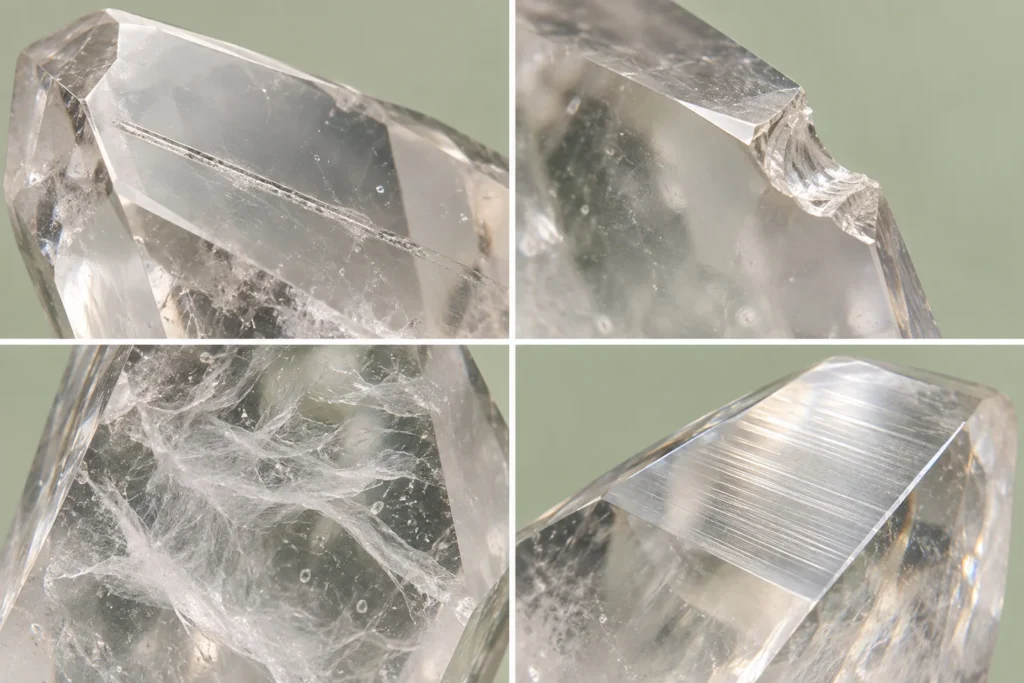
The main quality variables that affect the perceived rarity and pricing of clear quartz products are transparency level, internal inclusions, ice cracks, cloudiness, surface finish, and color consistency. Each of these factors narrows the pool of available material, making higher-grade clear quartz functionally rarer and more expensive.
Transparency and Cloudiness
Not all clear quartz is truly clear. The term "clear quartz" distinguishes it from smoky quartz, rose quartz, or amethyst — it refers to the colorless variety, not a guarantee of optical transparency.7 Many pieces sold as clear quartz have:
- Milky or foggy zones — Caused by microscopic fluid inclusions or structural irregularities8
- Semi-transparent areas — The piece transmits light but you can't see through it cleanly
- Window clarity — Only a portion of the piece is highly transparent
Truly water-clear quartz, where you can read text through the piece with minimal distortion, represents a small percentage of any given rough batch. This is the material that commands premium pricing and has genuine procurement scarcity.
Ice Cracks and Internal Fractures
"Ice cracks" (also called rainbow fractures or internal stress fractures) are extremely common in clear quartz.9 They appear as internal planes that catch light, sometimes producing rainbow effects. While some end consumers actually seek rainbow effects, most buyers who want "clear" quartz are looking for pieces with minimal internal fracturing.
Buyer tip: Always clarify with your supplier whether "clear quartz" in their listing means low-inclusion, high-transparency material or simply colorless quartz that may contain significant ice cracks and veils.
Inclusions and Internal Veils
Natural inclusions — tiny minerals, phantoms, wisps of other material — are part of what makes clear quartz natural. But for retail products where "clear" is the selling point, inclusions reduce perceived value. Common inclusions include:10
- Chlorite (green wisps)
- Rutile needles (golden threads)
- Iron oxide staining
- Phantom layers
- Unidentified mineral deposits
A batch of 100 clear quartz towers will almost always show a range of inclusion levels. Grading and sorting are essential parts of the supply chain, and they add cost.
How Quality Grades Affect Pricing
| Grade (Common Trade Terms) | Transparency | Inclusions | Ice Cracks | Relative Price | Supply Availability |
|---|---|---|---|---|---|
| B / Standard | Semi-transparent to translucent | Moderate to heavy | Common | $ | Readily available |
| A / Good | Mostly transparent | Light | Some present | $$ | Available with sorting |
| AA / High | Highly transparent | Minimal | Few or none | $$$ | Limited per batch |
| AAA / Premium | Near-optical clarity | Nearly none | None visible | $$$$ | Scarce, not always restockable |
These grade labels are not standardized across the industry. One supplier's "AAA" might be another's "A." This is exactly why I always recommend requesting actual batch photos or video before confirming an order, rather than relying on grade labels alone.
How Does Product Form Affect Clear Quartz Availability?
The shape and size of a finished clear quartz product directly determines how easy or difficult it is to source. A product form that requires more raw material, more processing skill, or more waste inherently makes that product rarer in the market.
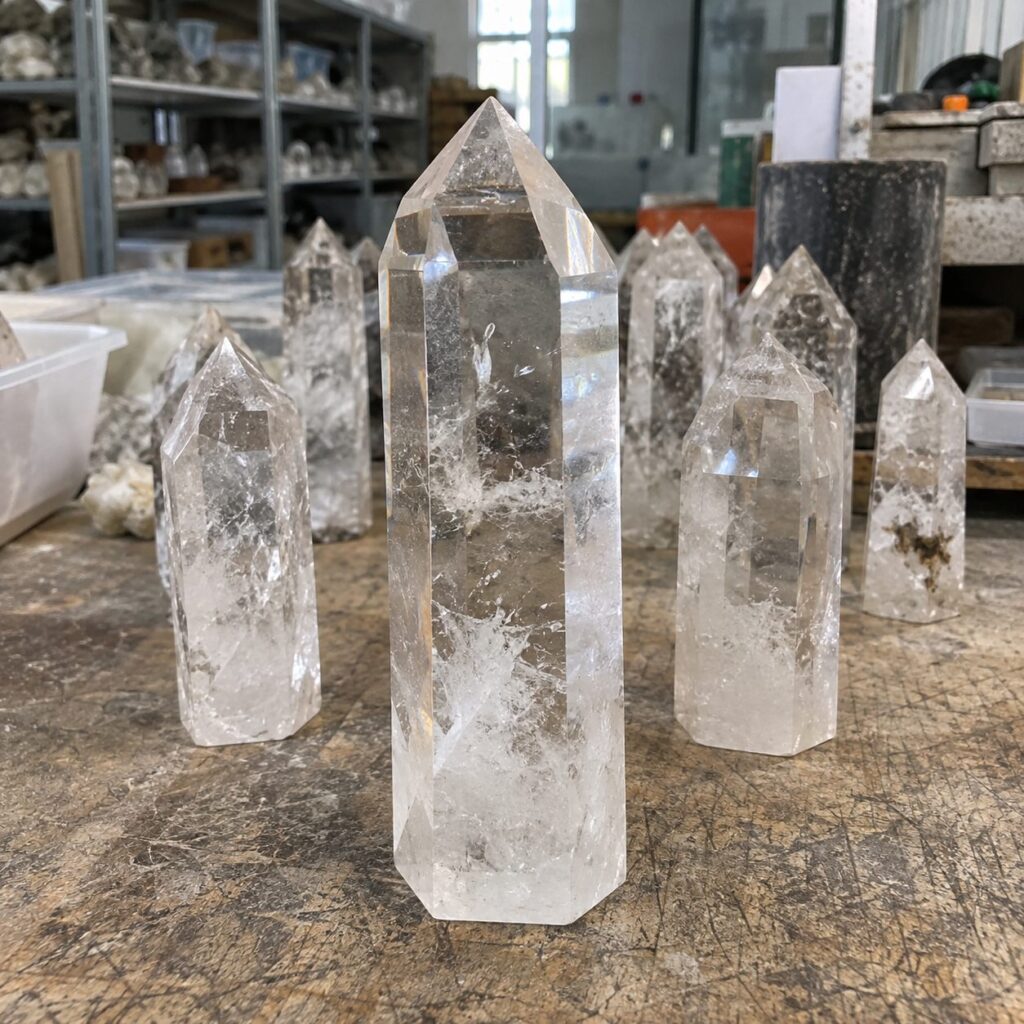
Small tumbled clear quartz stones and chip bags are among the easiest crystal products to source consistently. Large spheres, tall towers, detailed carvings, and matched sets in high clarity are significantly harder to find and restock, because they demand large sections of clean rough material and skilled processing.
Small vs. Large: The Size Threshold
Size is probably the single biggest factor that separates "commodity" clear quartz from "hard-to-get" clear quartz. Here's why:
- A 2–3 cm tumbled stone can be cut from a relatively small piece of rough. Even moderately included rough can yield acceptable small pieces after cutting and polishing.
- A 10 cm sphere requires a rough block of at least 12–14 cm in every dimension11, with no major fracture planes running through the center. Finding such clean, large rough is genuinely difficult.
- A 15+ cm clear quartz tower with high transparency? That requires an exceptional piece of rough. These pieces often come from specific pockets or veins and are not reliably available month to month.
Product Form Difficulty Ranking
| Product Form | Sourcing Difficulty | Key Constraint | Restocking Reliability |
|---|---|---|---|
| Tumbled stones (small) | Low | Minimal — abundant rough works | High |
| Chips and gravel | Low | Minimal | High |
| Palm stones | Low to moderate | Needs clean flat sections | Moderate to high |
| Hearts (small to medium) | Moderate | Shape wastes material | Moderate |
| Points / towers (small) | Moderate | Natural point preferred | Moderate |
| Points / towers (large, high clarity) | High | Large clean rough required | Low to moderate |
| Spheres (medium to large) | High | Needs clean block in all dimensions | Low |
| Detailed carvings | High | Skilled labor + clean material | Low |
| Matched pairs or sets | Very high | Must sort from same batch | Very low |
Batch Consistency: The Hidden Rarity
One challenge I see repeatedly with our buyers: they receive a first shipment they love, photograph it, list it online, and then expect the second order to look identical. With clear quartz, this is not always possible.
Natural material varies. Even rough from the same mine and the same extraction period will show differences in clarity, inclusion patterns, and surface character. When you factor in:
- Seasonal changes in rough supply
- Different pockets or veins producing different quality
- Processing variations between batches
- Sorting and grading subjectivity
…you start to see why batch consistency is itself a form of rarity. A supplier who can deliver consistent quality across multiple orders is providing something genuinely scarce in this market.
At GD Crystal, we handle this by maintaining close communication about current rough availability and being transparent when a particular quality level may not be restockable at the same price or timeline. We believe it's better to set realistic expectations upfront than to surprise buyers with mismatched reorders.
What Should B2B Buyers Ask When Sourcing Clear Quartz?
Many sourcing disappointments happen because the buyer asked for "clear quartz" without specifying what "clear" actually means to their business. The more precisely you communicate your requirements, the better your supplier can match (or honestly decline) the request.
B2B buyers should specify size range, desired transparency level, acceptable inclusions, product shape, quantity, whether batch photos or samples are needed, MOQ flexibility, and whether future restocking at the same quality matters. These details turn a vague inquiry into a workable order.
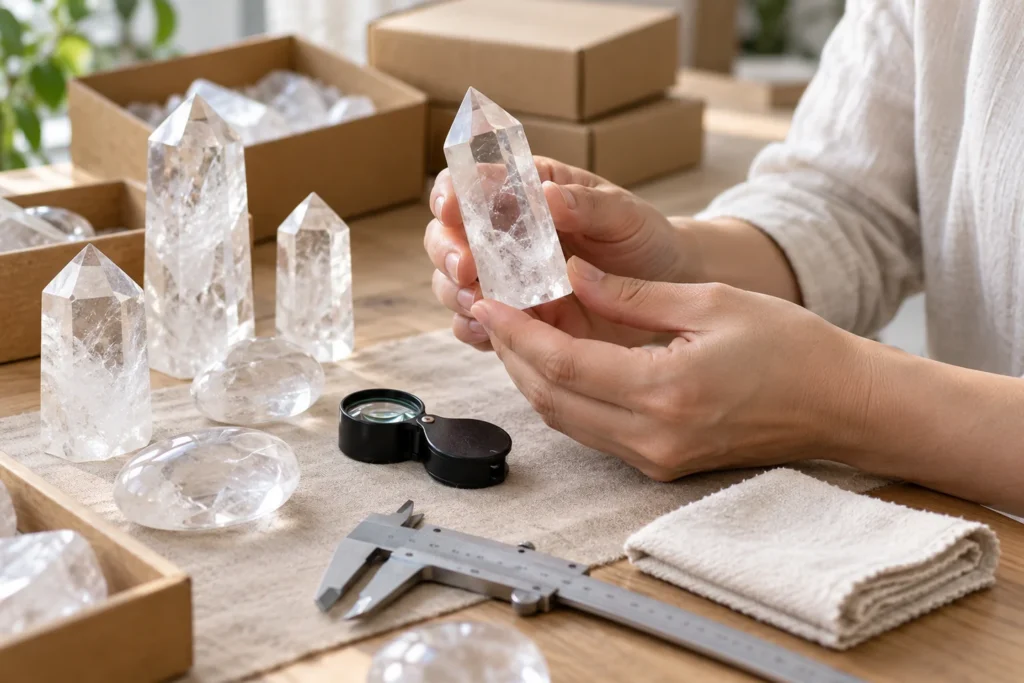
The Better Inquiry Checklist
Here's a practical framework I recommend to every buyer reaching out for clear quartz wholesale:
- Product form — Tower, sphere, palm stone, tumbled, carved shape, etc.
- Size range — Specify in centimeters or inches, with acceptable minimum and maximum
- Clarity expectation — Describe what you need: "mostly transparent," "some cloudiness acceptable," "no visible inclusions," etc. Reference photos are extremely helpful.
- Acceptable inclusions — Are ice cracks okay? Small phantoms? Rainbow fractures? Or do you need near-flawless pieces?
- Quantity — Total pieces needed for this order
- MOQ flexibility — Can you meet the supplier's minimum, or do you need a smaller trial order?
- Sample or photo requirements — Do you want batch photos before production? A physical sample shipment?
- Restocking needs — Is this a one-time purchase, or do you plan to reorder regularly? If regular, what frequency and quantity?
- Budget range — Even a rough per-piece or per-kilogram budget helps the supplier recommend the right grade
- Destination and packaging — Where is it shipping, and do you need individual wrapping, branded packaging, or bulk packing?
Why Reference Photos Matter More Than Grade Labels
I can't stress this enough: send your supplier a photo of what you want. Grade labels like "AAA" or "gem grade" mean different things to different suppliers, different regions, and different product categories. A photo eliminates ambiguity.
When you send a reference photo, a good supplier can tell you:
- Whether that quality level is currently available
- What the realistic price range would be
- Whether restocking at that quality is likely
- What compromises might be necessary at a lower budget
Common Misconceptions in Clear Quartz Sourcing
- "Clear quartz should always be cheap because it's common." — The mineral is common. High-clarity finished products at specific sizes are not.
- "If a supplier has it now, they'll always have it." — Rough supply fluctuates. Current availability is not a permanent guarantee.
- "AAA grade means the same thing everywhere." — It doesn't. Always verify with photos.
- "Larger pieces are just proportionally more expensive." — They're often disproportionately more expensive because the required rough is exponentially harder to find.
Frequently Asked Questions
Is clear quartz valuable enough to sell as a retail product?
Yes. Clear quartz remains one of the most popular and consistently selling crystal products in retail. Its broad consumer appeal, versatility in product forms, and range of price points — from affordable tumbled stones to premium display spheres — make it a reliable SKU for most crystal businesses.
Does "clear quartz" always mean the piece is perfectly transparent?
No. "Clear quartz" refers to colorless quartz as a mineral variety, not a transparency guarantee. Most clear quartz contains some degree of cloudiness, ice cracks, or inclusions. Buyers should specify their transparency expectations and request batch photos before confirming orders.
Can I get consistent clear quartz quality across multiple orders?
Consistency is possible but not guaranteed. It depends on current rough material availability, your supplier's sorting capabilities, and honest communication about what's realistically available. Work with a supplier who will update you on batch quality changes rather than silently substituting lower grades.
What size of clear quartz is hardest to source?
Generally, the larger and more transparent the piece, the harder it is to source. Spheres above 8 cm, towers above 12 cm, and any large carved form in high clarity are the most challenging to procure consistently. Small tumbled stones and chips are the easiest.
How should I evaluate a new clear quartz supplier?
Request actual batch photos or video (not catalog images), ask about current rough availability, clarify grade definitions, discuss MOQ and trial order options, and ask whether they can communicate honestly when a particular quality isn't available. A supplier who says "we can always get anything" may not be the most reliable partner.
Conclusion
So, how rare is clear quartz? As a mineral, it's one of the most abundant on Earth. As a procurement-ready product that meets your specific clarity, size, shape, and consistency requirements, it can be genuinely difficult to source. The rarity that matters to your business isn't geological — it's commercial.
Understanding this distinction helps you set realistic expectations, ask better questions, communicate more effectively with suppliers, and make smarter purchasing decisions. Whether you're stocking affordable tumbled stones or premium display-grade spheres, the key is specifying exactly what you need and working with a supplier who communicates honestly about what's available.
At GD Crystal, we handle clear quartz inquiries daily and we're always happy to discuss current availability, share batch photos, and help you find the right quality for your budget. If you're sourcing clear quartz for your shop or brand, reach out with your specifications and let's talk about what we can do for your next order.
References
- "Quartz", https://en.wikipedia.org/wiki/Quartz. A mineralogical reference identifies quartz as crystalline silicon dioxide, SiO₂, and describes rock crystal as the transparent, colorless variety of quartz. Evidence role: definition; source type: encyclopedia. Supports: A neutral mineral reference should verify that quartz is silicon dioxide and that rock crystal is the transparent, colorless variety.. ↩
- "Quartz | U.S. Geological Survey", https://www.usgs.gov/media/images/quartz. Geological references describe quartz as one of the most abundant and widespread minerals in Earth’s crust, supporting the article’s distinction between geological abundance and commercial availability. Evidence role: general_support; source type: government. Supports: A geological source should support that quartz is a major, widespread crustal mineral.. Scope note: This supports mineral abundance generally, not the availability of particular commercial grades. ↩
- "Earth's crust", https://en.wikipedia.org/wiki/Earth%27s_crust. Geology teaching references commonly estimate quartz as comprising about 10–15% of continental crust by volume, though exact values vary with the crustal model and rock assemblage considered. Evidence role: statistic; source type: education. Supports: A geology textbook or university source should verify the approximate percentage of quartz in continental crust.. Scope note: The percentage is an approximate educational estimate rather than a direct measurement for all crustal settings. ↩
- "The quartz crystal deposits of western Arkansas", https://www.usgs.gov/publications/quartz-crystal-deposits-western-arkansas-0. Mineral locality databases and geological references document quartz occurrences in Brazil, Madagascar, China, the United States, and many other countries, supporting the statement that quartz is geographically widespread. Evidence role: general_support; source type: research. Supports: A mineral locality database or geological survey should document quartz occurrences in the listed countries.. Scope note: Such sources establish occurrence and locality breadth, not current wholesale availability or grade distribution. ↩
- "Synthetic Rock Crystal Quartz Cluster with Natural-Looking …", https://www.gia.edu/gems-gemology/winter-2022-gemnews-synthetic-rock-crystal-quartz. Gemological and mineralogical sources note that natural quartz commonly contains inclusions, veils, fractures, or cloudy zones, which means that highly transparent rock-crystal material represents a selected subset of mined quartz. Evidence role: general_support; source type: research. Supports: A gemology or mineralogy source should explain that quartz commonly contains inclusions, veils, fractures, or cloudiness that affect transparency.. Scope note: This supports the mechanism and qualitative selection issue, but it may not provide a precise percentage for any specific mine or batch. ↩
- "The Challenges of Cutting a Large Gem Opal Rough", https://www.gia.edu/gems-gemology/summer-2016-challenges-cutting-large-gem-opal-rough. Gem-cutting references explain that larger finished stones require sufficiently large rough with acceptable clarity and freedom from fractures, so defects reduce yield more severely as finished size increases. Evidence role: mechanism; source type: education. Supports: A gemology or lapidary source should explain that cutting larger clean objects requires larger defect-free rough and that inclusions or fractures reduce usable yield.. Scope note: This supports the cutting-yield mechanism generally rather than documenting clear quartz wholesale scarcity directly. ↩
- "Quartz", https://en.wikipedia.org/wiki/Quartz. Mineralogical references distinguish colorless rock crystal from colored quartz varieties such as smoky quartz, rose quartz, and amethyst; this terminology does not by itself grade optical clarity. Evidence role: definition; source type: encyclopedia. Supports: A mineral reference should define rock crystal or clear quartz as the colorless variety of quartz and distinguish it from colored varieties.. Scope note: The source defines mineral varieties but may not address trade usage of the phrase “clear quartz.” ↩
- "Unusual Purple Fluid in Quartz", https://www.gia.edu/gems-gemology/fall-2022-microworld-unusual-purple-fluid-in-quartz. Mineralogical studies attribute the milky appearance of many quartz specimens to abundant microscopic fluid inclusions and related light-scattering defects within the crystal. Evidence role: mechanism; source type: paper. Supports: A mineralogy paper should support that microscopic fluid inclusions and related defects can scatter light and produce milky or cloudy quartz.. Scope note: This explains a common cause of cloudiness, but individual specimens may be cloudy for additional or mixed reasons. ↩
- "Tree in Rock Crystal Quartz | Gems & Gemology", https://www.gia.edu/gems-gemology/fall-2020-microworld-tree-in-rock-crystal-quartz. Gemological sources describe internal fractures, veils, and inclusions as common natural features in quartz; light interacting with such fractures can produce visible rainbow effects. Evidence role: mechanism; source type: education. Supports: A gemology source should explain internal fractures in quartz and how reflected or refracted light can create rainbow appearances.. Scope note: The source may not use the trade phrase “ice cracks” or quantify how common they are in wholesale clear quartz lots. ↩
- "Silvery Rutile “Tufts” in Quartz | Gems & Gemology", https://www.gia.edu/fall-2017-microworld-silvery-rutile-inclusions-quartz. Mineralogical references record a wide range of quartz inclusions, including chlorite, rutile needles, iron-oxide staining, and phantom growth zones, supporting the article’s examples of visible internal features. Evidence role: general_support; source type: research. Supports: A mineralogical source should verify that quartz commonly hosts mineral inclusions such as chlorite, rutile, iron oxides, and phantom growth zones.. Scope note: This supports the inclusion examples, not their frequency in any particular commercial batch. ↩
- "How It's Made: A Stone Sphere", https://www.youtube.com/watch?v=MoV-emestnA. Lapidary sphere-making guidance explains that finished spheres must be cut from oversize rough to allow for trimming, grinding, and polishing losses, supporting the need for rough larger than the final diameter. Evidence role: mechanism; source type: education. Supports: A lapidary education source should explain that a sphere must be cut from rough larger than the final diameter to allow for shaping, grinding, and polishing.. Scope note: This supports the production principle, while the exact 12–14 cm allowance for a 10 cm sphere may vary with rough shape, defects, and workshop practice. ↩