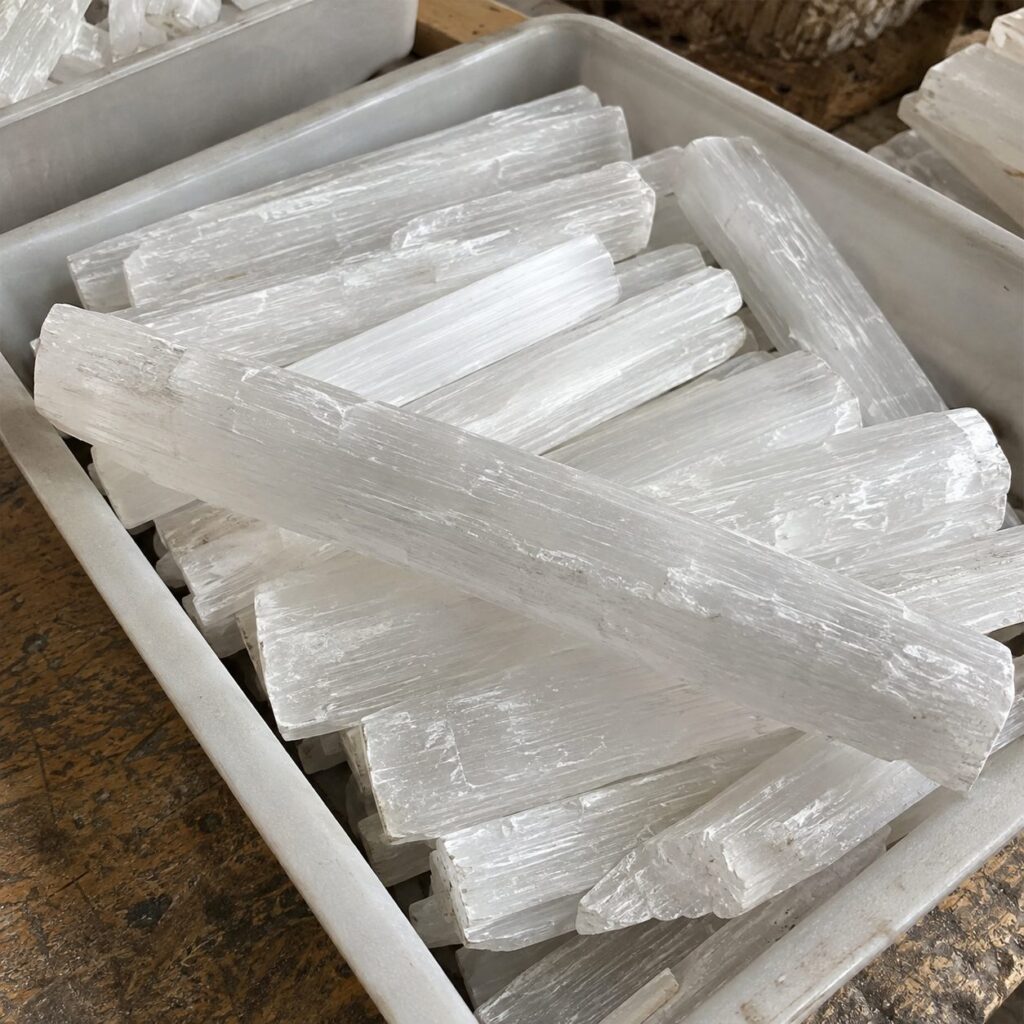
Selenite is one of the most popular products in the crystal retail market — and one of the most frequently damaged during storage, shipping, and display. If you stock selenite towers, bowls, or charging plates, pairing them carelessly with the wrong materials or care methods can lead to scratched inventory, customer complaints, and avoidable returns.
What not to combine with selenite comes down to a short list of practical risks rather than mysterious energy conflicts. Avoid combining selenite with water or moisture-based cleaning, harder or sharp-edged stones in direct contact, dyed or coated products that may transfer color, and unverified metaphysical "conflict" claims that expose your brand to credibility issues.
Understanding these risks matters whether you're assembling gift sets, designing retail displays, writing product descriptions, or simply packing a mixed wholesale order. Below, I'll walk through each category of what to avoid — and more importantly, why — so you can protect your inventory and give your customers accurate guidance.
Why Should Selenite Not Be Combined with Water or Moisture?
Water damage is the single most common — and most preventable — cause of selenite product loss in the crystal supply chain. Yet many retail care guides still lump selenite in with "wash your crystals under running water" advice, leading to cloudy surfaces, dissolved edges, and unhappy end customers.
Selenite should not be combined with water, saltwater, steam, or any moisture-heavy cleaning method because it is a hydrous calcium sulfate mineral with a Mohs hardness of only 21. Prolonged or repeated water exposure can dissolve the surface, dull the polish, and weaken the structural integrity of finished pieces.2
What Happens When Selenite Gets Wet?
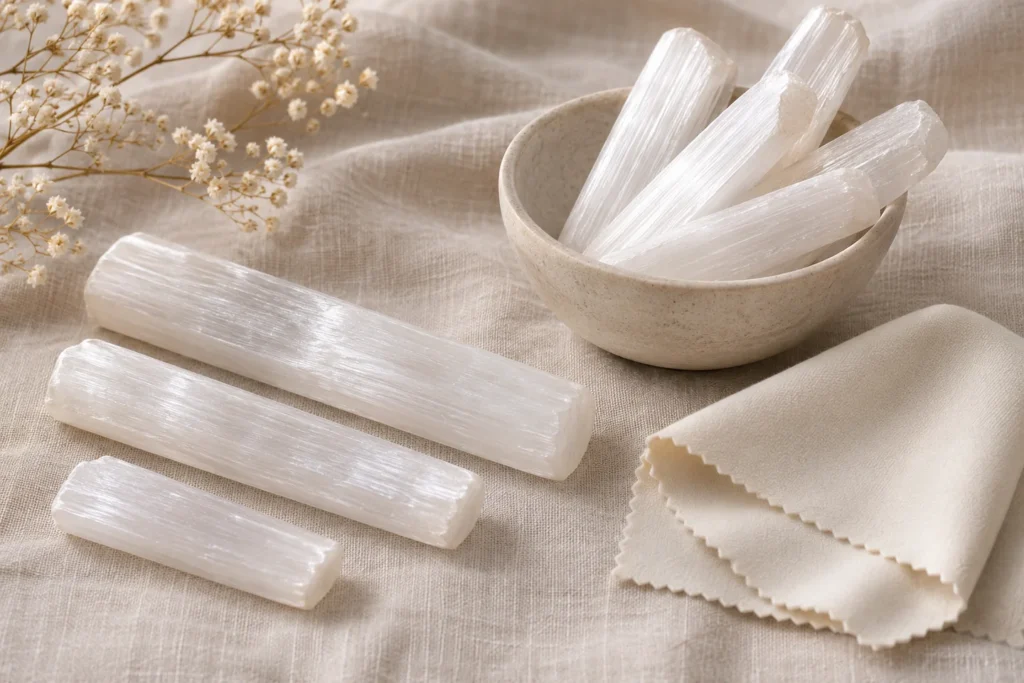
Selenite (a crystalline form of gypsum, CaSO₄·2H₂O)3 is slightly water-soluble4. Here's what that means in practical terms for inventory and retail:
- Brief splash or wipe: Usually no visible damage if dried immediately. But repeated brief exposures accumulate.
- Soaking or submerged cleaning: Surface becomes cloudy, loses its characteristic silky luster. Thin pieces (like wands or flat slabs) can become fragile.
- Saltwater baths: Salt accelerates surface degradation.5 Selenite stored near coastal humidity or combined with saltwater "cleansing" kits is especially at risk.
- Steam or humid display environments: Persistent humidity (e.g., a bathroom display, a spa retail shelf, or a poorly sealed shipping container) can slowly degrade surface quality over weeks or months.
Practical Implications for Retailers and Sellers
| Scenario | Risk Level | Recommended Action |
|---|---|---|
| Including selenite in a "crystal bath set" | High | Do not include. Offer dry-use alternatives. |
| Displaying selenite in a humid retail space | Medium | Use dehumidifiers or sealed display cases. |
| Packing selenite with wet-wiped stones | Medium | Ensure all items are fully dry before packing together. |
| Writing "cleanse under running water" in product care cards | High | Explicitly exclude selenite from water-based care instructions. |
| Shipping during monsoon/rainy season without moisture barriers | Medium | Add silica gel packets and moisture-barrier wrapping. |
From our experience at GD Crystal, the most frequent question we get from first-time selenite buyers is some variation of "can I include a selenite bowl in a bath-ritual gift box?" The short answer is: don't. The longer answer involves explaining to your own customers why selenite is a dry-display and dry-use product. A simple care card insert can save you significant return volume.
Tip for ecommerce sellers: If your product photos show selenite near water features or in bathroom settings for aesthetic reasons, add a visible disclaimer. Otherwise your customer support inbox will fill up with damage complaints.
Can Selenite Be Stored or Displayed with Harder Stones?
Mixed-crystal displays and curated gift sets are a major revenue driver for crystal retailers. But selenite's softness creates real problems when it shares space with most other popular stones. Ignoring this during packing, shelving, or kit assembly leads to scratches, chips, and inventory downgrades.
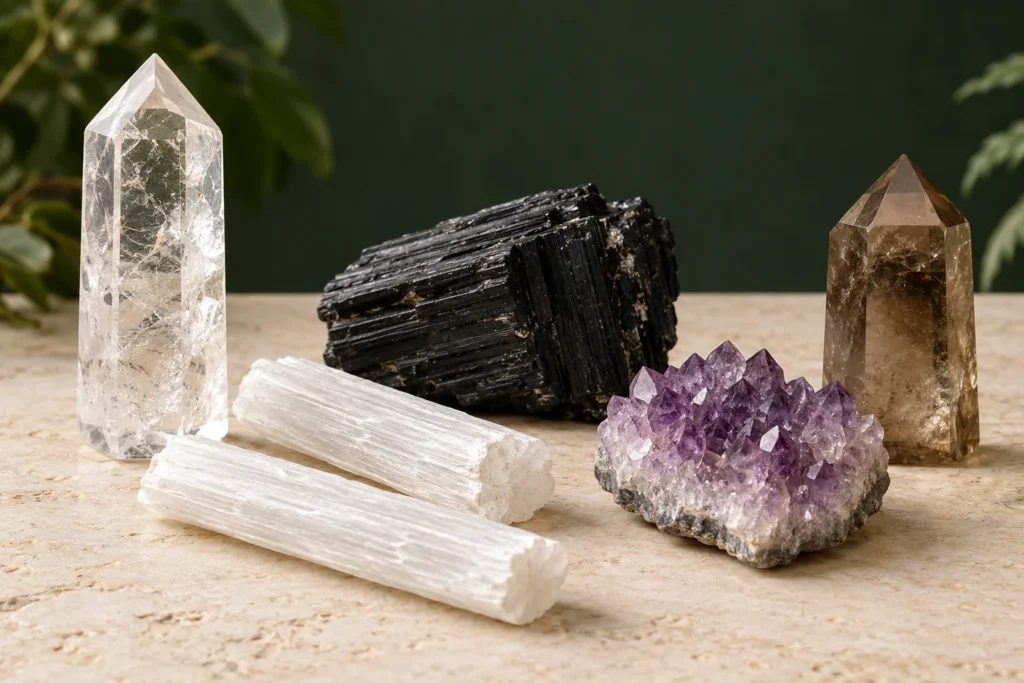
Selenite should generally not be stored in direct, bare contact with harder stones. At Mohs hardness 2, selenite is softer than nearly every other crystal product commonly sold at retail — including rose quartz (7), amethyst (7), black tourmaline (7–7.5), and even fluorite (4)6. Any friction, vibration, or stacking pressure between selenite and these harder materials can scratch or chip the selenite surface.7
The Hardness Gap Is the Core Issue
This isn't about energy or aesthetics — it's physics. Here's a quick reference for common pairings:
| Stone | Mohs Hardness | Scratch Risk to Selenite |
|---|---|---|
| Clear quartz | 7 | Very high |
| Amethyst | 7 | Very high |
| Rose quartz | 7 | Very high |
| Citrine | 7 | Very high |
| Black tourmaline | 7–7.5 | Very high |
| Labradorite | 6–6.5 | High |
| Fluorite | 4 | Moderate |
| Calcite | 3 | Low–moderate |
| Satin spar (fibrous selenite) | 2 | Minimal |
How to Combine Selenite Safely in Mixed Products
You don't have to avoid mixed displays entirely. You just need barriers:
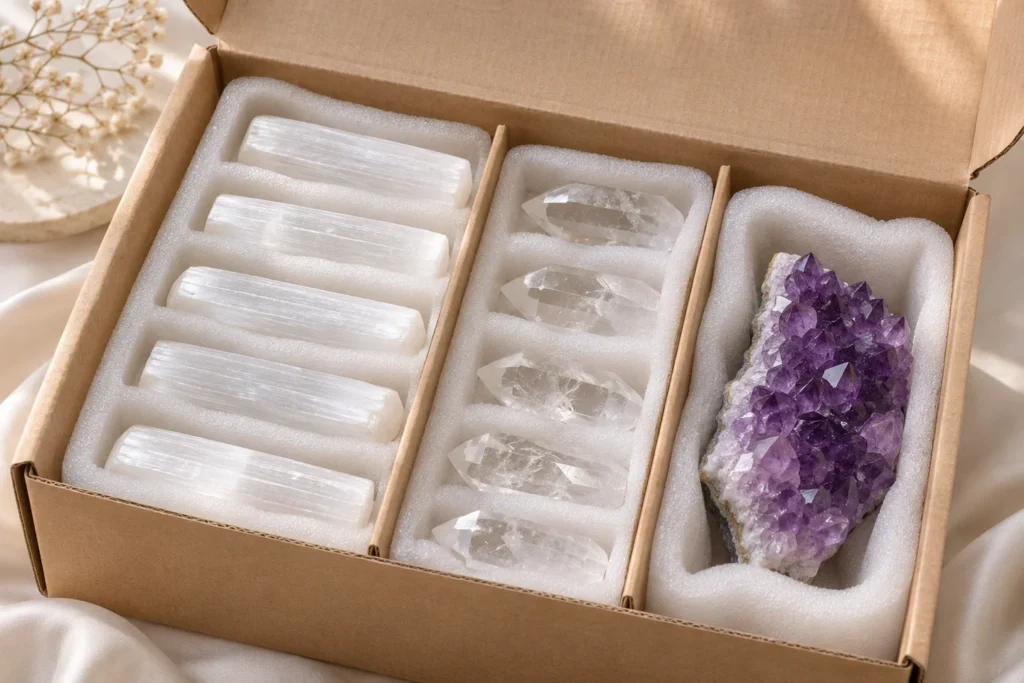
- Individual wrapping: Wrap each selenite piece in soft tissue, foam sleeves, or microfiber cloth before placing it in a shared box or tray.
- Compartmented trays: Use divided display trays (velvet-lined or foam-insert) so stones never touch each other directly.
- Shelf spacing in retail: Leave at least a finger's width of space between selenite and adjacent harder products. Vibration from foot traffic or nearby doors can cause items to shift.
- Shipping padding: For mixed wholesale orders, never let selenite rattle loose against quartz or agate pieces. Use individual compartments or wrap each item separately within the carton.
I recall a situation where a buyer ordered a mixed crystal gift set — selenite wands alongside raw amethyst clusters — and wanted them packed together in a single pouch. We flagged the scratch risk before shipping and suggested foam dividers. The buyer later told us this one suggestion saved them from what would have been a batch of unsellable, visibly scratched selenite wands. These are the small details that matter in B2B crystal supply.
Should You Combine Selenite with Dyed, Coated, or Treated Stones?
The crystal market is full of enhanced products — dyed agate slices, titanium-coated quartz clusters, resin-stabilized turquoise, and more. Combining these with selenite introduces a different kind of risk: color transfer, coating residue, and packaging contamination.
Selenite should not be combined in direct contact with dyed, coated, or surface-treated stones unless you have verified, batch by batch, that no color bleeding, coating flaking, or chemical transfer will occur. Selenite's soft, slightly porous surface makes it especially vulnerable to staining from contact with unstable dyes or coatings.
Why This Risk Is Harder to Predict
Unlike hardness-based scratch risk (which is consistent and measurable), color transfer and coating stability vary dramatically by:
- Dye type and quality: Some dyed agates bleed color readily when warm or humid; others are stable.8 You cannot tell by looking.
- Coating method: Titanium or metallic vapor coatings are generally stable, but low-quality coatings can flake, especially under friction.9
- Batch variation: A dyed product that was stable in one batch may bleed in the next if the supplier changed dye concentration or curing time.
- Packaging environment: Heat during transit, humidity in storage, or sealed plastic bags that trap moisture can all accelerate color transfer.
Best Practices for Sellers
- Test before committing. When creating a mixed product set or display, place a sample of the dyed/coated item against a piece of white selenite for 48–72 hours in conditions similar to your storage or shipping environment. Check for any color marks or residue.
- Wrap individually. If you must combine them, ensure both the selenite and the treated stone are individually wrapped so no surface-to-surface contact occurs.
- Confirm treatment details with your supplier. At GD Crystal, we encourage buyers to ask specifically about material treatment, dye stability, and coating type for any product they plan to combine with selenite. These details should be confirmed per batch — not assumed from a previous order.
- Photograph before packing. Document the condition of selenite pieces before they go into mixed sets. This protects you if a dispute arises about damage during transit versus pre-existing staining.
Key point: The risk here isn't that dyed or coated stones are inherently "bad." It's that their surface stability is a variable, not a constant. Treat it like any other quality-control checkpoint.
What About Combining Selenite with Certain Crystals for "Energy" Reasons?
If you search "what not to combine with selenite," most online results will give you a list of crystals that supposedly conflict with selenite's energy — black tourmaline, malachite, carnelian, or other specific stones. This section addresses how to handle these claims as a retailer or brand.
There is no scientifically verified basis for claiming that selenite has energy conflicts with specific crystal types.10 These pairing recommendations come from metaphysical traditions and personal belief systems. As a seller, you can reference these traditions as part of your product storytelling, but presenting them as fact creates credibility risk and potential regulatory exposure.11
Why This Matters for Your Business
The metaphysical crystal market is large and genuine — millions of customers buy crystals partly or entirely for spiritual reasons, and there is nothing wrong with serving that market respectfully. The issue arises when sellers:
- State energy claims as scientific facts. "Selenite will neutralize negative energy" is a belief statement. Presenting it as verified fact can erode trust with discerning buyers and, in some markets, may run afoul of advertising regulations.
- Publish rigid "never combine" lists without explanation. If you tell customers to never put selenite near malachite but offer no reasoning — physical or traditional — you're just generating anxiety, not providing useful guidance.
- Confuse physical care advice with spiritual advice. "Don't combine selenite with water" is physical product care. "Don't combine selenite with carnelian" is a belief-based suggestion. Mixing these two categories without distinction undermines the credibility of your genuinely useful care advice.
How to Handle This in Your Product Content
Here's a framework I recommend based on what we see working well for our retail and brand customers:
| Content Type | Recommended Approach |
|---|---|
| Product care cards | Focus on physical care: avoid water, avoid hard stone contact, store separately. |
| Blog posts / educational content | You may reference traditional pairing beliefs, but clearly label them as such. |
| Product descriptions | Lead with material facts (size, weight, hardness, finish). Add traditional use notes as secondary context. |
| Customer Q&A responses | Answer physical care questions directly. For metaphysical questions, suggest the customer follow their own tradition or consult a practitioner they trust. |
A Practical Example
Instead of writing:
"Never place selenite with black tourmaline — the energies will clash and cancel each other out."
Consider writing:
"Some crystal practitioners prefer to display selenite separately from grounding stones like black tourmaline, based on traditional pairing beliefs. From a product care perspective, black tourmaline (Mohs 7–7.5) is significantly harder than selenite and should not be stored in direct contact to avoid scratching."
This version respects the customer's beliefs, gives a verifiable physical reason for separate storage, and avoids making an unverifiable claim sound like a product specification.
How Should Selenite Be Packaged When Combined with Other Products?
Packaging is where all of these combination risks converge. Whether you're shipping a wholesale order with mixed crystals, assembling a retail gift set, or packing individual ecommerce orders, the packaging method determines whether your selenite arrives intact and unmarked.
Selenite requires individual wrapping, physical separation from harder or treated materials, and moisture protection whenever it is packaged alongside other crystal products. Skipping any of these steps is the most common cause of preventable selenite damage in the B2B and DTC supply chain.
Packaging Checklist for Selenite in Mixed Orders
- Individual foam sleeves or bubble wrap for each selenite piece — even small tumbled or palm-sized items.
- Cardboard dividers or compartmented inserts in cartons containing both selenite and harder stones.
- Silica gel packets in sealed bags or cartons, especially for ocean freight or shipments to humid climates.
- "Fragile / Handle with Care" markings on outer packaging. Selenite is far more breakage-prone than quartz-family products.
- Dry packing verification: Confirm no items are damp or freshly cleaned when they go into the box.
What We See Go Wrong Most Often
At GD Crystal, when buyers report selenite damage on arrival, the cause almost always traces back to one of three packaging failures:
- Selenite packed loose against quartz or agate — scratch and chip damage.
- No moisture barrier on ocean shipments — cloudy, degraded surface finish.
- Dyed items packed touching white selenite — visible color staining that cannot be reversed.
All three are preventable with basic packaging discipline. If you're sourcing from any supplier, it's worth confirming their standard packaging method for selenite before placing an order — and requesting adjustments if needed.
Frequently Asked Questions
Can selenite go in water for a short time?
Brief, accidental water contact (a quick splash) usually won't cause visible damage if the selenite is dried immediately. However, repeated short exposures accumulate surface degradation over time. It's best practice to keep selenite completely dry and never include it in water-based rituals or cleaning routines.
Does selenite actually scratch that easily?
Yes. At Mohs hardness 2, selenite can be scratched by a fingernail.12 Any stone harder than 2 — which includes virtually every other crystal product on the market — can mark selenite's surface. This is why individual wrapping and separated storage are essential, not optional.
Can I sell selenite charging plates with other crystals placed on top?
Selenite charging plates are a popular retail item, and customers will place other crystals on them. The key is to advise customers that harder stones may gradually scratch the plate's surface over time. Some sellers include a thin fabric pad with their charging plates to minimize direct contact — a simple addition that reduces complaints.
Is it true that selenite should never be near black tourmaline?
This is a common claim in metaphysical crystal pairing traditions, but it has no verified physical or scientific basis. From a product care standpoint, the real concern is that black tourmaline (Mohs 7–7.5) is much harder than selenite and will scratch it on contact. Separate them physically, and let your customers decide on spiritual pairing based on their own beliefs.
How should I describe selenite combinations in my product listings?
Focus your product descriptions on physical care facts: avoid water, store away from harder stones, handle gently. If you reference traditional crystal pairing beliefs, clearly label them as traditional or practitioner-based perspectives rather than verified product specifications. This approach builds trust and reduces return disputes.
Conclusion
Knowing what not to combine with selenite is fundamentally a product care and business communication question. Keep selenite away from water and moisture. Separate it physically from harder stones during storage, display, and shipping. Test any combination with dyed or coated products before committing to mixed sets. And present metaphysical pairing traditions honestly — as beliefs, not as product specs.
These steps protect your inventory, reduce returns, and build customer trust in your brand's expertise. If you're sourcing selenite products for your shop or brand and want to discuss material details, packaging options, or product selection for your specific retail needs, reach out to GD Crystal for a conversation about your next order.
References
- "Mohs scale", https://en.wikipedia.org/wiki/Mohs_scale. A mineral reference lists gypsum with a Mohs hardness of 2, supporting the article's classification of selenite as a very soft mineral. Evidence role: definition; source type: institution. Supports: Gypsum, including selenite, is assigned Mohs hardness 2.. ↩
- "The kinetics of dissolution of calcium sulphate dihydrate in …", https://ui.adsabs.harvard.edu/abs/1976JCrGr..35…79C/abstract. Experimental and geochemical studies of gypsum dissolution show that calcium sulfate dihydrate dissolves in contact with water, supporting the mechanism by which repeated wetting can erode selenite surfaces. Evidence role: mechanism; source type: paper. Supports: Gypsum dissolves when exposed to water, providing a mechanism for surface loss and degradation after repeated wetting.. Scope note: Such studies usually measure mineral dissolution rather than consumer-product polish loss, so the support is mechanistic rather than a direct retail damage-rate study. ↩
- "Gypsum – Common Minerals – University of Minnesota", https://commonminerals.esci.umn.edu/minerals-g-m/gypsum. A mineralogical reference identifies selenite as a transparent crystalline variety of gypsum and gives gypsum's composition as calcium sulfate dihydrate, CaSO₄·2H₂O. Evidence role: definition; source type: encyclopedia. Supports: Selenite is a variety of gypsum, and gypsum is calcium sulfate dihydrate, CaSO₄·2H₂O.. ↩
- "Gypsum", https://en.wikipedia.org/wiki/Gypsum. Chemistry and mineral references report that gypsum, calcium sulfate dihydrate, is sparingly soluble in water, which explains why repeated wetting can affect selenite surfaces. Evidence role: mechanism; source type: education. Supports: Gypsum/calcium sulfate dihydrate has measurable, limited solubility in water.. Scope note: The source would support the dissolution mechanism, not quantify damage to finished retail pieces under every handling condition. ↩
- "Gypsum: an old product with a new use", https://crops.extension.iastate.edu/encyclopedia/gypsum-old-product-new-use. Research on gypsum dissolution and salt weathering indicates that saline solutions and salt crystallization processes can contribute to gypsum surface deterioration, providing a mechanism for greater risk from saltwater exposure. Evidence role: mechanism; source type: paper. Supports: Saline environments can influence gypsum dissolution and salt-related deterioration processes.. Scope note: The evidence is contextual because it concerns gypsum chemistry and stone deterioration generally, not controlled tests on retail selenite bowls or wands. ↩
- "Mohs scale", https://en.wikipedia.org/wiki/Mohs_scale. Mineralogical databases list quartz varieties such as rose quartz and amethyst at Mohs hardness 7, fluorite at 4, and tourmaline commonly around 7 to 7.5, supporting the article's hardness comparison with selenite. Evidence role: general_support; source type: institution. Supports: The listed minerals have Mohs hardness values higher than gypsum/selenite.. Scope note: Hardness may vary slightly by specimen and reference, but the cited ranges are sufficient to establish that these stones are harder than selenite. ↩
- "Mohs Hardness Scale", https://www.nps.gov/articles/mohs-hardness-scale.htm. References on the Mohs hardness scale explain that minerals with higher hardness scratch minerals with lower hardness, supporting the article's warning that harder stones can abrade selenite during contact. Evidence role: mechanism; source type: encyclopedia. Supports: On the Mohs scale, harder minerals can scratch softer minerals.. Scope note: The source supports the scratch mechanism but does not directly measure chip frequency during shipping or retail display. ↩
- "An Introduction to Gem Treatments", https://www.gia.edu/gem-treatment. Gemological treatment references describe dyeing as a common enhancement for agate and other gem materials and note that treated colors can vary in stability, supporting the need to treat dyed agate as a batch-specific staining risk. Evidence role: general_support; source type: institution. Supports: Dyed gemstone materials can vary in stability and may be affected by environmental conditions or handling.. Scope note: The source may not specifically test dyed agate pressed against selenite in humid packaging, so the support is contextual rather than direct proof of transfer in this exact pairing. ↩
- "Effects of surface coating on reducing friction and wear … – PMC", https://pmc.ncbi.nlm.nih.gov/articles/PMC5090599/. Materials-science literature on physical vapor deposition and thin-film coatings identifies adhesion and abrasive wear as factors in coating failure, supporting the article's caution that low-quality metallic coatings may flake under friction. Evidence role: mechanism; source type: paper. Supports: Thin metallic coatings can fail through poor adhesion or wear under friction.. Scope note: The evidence concerns coating behavior generally and may not directly evaluate titanium-coated quartz specimens sold in crystal retail. ↩
- "Placebo effects in alternative medical treatments for anxiety", https://pmc.ncbi.nlm.nih.gov/articles/PMC13064771/. Critical reviews and discussions of crystal healing report a lack of scientific evidence for specific crystal effects beyond belief or placebo-related mechanisms, supporting the article's distinction between metaphysical pairing traditions and verified material facts. Evidence role: expert_consensus; source type: research. Supports: Scientific literature has not verified specific energetic effects or conflicts among crystals.. Scope note: Such sources usually address crystal-healing claims broadly rather than the specific alleged conflict between selenite and any named stone. ↩
- "Health Products Compliance Guidance", https://www.ftc.gov/business-guidance/resources/health-products-compliance-guidance. Federal Trade Commission guidance states that advertisers must substantiate objective product claims and that health-related claims generally require competent and reliable scientific evidence, supporting the article's warning about regulatory exposure from presenting unverified crystal claims as fact. Evidence role: general_support; source type: government. Supports: Advertisers must have a reasonable basis, and in many health-related contexts competent and reliable scientific evidence, for objective claims made to consumers.. Scope note: The guidance does not single out selenite pairings; it applies generally to advertising claims made in commerce. ↩
- "Mohs Hardness Scale", https://www.nps.gov/articles/mohs-hardness-scale.htm. Geology teaching references commonly note that gypsum has Mohs hardness 2 and can be scratched by a fingernail, illustrating selenite's practical vulnerability to surface marking. Evidence role: general_support; source type: education. Supports: Gypsum at Mohs hardness 2 can be scratched by a fingernail, which is commonly around Mohs 2 to 2.5.. ↩