If you've ever typed "is quartz crystal worth anything" into a search bar, you're probably staring at a potential product line and wondering whether it can actually make you money. The confusion is understandable — quartz is one of the most abundant minerals on Earth1, yet some quartz products command surprisingly strong retail prices. The gap between "common rock" and "profitable inventory" is where sourcing decisions live.
Yes, quartz crystal can absolutely be worth money — but its value for resale buyers is not determined by the word "quartz" alone. Commercial worth depends on the specific variety, clarity, color, size, product form, processing quality, and order conditions. A rough milky quartz chunk and a flawlessly polished clear quartz sphere sit at opposite ends of the pricing spectrum, even though both are technically "quartz." For wholesale buyers, the real question is whether a given quartz product fits your customers, your margins, and your supply needs.
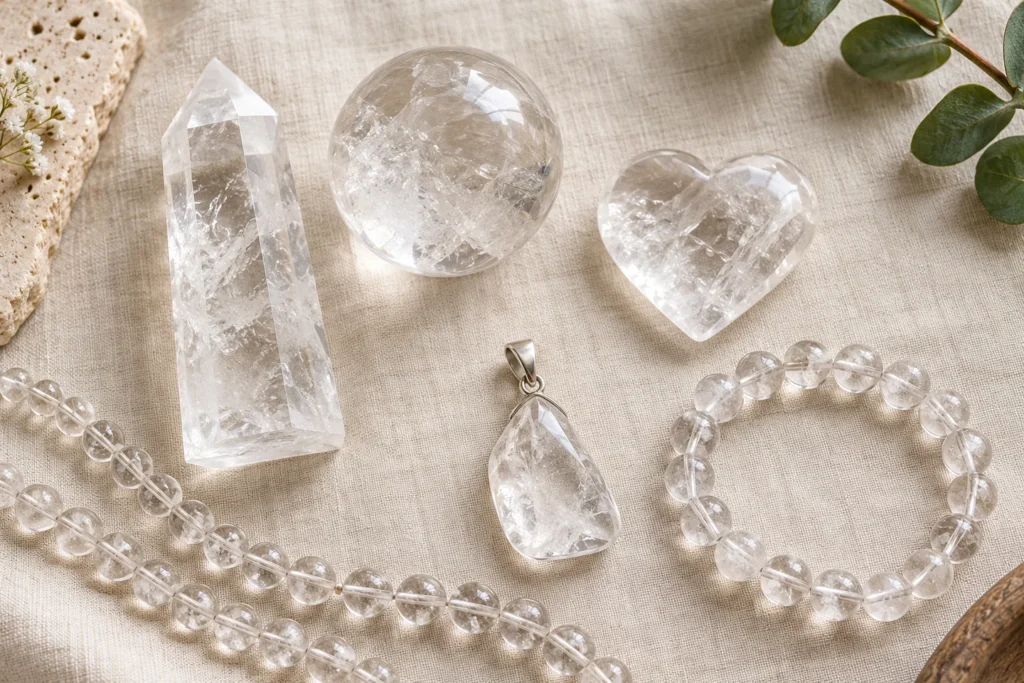
That simple shift in thinking — from "Is quartz valuable?" to "Is this quartz product valuable for my business?" — changes everything about how you evaluate suppliers, compare quotes, and build your product catalog. Let's break down exactly what drives quartz crystal value in a wholesale and resale context.
What makes some quartz crystal more valuable than others?
Walk into any crystal trade show and you'll notice that quartz prices can range from pennies per kilogram to hundreds of dollars per piece. If quartz is just quartz, why the massive spread? The answer lies in a handful of quality and rarity factors that directly influence what end customers will pay.
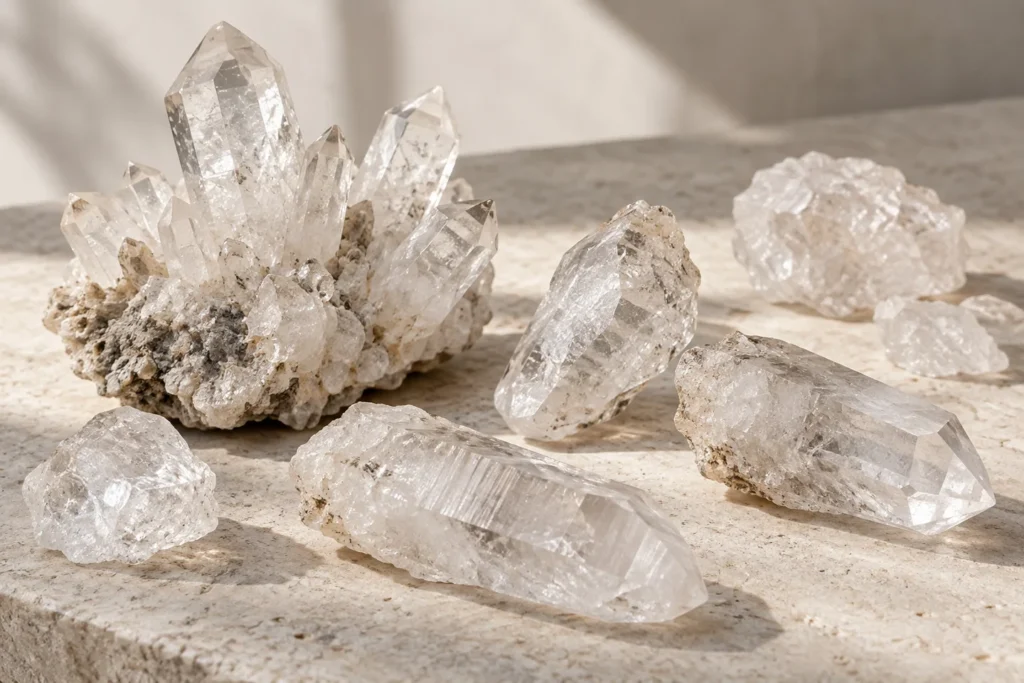
The commercial value of quartz crystal is driven by variety, clarity, color saturation, size, natural formation rarity, and visual appeal. Clear quartz with high transparency, smoky quartz with even color, rose quartz with deep pink hues, and amethyst with rich purple saturation all command different price tiers — even though they are all members of the quartz mineral family2.
Variety and color matter more than the name
In my experience answering wholesale inquiries, the single most common misunderstanding is treating "quartz" as one product. It isn't. Here's a simplified look at how common quartz varieties stack up in terms of general wholesale pricing tendency:
| Quartz Variety | Color / Feature | Relative Wholesale Price Range | Key Value Driver |
|---|---|---|---|
| Milky quartz | White, opaque | Low | Abundant supply, limited visual appeal |
| Clear quartz | Colorless, transparent | Low to high | Clarity and size are everything |
| Rose quartz | Pink | Low to moderate | Color depth, translucency |
| Smoky quartz | Brown to black | Low to moderate | Evenness of color, transparency |
| Amethyst | Purple | Low to high | Color saturation, size, origin |
| Citrine (natural) | Yellow to golden | Moderate to high | Natural citrine is relatively scarce3 |
| Rutilated quartz | Golden or silver needle inclusions | Moderate to high | Inclusion pattern, clarity of base |
| Phantom quartz | Visible internal "ghost" formations | Moderate to high | Clarity and definition of phantoms |
Note: These are general tendencies, not fixed price lists. Actual wholesale pricing must be confirmed per batch, specification, and order terms. Treatments such as heat treatment (common for citrine and some amethyst) should be disclosed and verified with your supplier.4
Clarity, size, and visual appeal
Within any single variety, three factors consistently move the price needle:
- Clarity: A clear quartz point with no visible inclusions, cracks, or cloudiness is worth significantly more than a similar-sized piece with heavy milkiness. For retail, customers often judge with their eyes first.
- Size: Larger pieces of good quality are disproportionately more expensive. A 10 cm clear quartz sphere costs far more than ten 1 cm spheres because finding a clean enough rough piece to produce a large sphere is much harder.5
- Visual appeal: This includes luster after polishing, interesting natural formations (like double-terminated points or cathedral formations), and color distribution. Products that photograph well and look striking on a shelf carry higher retail potential.
Rarity versus abundance
Ordinary milky quartz is genuinely one of the most common minerals. Dismissing all quartz as cheap because of this is a mistake I see new buyers make. Natural citrine, high-quality rutilated quartz, or large gem-grade amethyst clusters are all quartz — but their supply is much more limited.6 In wholesale sourcing, understanding where your target product sits on the abundance-to-rarity spectrum helps you set realistic expectations for both cost and margin.
Does the product form change quartz crystal value?
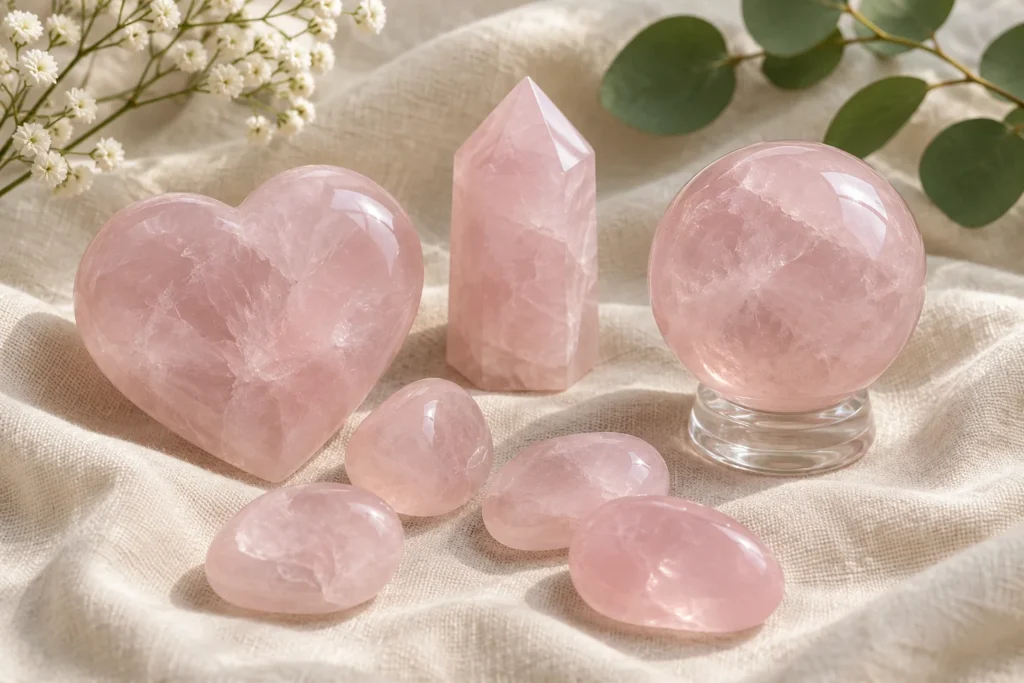
Here's something that surprises many first-time wholesale buyers: the same rough quartz material can end up as products with dramatically different price points depending on how it's processed. A kilogram of rose quartz rough and a set of polished rose quartz hearts cut from that same rough are entirely different propositions for your store.
Product form significantly impacts the commercial value of quartz crystal. Towers, spheres, carved shapes, tumbled stones, raw specimens, bracelets, and decorative items each carry different processing costs, breakage rates, visual appeal, and retail price expectations. A polished sphere requires more material waste and skilled labor than a tumbled stone, and that difference shows up in both wholesale cost and resale potential.
Processing cost and material waste
Not all product forms are created equal in terms of manufacturing effort:
- Tumbled stones and chips: Lowest processing cost per unit. Large batches are processed together. Suitable for entry-level retail price points.
- Palm stones and worry stones: Moderate processing. Require some hand shaping and polishing. Good balance of perceived value and cost.
- Towers and points: Require selecting pieces with appropriate shape and minimal fractures. Polishing flat faces and maintaining a natural point adds labor.
- Spheres: Among the highest material waste rates — carving a sphere from rough can consume 60–80% of the raw material7. Good spheres require relatively clean, crack-free rough.
- Carvings and figurines: Cost depends heavily on complexity. A simple heart is straightforward; an intricate animal carving demands skilled labor and more time.
- Bracelets: Require consistent bead quality across every bead in a strand. Even one cracked or off-color bead reduces the piece.
Retail fit and customer expectations
From a resale perspective, I always encourage buyers to think about what their specific customers want. Consider these factors:
| Product Form | Typical Retail Price Point | Impulse Buy Potential | Display / Photography Appeal | Breakage Risk in Shipping |
|---|---|---|---|---|
| Tumbled stones | $1–5 | High | Moderate | Low |
| Palm stones | $5–15 | Moderate | Good | Low |
| Towers | $10–60+ | Moderate | High | Moderate |
| Spheres | $15–100+ | Lower | Very high | Higher |
| Carvings | $8–80+ | Variable | High | Moderate to high |
| Raw clusters | $10–200+ | Lower | Very high | Moderate |
| Bracelets | $5–30 | High | Good | Low |
These retail ranges are rough illustrations, not promises. Your actual retail price depends on your market, the specific quality, your brand positioning, and local competition. I share these ranges only to show how product form creates different commercial tiers from the same base material.
Matching form to your business model
A Shopify seller specializing in curated crystal gifts may find more value in polished spheres and carved hearts. A booth vendor at weekend markets may move more tumbled stones and bracelets at impulse-buy prices. Neither approach is wrong — but ordering the wrong product form for your channel wastes capital. When you request a quote for quartz crystal products, specifying the product form, size range, and target quality level is the first step toward getting a price that actually means something.
Why do quartz crystal prices vary so much between suppliers?
If you've ever collected quotes from three different suppliers for "clear quartz towers" and received three wildly different numbers, you're not alone. Price inconsistency is one of the most frustrating parts of sourcing quartz crystal products — and it's usually not because someone is cheating you. It's because the specifications aren't aligned.
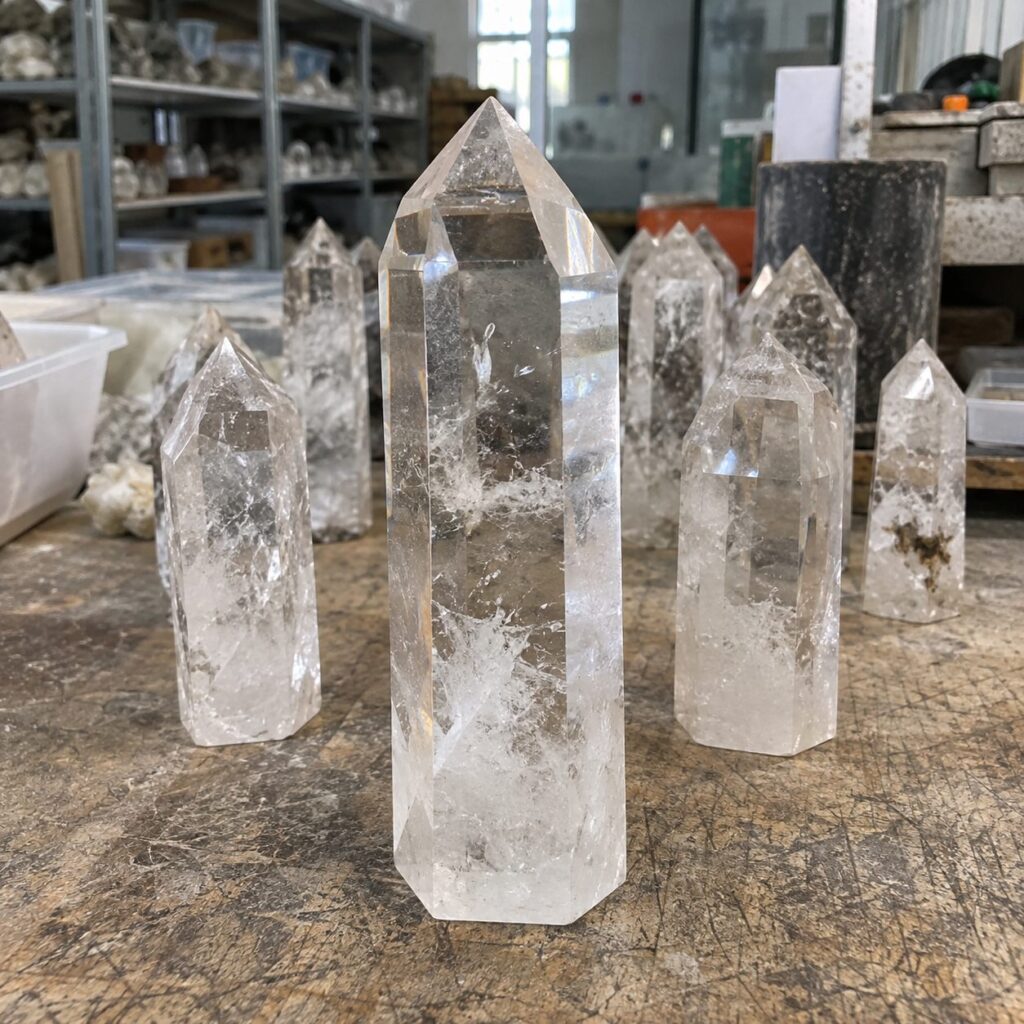
Quartz crystal prices vary between suppliers because the actual product behind a general description can differ in material grade, size tolerance, processing quality, treatment status, packaging, MOQ requirements, and delivery terms. Two quotes for "clear quartz towers, 8–10 cm" might describe very different products if one supplier includes near-flawless clarity and the other includes pieces with visible inclusions or cloudiness.
The specification gap
In wholesale sourcing, vague descriptions are the root cause of price confusion. Here's what I typically ask buyers to clarify — and what you should confirm with any supplier:
- Material and variety: Exactly which quartz? Natural citrine and heat-treated citrine are different products at different prices.
- Size range: "Medium" means different things to different factories. Specify in centimeters or inches, and ask whether pricing is per piece or per kilogram.
- Quality grade: Is this A-grade (supplier's own grading)? What does that mean specifically — clarity percentage, surface finish, acceptable inclusions?
- Treatment disclosure: Has the material been heat-treated, dyed, coated, or irradiated? This affects both legality of sale claims in some markets and customer trust.
- Current batch photos: Old photos from previous batches may not represent the current available stock. Always request up-to-date images.
- MOQ and mixed ordering: Can you mix varieties or forms within an order? What's the minimum per SKU?
- Packaging and shipping: Are items individually wrapped? What's the shipping method and destination? These costs can significantly change your landed cost per piece.
Comparing apples to apples
Before concluding that one supplier is expensive and another is cheap, verify that both quotes describe the same product. I've seen buyers choose the lowest price only to receive pieces with heavy cloudiness, uneven polish, or sizes at the bottom of the stated range. The "savings" evaporated when those products sat unsold or generated returns.
A practical approach:
- Request sample orders before committing to large quantities.
- Ask for grading criteria in writing — what counts as A, B, or C grade for that supplier.
- Compare photos side by side, ideally with a ruler or reference object for scale.
- Calculate landed cost, including shipping, customs, and packaging, not just the unit price.
Treatment and authenticity considerations
Some quartz varieties are commonly treated. Heat-treated amethyst is often sold as citrine.8 Aura-coated quartz has metallic surface treatments.9 Dyed agate and other treated silica materials are sold alongside quartz; products marketed as ‘cherry quartz’ may be manufactured glass rather than natural quartz, so confirm material identity with the supplier.10 None of these products are necessarily bad for resale — but misrepresenting them to your customers is a problem.
For treatment verification and gemological identification beyond what your supplier can confirm, third-party lab testing is available11 and may be appropriate for higher-value items or when you need certified documentation for your market. This is a separate step from supplier communication and should be treated as such.
How should resale buyers evaluate whether quartz crystal is worth stocking?
This is where the rubber meets the road. You now know quartz crystal can be valuable. The question for your business is whether a specific quartz product is worth committing your purchasing budget to.
Resale buyers should evaluate quartz crystal products based on customer demand alignment, achievable margin after landed costs, batch consistency, supplier communication quality, and reorder reliability — not based on generic mineral value claims or old price references. A product is "worth it" when it sells profitably and repeatably in your specific channel.
Start with your customer, not the mineral
Before you worry about whether quartz is "valuable," ask:
- What do my customers already buy? If rose quartz hearts are your best seller, exploring rose quartz in new forms (towers, palm stones) is lower-risk than jumping to a completely different variety.
- What price points work in my channel? An online shop with $15–40 average order value needs different products than a high-end boutique.
- What do my competitors stock? If every local shop carries clear quartz towers, differentiation might come from unusual forms, curated sets, or less common varieties like phantom quartz or flower agate.
The margin calculation that matters
Many buyers I work with initially focus on the per-piece wholesale price. That's only one number. Here's a more complete picture:
| Cost Component | What to Include |
|---|---|
| Unit wholesale price | Per piece or per kg, confirmed for current batch |
| Shipping cost | Freight, insurance, per-unit allocation |
| Import duties/taxes | Varies by destination country and HS code |
| Packaging cost | Supplier packaging + any repackaging you do |
| Breakage allowance | Typically 1–5% depending on product form and shipping method |
| Photography/listing cost | Time or money to photograph and list new products |
| Platform/marketplace fees | If selling on Etsy, Amazon, etc. |
Your margin is what's left after all of these, not just the difference between wholesale price and retail price. A quartz sphere that seems like a great deal at $8 wholesale might barely break even at $25 retail after shipping, breakage, and fees — or it might be extremely profitable. The math depends on your specifics.
Batch consistency and reorder reliability
One factor that separates a good product from a good product line is whether you can reorder it and get something similar. In natural stone products, no two pieces are identical. But customers expect reasonable consistency in:
- Color range: If your product photos show deep pink rose quartz, receiving pale pink in the next batch creates customer complaints.
- Size and weight: Pieces should fall within the stated range, not wildly vary.
- Surface quality: Polish level, absence of chips or tool marks.
- Overall appearance: The "feel" of the batch should match what your customers have come to expect.
When evaluating a quartz crystal supplier, ask about batch-to-batch variation honestly. A supplier who tells you every batch is identical is either not being truthful or doesn't understand natural materials. A supplier who explains realistic variation and provides current batch photos is someone you can work with long-term.
Frequently Asked Questions
Is common quartz crystal worthless for resale?
No. Even abundant varieties like milky quartz or basic clear quartz can be profitable in the right product forms — tumbled stones, chips for jewelry making, or decorative items. Commercial value depends on processing, presentation, and whether the product fits your customer base and price point, not solely on mineral rarity.
How can I tell if quartz has been treated or is synthetic?
Start by asking your supplier directly about treatments such as heat treatment, dyeing, coating, or irradiation. Reputable suppliers should disclose known treatments. For high-value items or when documentation is required, third-party gemological testing can provide independent verification. This is especially important for varieties like citrine, where heat-treated amethyst is common.
What quartz crystal products have the best resale margins?
There is no universal answer. Margins depend on your specific market, channel, and customer expectations. Generally, products with higher processing value (spheres, detailed carvings, well-made bracelets) can support higher retail prices, but they also cost more to purchase. Trial orders across several product forms help you identify what performs best in your particular store.
Should I buy quartz crystal by weight or by piece?
It depends on the product form. Raw quartz, tumbled stones, and chips are commonly sold by weight (per kilogram). Finished products like towers, spheres, and carvings are typically priced per piece because individual size and quality matter. Always confirm the pricing unit with your supplier and understand how size ranges are defined within that pricing.
How do I request an accurate quote for quartz crystal products?
Provide as much detail as possible: the specific quartz variety, desired product form, size range, quality expectations, estimated quantity, packaging preferences, and shipping destination. The more specific your inquiry, the more accurate and useful the quote will be. Vague requests like "How much for quartz?" will get you a vague answer.
Conclusion
So, is quartz crystal worth anything? For resale buyers, the honest answer is: it depends entirely on the specific product, its quality, and how well it fits your business. Quartz is not a single commodity with a single value — it's a vast family of materials that can be shaped into dozens of product forms at wildly different price points. The buyers who succeed with quartz crystal are those who move past the generic question and start asking specific ones: What variety? What clarity? What size? What form? What are the current batch conditions? What are the landed costs versus realistic retail prices in my market?
At GD Crystal, we work with independent retailers and growing crystal brands to navigate exactly these questions. If you're evaluating quartz crystal products for your store, reach out with your product interests, target specifications, and order expectations — and we'll provide current photos, batch details, and a quote you can actually plan around.
References
- "Quartz", https://en.wikipedia.org/wiki/Quartz. A mineralogical reference should be cited to support that quartz is one of the most common rock-forming minerals on Earth; this establishes geological abundance but does not by itself determine commercial value. Evidence role: general_support; source type: encyclopedia. Supports: Quartz is a very common rock-forming mineral and is widely distributed in Earth's crust.. Scope note: Contextual support only; abundance does not directly prove retail or wholesale pricing. ↩
- "Quartz", https://en.wikipedia.org/wiki/Quartz. A mineralogical reference should be cited to confirm that amethyst, citrine, smoky quartz, and rose quartz are recognized varieties of quartz; this supports classification, not comparative commercial value. Evidence role: definition; source type: encyclopedia. Supports: Named materials such as amethyst, citrine, smoky quartz, and rose quartz are recognized varieties of quartz.. Scope note: Does not establish relative market prices among the varieties. ↩
- "Citrine Gemstone | Natural Citrine Stone", https://www.gia.edu/citrine. A gemological institution source should be cited to support that natural citrine is comparatively uncommon and that much citrine-colored material in commerce is produced by treatment; this supports the authenticity context but not a specific price premium. Evidence role: expert_consensus; source type: institution. Supports: Natural citrine is less commonly encountered than citrine-colored material produced by heat treatment of amethyst or smoky quartz.. Scope note: Supports scarcity in general, not the value of any particular citrine lot. ↩
- "An Introduction to Gem Treatments", https://www.gia.edu/gem-treatment. A consumer-protection or gemological treatment-disclosure source should be cited to show that gemstone treatments affecting value or care are expected to be disclosed; this supports the disclosure principle, while a separate gemological source may be needed for quartz-specific treatment prevalence. Evidence role: general_support; source type: government. Supports: Gemstone treatments that significantly affect value, care, or consumer expectations should be disclosed, and heat treatment is a recognized treatment in colored stones.. Scope note: Regulatory guidance supports disclosure obligations but may not quantify how common treatment is for each quartz variety. ↩
- "Diamond Quality Factors", https://www.gia.edu/diamond-quality-factor. A gemological valuation source should be cited to explain that large, high-clarity material is generally less available than small material and therefore can command a disproportionate premium; this supports the pricing mechanism but not the exact price relationship between 10 cm and 1 cm spheres. Evidence role: mechanism; source type: institution. Supports: Larger gemstones or ornamental stones of high clarity are generally rarer than smaller pieces, making size and clarity important value factors.. Scope note: Contextual support only; the specific sphere comparison is illustrative. ↩
- "Citrine Gemstone | Natural Citrine Stone", https://www.gia.edu/citrine. A gemological or mineralogical source should be cited to support the distinction between common quartz and less commonly available gem-quality or variety-specific quartz material; this supports the scarcity comparison in general rather than proving supply conditions for any current wholesale batch. Evidence role: general_support; source type: institution. Supports: Commercially desirable quartz varieties and high-quality specimen forms can be less available than common massive or milky quartz.. Scope note: Does not quantify current global supply or inventory availability. ↩
- "How It's Made: A Stone Sphere", https://www.youtube.com/watch?v=MoV-emestnA. A lapidary or geometry-based source should be cited to support that sphere carving entails substantial material loss because a spherical form must be cut from irregular or block-like rough; this supports the waste mechanism, while the stated 60–80% range should be used only if the source directly documents that practical yield range. Evidence role: mechanism; source type: education. Supports: Producing a sphere from rough stone necessarily removes substantial material, with theoretical and practical yield depending on rough shape, flaws, and target diameter.. Scope note: General geometry supports high waste, but the exact percentage requires a lapidary production source. ↩
- "Is citrine treated?", https://www.gia.edu/FAQ/gia-faq-treated-citrine. A gemological institution source should be cited to support that much commercial citrine is produced by heating amethyst or smoky quartz; this supports the treatment-identification issue but does not imply that all citrine is treated. Evidence role: expert_consensus; source type: institution. Supports: Citrine-colored quartz in the market is frequently produced by heat treatment of amethyst or smoky quartz.. Scope note: Does not determine treatment status for a specific stone without testing or supplier documentation. ↩
- "PVD for Decorative Applications: A Review – PMC – NIH", https://pmc.ncbi.nlm.nih.gov/articles/PMC10381906/. A mineralogical or gemological reference should be cited to define aura quartz as quartz modified by a metallic surface coating; this supports the treatment description but does not assess its market desirability. Evidence role: definition; source type: encyclopedia. Supports: Aura quartz refers to quartz that has been artificially coated with a thin metallic layer, commonly producing iridescent surface colors.. Scope note: Definition support only; coating quality and durability vary by process and supplier. ↩
- "An Introduction to Gem Treatments", https://www.gia.edu/gem-treatment. Additional identification reference: GIA, Spring 2003 Gems & Gemology Lab Notes, https://www.gia.edu/doc/1495239324919/GG-Lab-Notes.pdf, reports manufactured glass sold as “cherry quartz”. A gemological treatment source should be cited to support that dyeing is a recognized treatment for silica materials such as agate and quartz-family products; this supports the need for treatment caution, though it may not quantify how widespread dyed material is in current wholesale channels. Evidence role: general_support; source type: institution. Supports: Dyeing is a recognized treatment for quartz-family or silica materials such as agate, and some trade names may refer to manufactured or treated materials.. Scope note: Supports the existence and relevance of dyeing, not a measured prevalence rate. ↩
- "How GIA Analyzes Colored Stones from Start to Finish", https://www.gia.edu/gia-news-research/guide-how-gia-analyzes-colored-stones. A gemological laboratory or institute source should be cited to document that independent gem identification and treatment-report services are available; this supports the availability of testing but not that every quartz treatment can always be conclusively detected. Evidence role: case_reference; source type: institution. Supports: Gemological laboratories offer identification and reporting services that can help verify material identity and, where possible, treatments.. Scope note: Some treatments may be difficult to determine conclusively depending on material and test methods. ↩