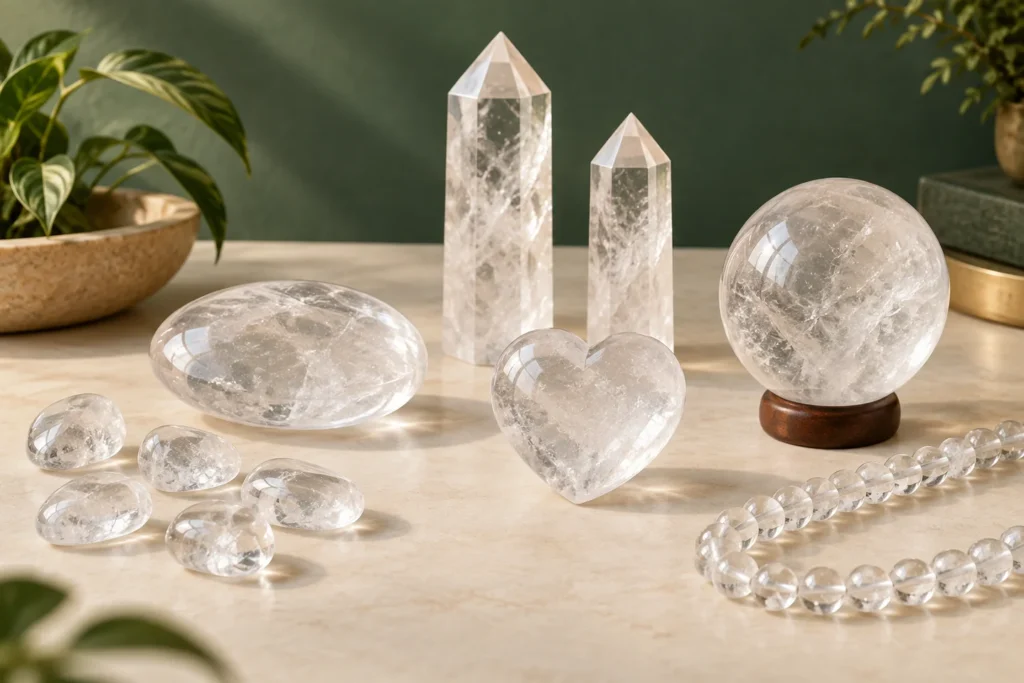
Clear quartz crystals may seem simple, but their value varies greatly depending on form, clarity, size, workmanship, and batch conditions. Buyers often face confusion comparing raw pieces, towers, spheres, carvings, tumbles, and specimens. To make better sourcing decisions, I evaluate resale use, grade, processing, quantity, and batch conditions.
Clear quartz crystals are valuable when their product form, clarity, size, workmanship, and purchase conditions align with the buyer’s resale market.1 The name “clear quartz” alone does not create value.
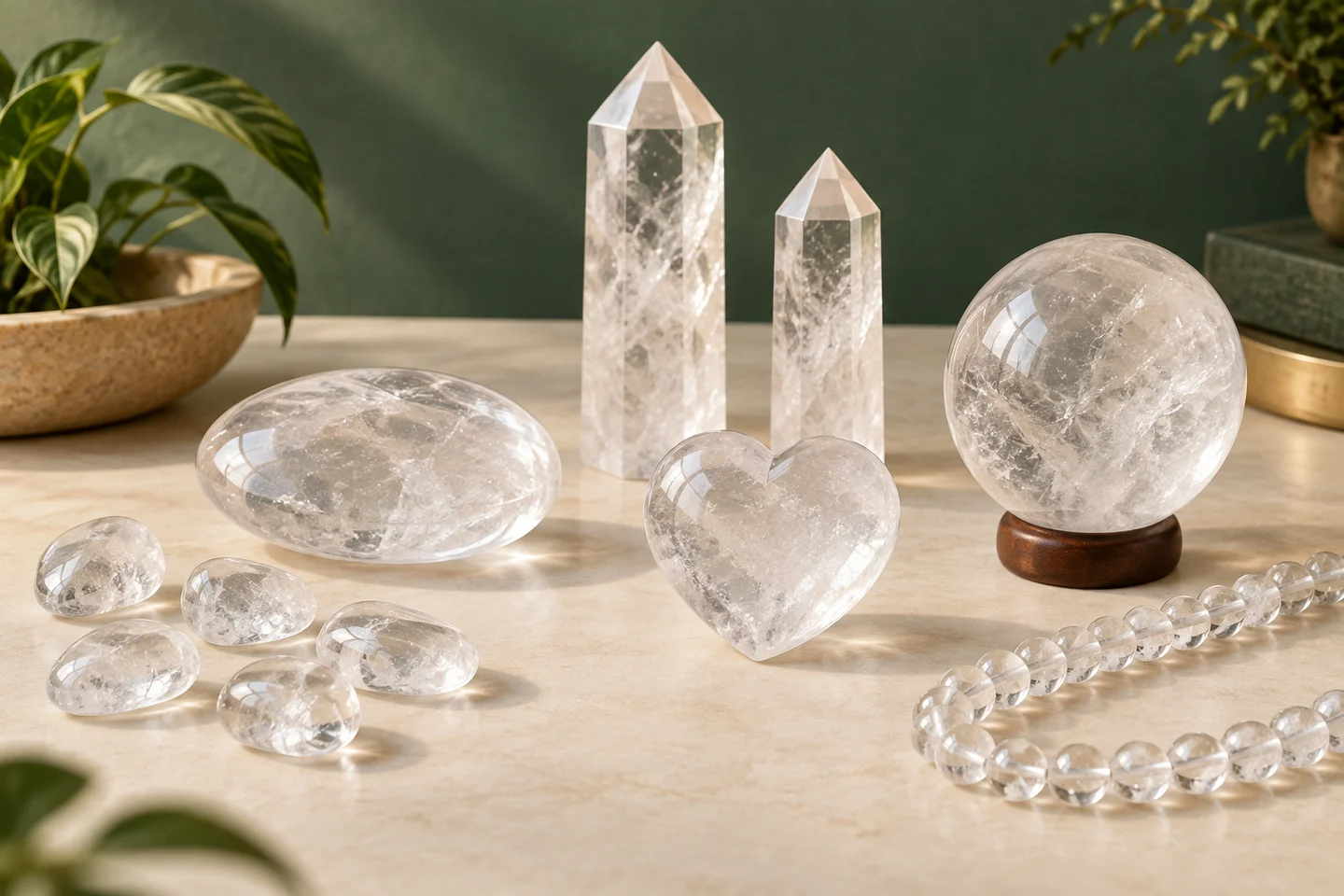
Are clear quartz crystals valuable for resale buyers?
Clear quartz can sell well, but resale value is not automatic. Retailers may lose money if the product form, grade, or cost doesn’t align with their market. Value depends on product shape, clarity, size, finishing quality, packaging, order quantity, and supplier batch conditions.
Resale vs. collector value
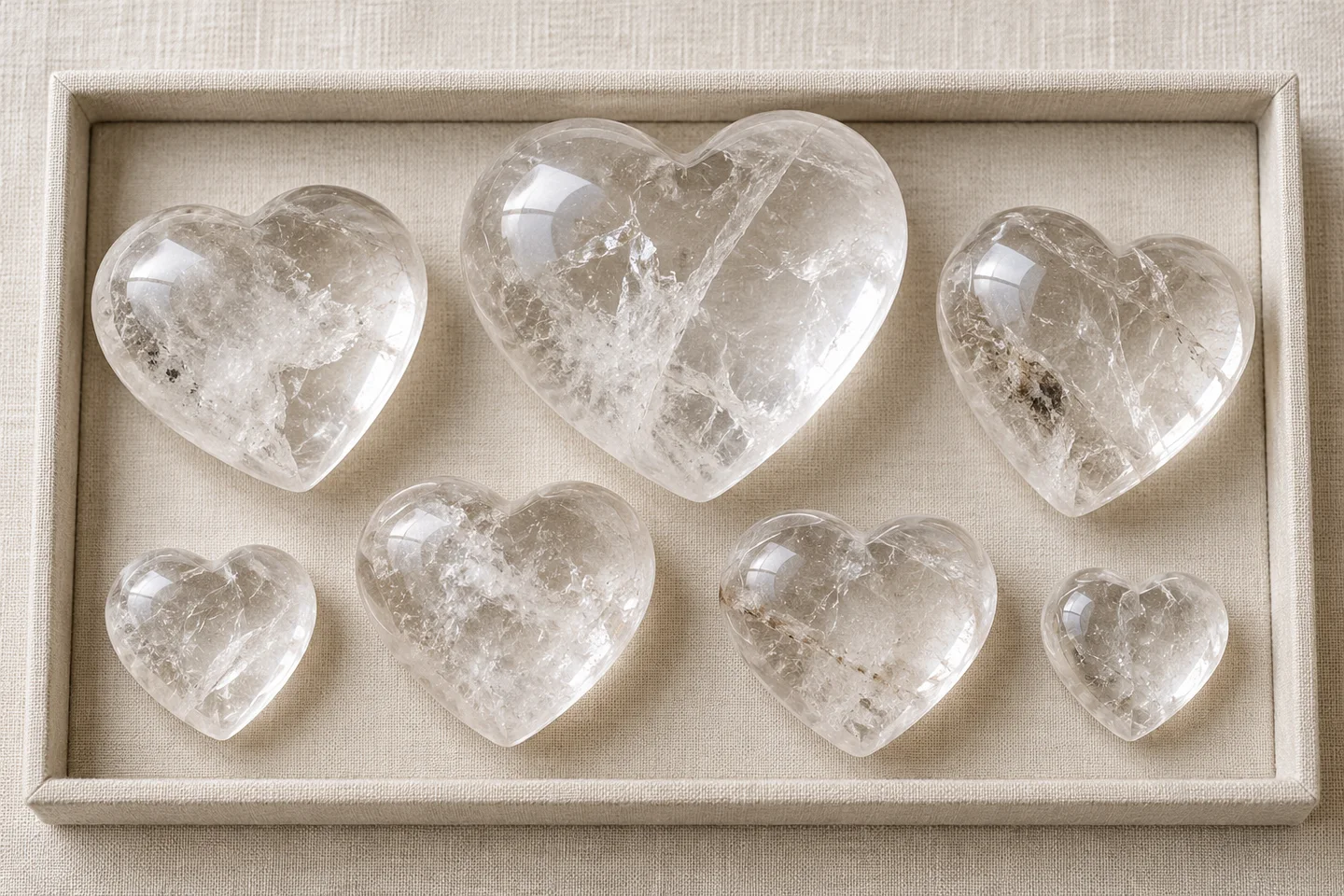
Collectors value natural points for formation, locality, or inclusions, while gift shops prioritize polished hearts for ease of pricing.2 E-commerce sellers may focus on consistent sizes and safe packaging. Comparing raw points to polished towers or tumbles to spheres is misleading—they serve different markets.
Why clear quartz attracts B2B buyers
Clear quartz is popular due to its neutral color, versatility, and broad customer recognition.3 It fits many retail categories, including gifts, home décor, and entry-level mineral products. However, popularity doesn’t eliminate risks like cloudiness, cracks, or poor polishing.
Practical resale value checklist
| Evaluation point | Why it matters |
|---|---|
| Product form | Different forms serve different customers |
| Clarity level | Transparency affects appeal and cost |
| Size range | Predictable sizes aid pricing and display |
| Batch consistency | E-commerce sellers need reliable photos |
| Workmanship | Quality affects perceived value |
| Packaging | Protects fragile items |
| MOQ | Small buyers need test orders; wholesalers need volume pricing |
| Landed cost | Freight and duties impact margins |
The most beautiful sample isn’t always the best inventory choice. A sellable batch matters more.
Defining “valuable” for retailers
For retailers, value means products move through inventory with acceptable margins and customer satisfaction. The key question is: Which clear quartz items can I buy, display, describe, price, ship, and reorder confidently?
Does high clarity make clear quartz more valuable?
Clarity often enhances appeal, but it’s not the sole determinant of value.4 High clarity combined with good size, attractive form, skilled polishing, and consistent sorting can increase value. However, very clear material may not sell well if it’s poorly cut, overpriced, or difficult to move quickly.
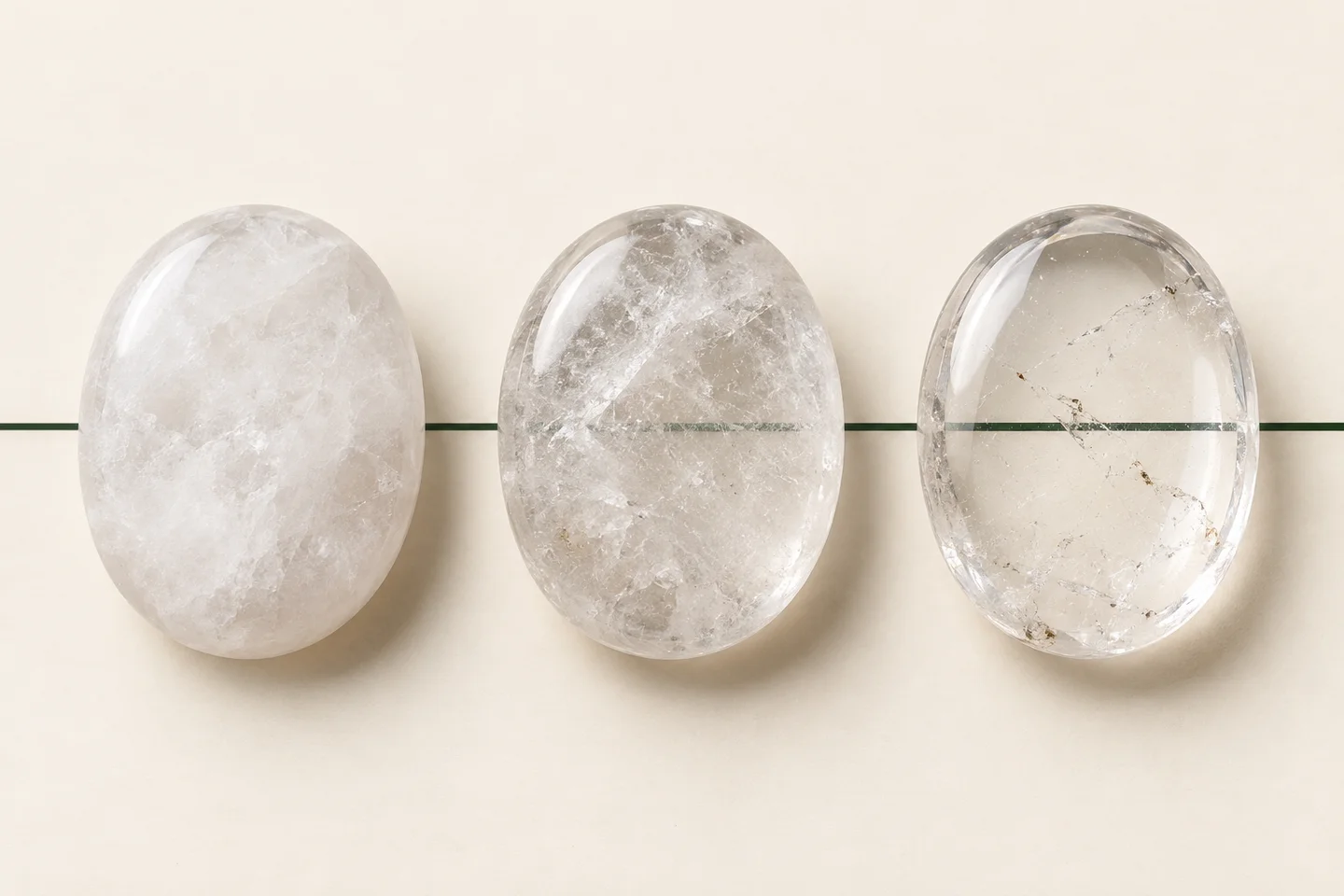
Clarity is one part of grade
Visual grade includes:
- Transparency: Light transmission
- Cloudiness: Milky or smoky appearance
- Cracks and veils: Internal fractures
- Inclusions: Minerals, bubbles, or growth marks
- Color tone: Water-clear, gray, yellowish, or smoky
- Surface polish: Brightness and smoothness
- Shape accuracy: Symmetry of towers, spheres, or hearts
High transparency can boost appeal, but lower-clarity items may sell better if their shape, price, and story fit the market.5
Why “clear” doesn’t always mean “premium”
Transparency varies by angle, size, and product form. For example:
| Feature | Buyer reaction | Impact |
|---|---|---|
| High transparency | Premium look | Supports higher pricing |
| Light veils | Natural and acceptable | Works for mid-range products |
| Heavy cloudiness | Lower grade | Needs lower pricing |
| Many cracks | Reduces confidence | Lowers resale value |
| Good polish | Enhances quality | Improves photos and display |
| Poor symmetry | Looks careless | Reduces value despite clarity |
Clarity’s role by product form
- Spheres: Clarity is crucial due to visibility through the curved surface.
- Towers: Shape and point quality matter as much as clarity.
- Tumbles: High clarity may not justify higher costs for low-price items.
- Carvings: Detail and polish often outweigh transparency.
- Raw pieces: Natural formation and display character may matter more than clarity.
Practical sourcing advice
When buyers request “very clear quartz,” I ask:
- What product form do you need?
- What size range?
- Top clarity or good commercial clarity?
- Selling by piece, weight, set, or lot?
- Target retail price?
- Batch photos before confirmation?
These questions help avoid overbuying. Buyers need the right clarity level for their market and margin.
Which clear quartz product forms are most valuable?
Clear quartz value depends on the buyer’s market. Towers, spheres, tumbles, hearts, carvings, raw points, specimens, bracelets, and chips can all be valuable when their size, grade, workmanship, and pricing fit the resale channel.
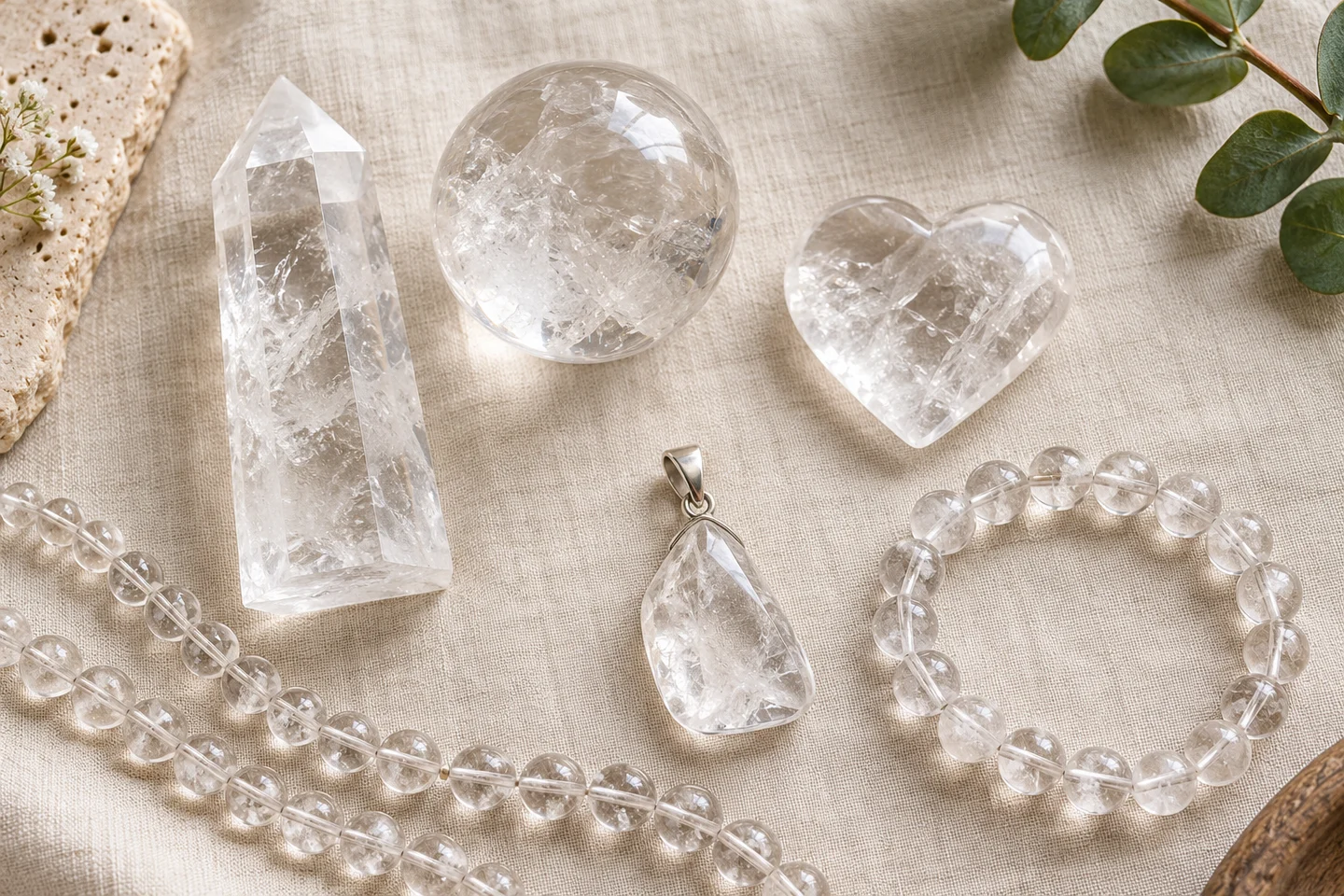
Product forms and value logic
| Product form | Common use | Value drivers | Sourcing risks |
|---|---|---|---|
| Towers | Crystal shops, online stores | Shape, polish, clarity | Uneven tips, cracks |
| Spheres | Premium décor | Diameter, clarity, roundness | Material loss, breakage |
| Tumbles | Entry-level retail | Smoothness, size consistency | Mixed grades |
| Hearts | Gifts, sets | Symmetry, polish | Uneven shape |
| Carvings | Gifts, décor | Detail, polish | Labor cost |
| Raw pieces | Natural displays | Size, formation | Dust, breakage |
| Specimens | Collectors | Aesthetics, uniqueness | Hard to standardize |
| Bracelets | Jewelry | Bead polish, hole quality | Breakage |
| Chips | Décor, crafts | Sorting, packing | Dust, low perceived value |
Choosing product forms for new buyers
For first-time buyers, I suggest a balanced test order:
- Entry-level items: tumbles, chips, small hearts
- Core items: towers, palm stones
- Premium items: spheres, freeforms
- Natural items: raw points or specimens
This mix helps identify what sells before committing to large orders.
What affects clear quartz wholesale prices?
Clear quartz pricing depends on raw material quality, size, product form, cutting loss, polishing difficulty, labor, sorting, MOQ, packaging, and delivery terms.6 Comparing quotes without matching specifications can be misleading.
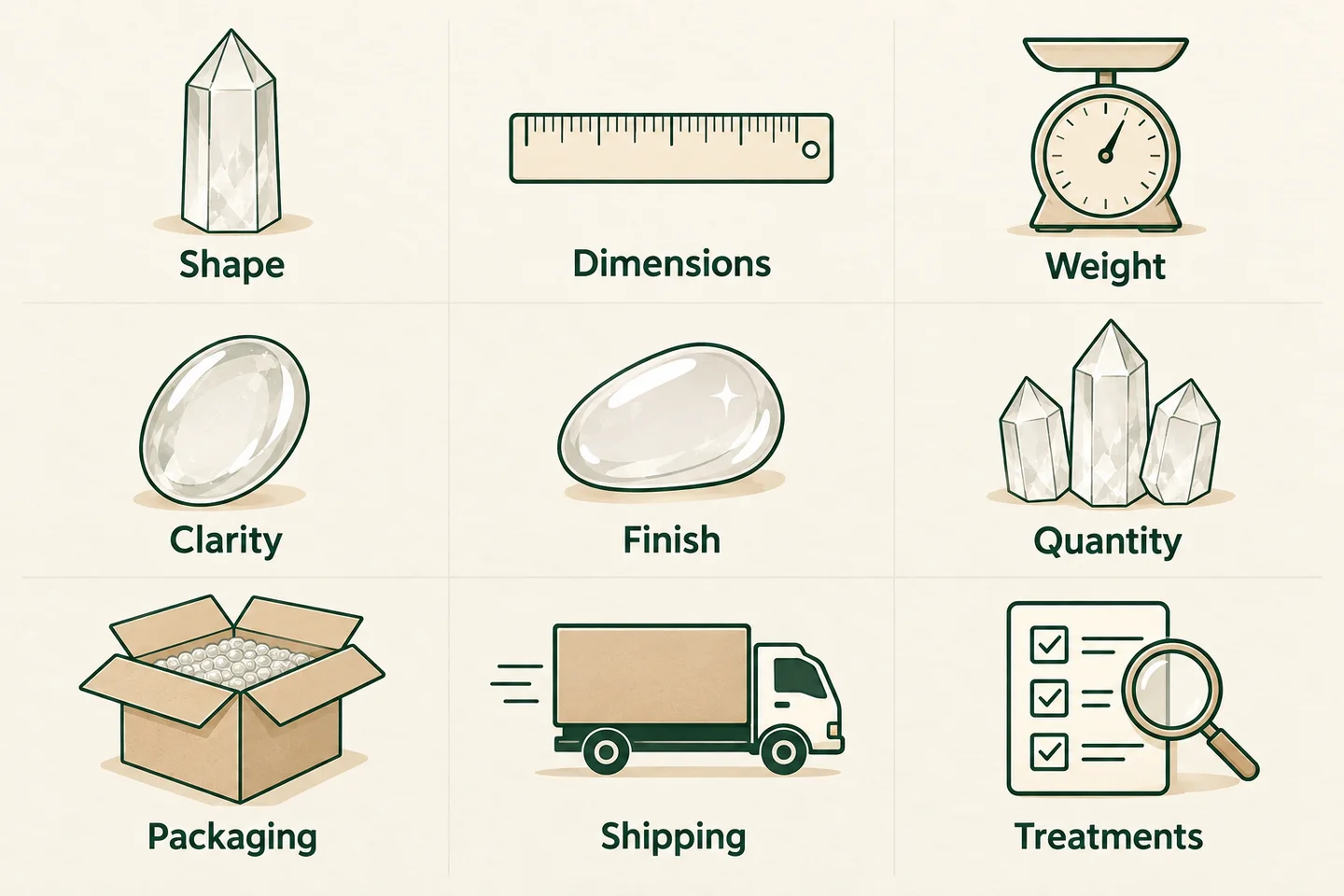
Main price variables
| Factor | Buyer questions |
|---|---|
| Material grade | What clarity and cracks are acceptable? |
| Product form | Tower, sphere, tumble, etc.? |
| Size range | Exact or approximate? |
| Weight basis | By piece, kg, strand, or set? |
| Sorting | Random or graded? |
| Workmanship | Expected polish, symmetry, or detail? |
| Quantity | MOQ and volume pricing? |
| Packaging | Bulk, individual wrap, or retail-ready? |
| Photos | Current batch or reference images? |
| Delivery terms | EXW, FOB, CIF, or DDP? |
| Lead time | In stock or made to order? |
Processing cost and cutting loss
Polished items like spheres and towers involve material loss and labor.7 Larger or clearer pieces require more selective rough material, increasing costs.
Packaging and freight
Clear quartz is heavy and fragile.8 Packaging protects margins by reducing breakage. Buyers should confirm packaging needs, especially for polished items.
How to evaluate clear quartz suppliers
Supplier reliability is as important as product quality. Buyers should check batch photos, specifications, size tolerances, processing capability, MOQ, packaging options, and communication clarity.
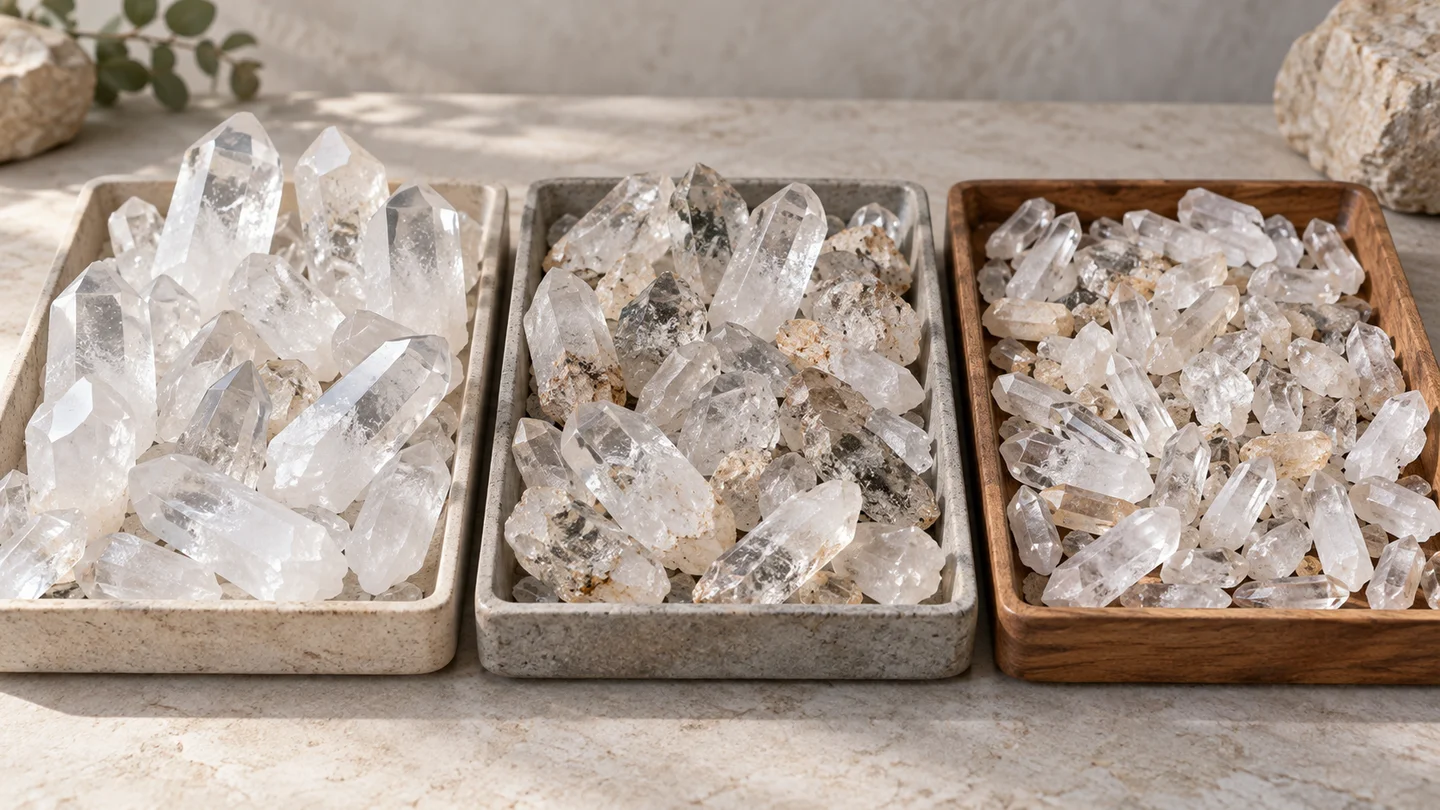
Key supplier questions
- Are photos from the current batch?
- What size tolerance applies?
- How are clarity and cracks sorted?
- What is the MOQ?
- Is the item in stock or made to order?
- What packaging is recommended?
- Can photos be provided before packing?
Why batch conditions matter
Natural material varies.9 Buyers should confirm specifications and photos close to the order date to avoid surprises.
How can retailers decide if clear quartz fits their product line?
Clear quartz must match customer demand, price range, and display style.10 A small test order with mixed forms often provides better insights than a large initial purchase.
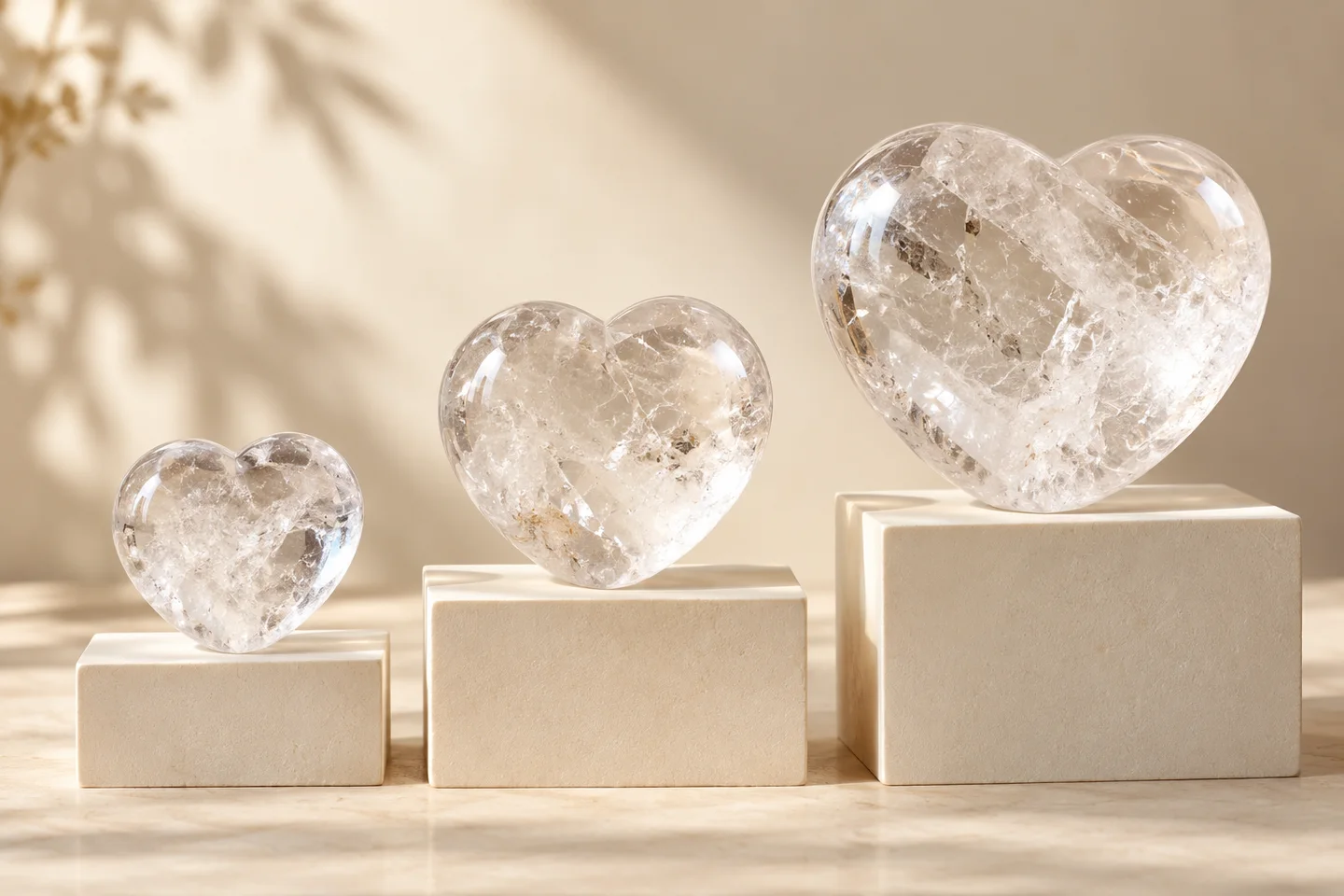
Start with the customer
The product must fit the store’s selling environment. For example:
- Crystal shops: premium spheres, towers, raw pieces
- Gift shops: hearts, carvings, boxed sets
- E-commerce: consistent sizes, repeatable SKUs
- Wholesale: bulk tumbles, chips, mixed forms
Build a test assortment
A test mix might include:
- Small items: tumbles, chips
- Mid-range items: towers, palm stones
- Premium items: large towers, spheres
- Gift items: carved shapes or sets
- Natural items: raw points or clusters
Avoid common mistakes
- Relying on old photos
- Comparing quotes without details
- Assuming “clear” means the same across suppliers
- Overordering slow-moving premium items
- Ignoring packaging for fragile items
Frequently Asked Questions
Are clear quartz crystals rare?
Clear quartz is common, but high-quality, large, or well-processed pieces can be harder to source.
Is clearer quartz always more expensive?
Clearer quartz often costs more but isn’t always the best choice. Buyers should balance clarity with form, size, and market needs.
What should I ask for in a quote?
Specify product form, size, quantity, clarity, packaging, delivery terms, and photo requirements.
Can I reorder the same products?
Reordering is possible, but natural material varies. Confirm batch conditions before each reorder.
Are towers, spheres, and tumbles valued the same?
No. Each form has unique value drivers like shape, clarity, and workmanship.
Conclusion
Clear quartz crystals are valuable when they fit a clear resale purpose. Buyers should focus on clarity, inclusions, size, form, workmanship, sorting, and batch conditions. The best question is: Which clear quartz products match your customers, price point, margin, and turnover plan? For practical quotations, contact GD Crystal with your requirements.
References
- "Colored Gemstone Value Factors", https://www.gia.edu/gia-news-research/value-factors-design-cut-quality-colored-gemstone-value-factors. Educational resources on mineral grading and market evaluation confirm that factors such as clarity, size, and workmanship significantly impact the value of quartz crystals. Evidence role: general_support; source type: education. Supports: Factors like form, clarity, size, workmanship, and purchase conditions influence the value of clear quartz crystals.. Scope note: The source may focus on general mineral evaluation rather than specific resale markets. ↩
- "Quarterly Crystal: Molybdenite Phantoms in Quartz", https://www.gia.edu/gems-gemology/summer-2017-microworld-quarterly-crystal-molybdenite-phantoms-quartz. Research on mineral markets indicates that collectors often seek unique formations and inclusions, while gift shops favor polished and symmetrical items for retail appeal. Evidence role: general_support; source type: research. Supports: Collectors and gift shops prioritize different quartz forms based on their respective market needs.. Scope note: The source may not address specific quartz forms but general mineral preferences. ↩
- "Quartz | Common Minerals – University of Minnesota", https://commonminerals.esci.umn.edu/minerals-o-s/quartz. Institutional studies on gemstone markets highlight clear quartz's appeal due to its neutral aesthetics and adaptability across retail categories. Evidence role: general_support; source type: institution. Supports: Clear quartz is popular due to its neutral color, versatility, and broad customer recognition.. Scope note: The source may focus on general gemstone trends rather than quartz-specific data. ↩
- "Quartz | Common Minerals – University of Minnesota", https://commonminerals.esci.umn.edu/minerals-o-s/quartz. Research on mineral grading confirms that while clarity is a key factor, other attributes like size, form, and workmanship also influence value. Evidence role: general_support; source type: research. Supports: Clarity enhances appeal but is not the sole determinant of quartz crystal value.. Scope note: The source may focus on general mineral grading rather than quartz-specific examples. ↩
- "Diamond Quality Factors", https://www.gia.edu/diamond-quality-factor. Market research indicates that quartz items with inclusions or lower clarity can appeal to specific customer segments when priced and marketed effectively. Evidence role: general_support; source type: research. Supports: Lower-clarity quartz items can sell better if their shape, price, and story fit the market.. Scope note: The source may not provide direct sales data for quartz crystals. ↩
- "All Sorts of Quartz | Smithsonian National Museum of Natural History", https://naturalhistory.si.edu/education/teaching-resources/featured-collections/all-sorts-quartz. Institutional studies on gemstone pricing outline how material quality, processing, and packaging impact costs. Evidence role: general_support; source type: institution. Supports: Clear quartz pricing depends on factors like material quality, size, and processing costs.. Scope note: The source may not provide specific pricing formulas for quartz crystals. ↩
- "A Combined Triboelectrochemical QCM for Studies of the CMP of Copper", https://dr.lib.iastate.edu/bitstreams/74f6913a-ca7d-439d-b7e9-d725c3a62c22/download. Research on gemstone processing confirms that polishing spheres and towers results in material loss and requires skilled labor. Evidence role: mechanism; source type: research. Supports: Polished quartz items like spheres and towers involve material loss and labor.. Scope note: The source may focus on general gemstone processing rather than quartz-specific examples. ↩
- "MINERALS SORTED BY NAME", https://www.uky.edu/KGS/rocksmineral/minerals-sortby-name.pdf. Educational materials on mineral logistics confirm that quartz crystals require protective packaging due to their weight and fragility. Evidence role: mechanism; source type: education. Supports: Clear quartz is heavy and fragile, necessitating careful packaging.. Scope note: The source may focus on general mineral transport rather than quartz-specific details. ↩
- "Quartz | Common Minerals – University of Minnesota", https://commonminerals.esci.umn.edu/minerals-o-s/quartz. Educational resources on mineral formation explain that natural quartz exhibits variability in clarity, inclusions, and structure. Evidence role: mechanism; source type: education. Supports: Natural quartz material varies, impacting batch consistency.. Scope note: The source may not address batch-specific impacts directly. ↩
- "Strategies Leaders in the Retail Industry Use to Increase Employee …", https://scholarworks.waldenu.edu/cgi/viewcontent.cgi?article=10365&context=dissertations. Research on retail strategies confirms that product alignment with customer preferences and pricing is critical for success. Evidence role: general_support; source type: research. Supports: Clear quartz products must align with customer demand, price range, and display style.. Scope note: The source may focus on general retail strategies rather than quartz-specific examples. ↩