When you sell clear quartz in volume, the question of whether clear quartz scratches easily becomes more than trivia — it becomes a return dispute waiting to happen. Buyers spot a mark on a polished sphere, a line across a tower face, or a scuff on a bracelet bead, and suddenly you're fielding complaints. The real answer requires understanding what scratching actually means, what other surface issues get confused with scratches, and how sellers can protect their inventory.
Clear quartz rates 7 on the Mohs hardness scale1, which means most everyday materials — keys, fingernails, coins, and even steel blades — will not scratch its surface2. However, "hard" does not mean invincible. Quartz can still be scratched by harder minerals3, abraded by dust and sand particles, and chipped or damaged by impact. For resellers, the practical concern is less about whether quartz scratches and more about distinguishing true scratches from chips, inclusions, polishing marks, and internal fractures that buyers often misidentify.
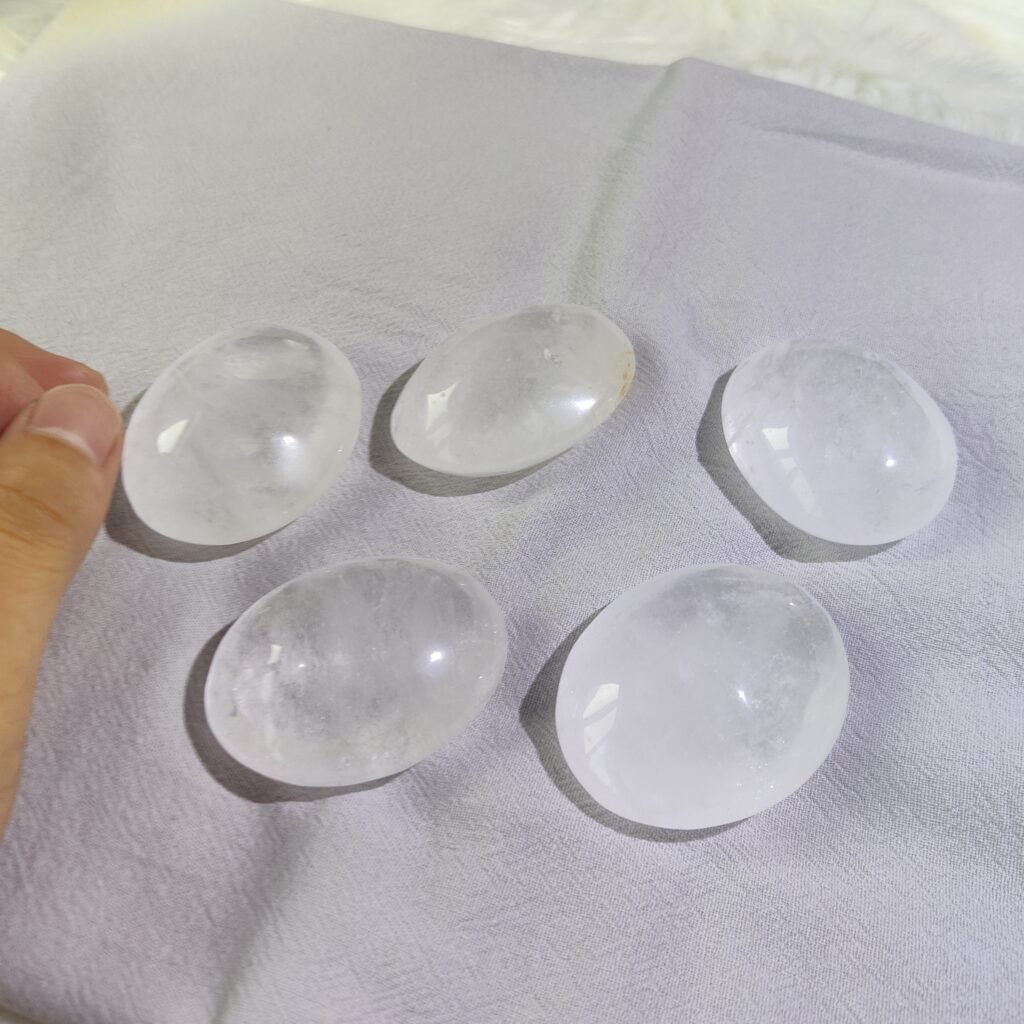
Understanding the nuances behind clear quartz durability helps sellers write more accurate product descriptions, set proper customer expectations, and reduce avoidable disputes. Let's break down what Mohs hardness actually tells you, what kinds of surface issues you'll encounter, and how product shape and packaging choices affect scratch risk in real-world selling.
What Does Mohs 7 Hardness Actually Mean for Clear Quartz?
Most sellers know clear quartz is "Mohs 7," but few translate that number into practical risk assessment. A hardness rating gets cited like a warranty, when it's really just one data point about mineral resistance to a specific type of damage.
The Mohs hardness scale tells you which minerals can scratch which — and at 7, clear quartz resists scratching from anything softer than itself. This means common metals, glass, and most household surfaces won't leave a true scratch. But materials rated 7 or higher (like other quartz pieces, topaz, corundum, or silicon carbide dust) absolutely can4.
Relative scratch hardness — not chip or fracture resistance.
What Mohs Hardness Does and Doesn't Guarantee
The Mohs scale is a relative ranking, not an engineering measurement of absolute scratch resistance.5 It tells you that quartz will scratch glass (Mohs ~5.5) and that a steel knife (Mohs ~5.5–6.5) generally won't scratch quartz. But here's what it does not tell you:
- It doesn't measure resistance to chipping or fracture. Hardness and toughness are different properties.6 Clear quartz has conchoidal fracture7, meaning it can chip when struck — especially on thin edges like tower points or carving details.
- It doesn't account for abrasion from particles. Sand and airborne dust often contain quartz grains themselves.8 When clear quartz rubs against quartz-laden dust during transport or storage, fine surface abrasion can occur, even though the hardness is technically equal.
- It doesn't predict polish durability over time. A polished surface can gradually lose its luster from micro-abrasions without showing a single visible "scratch." This matters for display pieces and bracelets that get handled repeatedly.
A Practical Hardness Reference for Sellers
| Material | Approximate Mohs Hardness | Will It Scratch Clear Quartz? |
|---|---|---|
| Fingernail | 2.5 | No |
| Copper coin | 3.5 | No |
| Steel knife blade | 5.5–6.5 | Very unlikely |
| Window glass | 5.5 | No |
| Another quartz piece | 7 | Yes — mutual scratching |
| Topaz | 8 | Yes |
| Silicon carbide (sandpaper grit) | 9–9.5 | Yes |
| Diamond | 10 | Yes |
In buyer communication, this question often comes up because sellers want to avoid return disputes or unclear quality expectations. I recommend thinking of Mohs 7 as a practical risk indicator: clear quartz is tougher than most things it'll contact in daily retail life, but it is not scratch-proof, chip-proof, or damage-proof. That distinction matters when you write product descriptions or respond to customer inquiries.
Key takeaway for sellers: Mohs 7 means clear quartz is relatively scratch-resistant in everyday conditions. It does not mean it's immune to all surface damage, especially from equal-or-harder materials, particulate abrasion, or impact.
Is That Really a Scratch — Or Something Else Entirely?
One of the most common sources of buyer disputes isn't actual scratching. It's misidentification. When a customer sees any visible line, mark, or imperfection on clear quartz and calls it a "scratch," the seller is immediately put on the defensive. Knowing the difference saves time, money, and relationships.
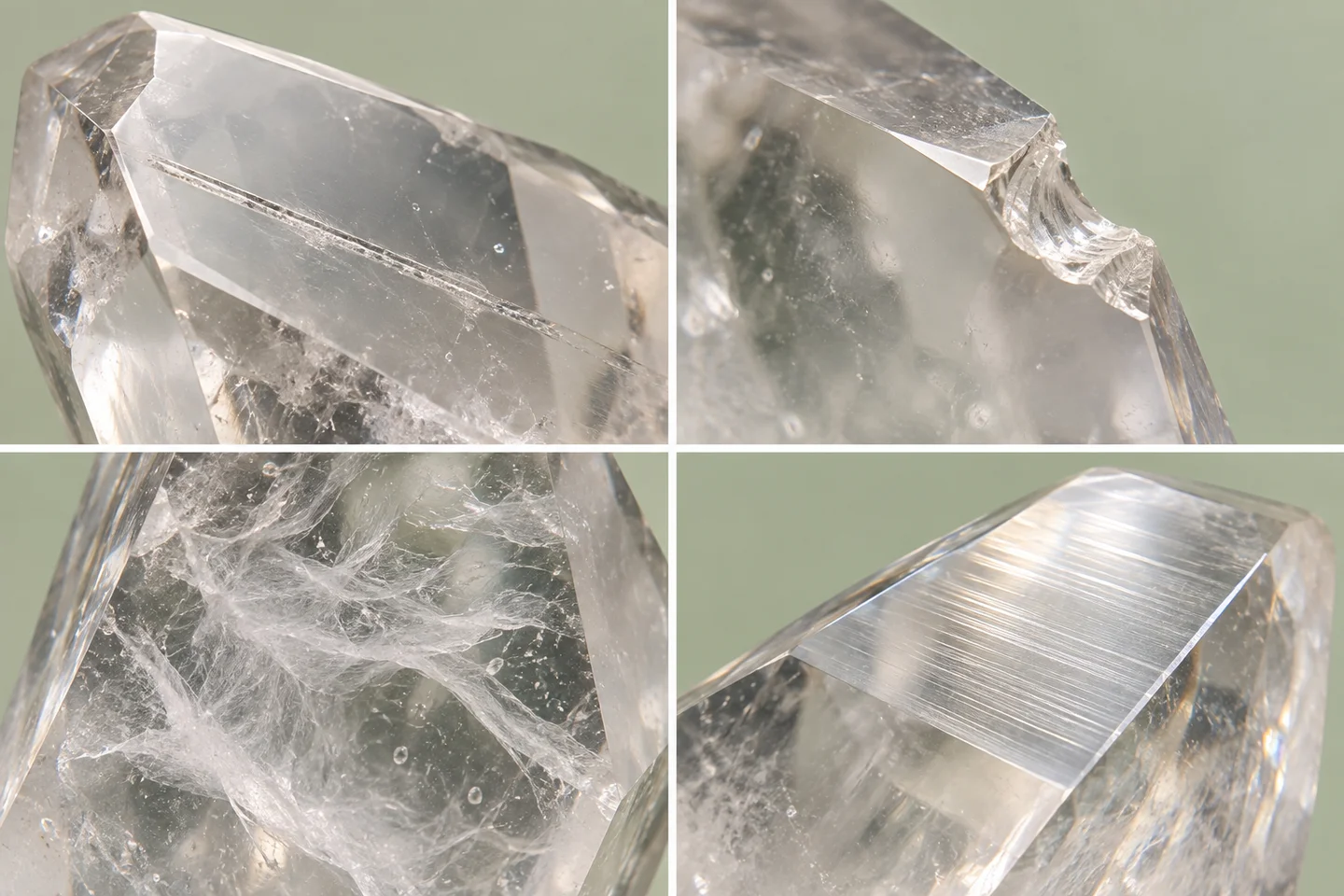
True scratches on clear quartz are surface-level grooves caused by a harder material dragging across the polished face. But many marks that buyers call "scratches" are actually chips, natural internal fractures, inclusions, polishing artifacts, or pre-existing surface features that become more visible under certain lighting.
How to Distinguish Common Surface Issues
Here's a breakdown of the most frequently confused surface features on clear quartz products:
1. True Scratches
These are shallow grooves on the exterior surface that you can feel with a fingernail. They follow a linear path and are typically caused by contact with a harder object. Under magnification, the groove has a defined channel. True scratches are relatively uncommon on well-packaged quartz.
2. Chipped Edges and Dings
Chips occur from impact, not abrasion. They're most common on tower tips, carved details, and the edges of flat-polished pieces. A chip removes a small conchoidal flake of material. Buyers often describe these as "scratches on the point," but they're structurally different and caused by different handling failures.
3. Natural Internal Fractures (Veils and Planes)
Clear quartz frequently contains internal fracture planes, sometimes called "veils" or "rainbows."9 These are entirely natural and exist inside the stone. They catch light and can look like surface cracks to an untrained eye, especially in photographs. They are not damage — they formed during the crystal's growth.
4. Inclusions and Phantoms
Mineral inclusions, fluid inclusions, or phantom growth layers can appear as lines, clouds, or spots inside the crystal.10 Buyers sometimes interpret these as defects or surface marks, particularly when viewing photos on a screen. In my experience handling B2B orders, educating buyers about the difference between inclusions and surface damage before shipment significantly reduces after-sale friction.
5. Polishing Marks and Residual Tool Lines
During the shaping and polishing process, rotary tools and abrasive compounds leave micro-lines on the surface11. High-quality polishing minimizes these, but under certain angles of light, faint directional lines may be visible. These are manufacturing artifacts, not post-production scratches. They indicate the polish grade of the piece.
6. Cloudy or Matte Patches
Some areas of a polished piece may appear less glossy than others. This can result from variations in the stone's internal structure (micro-fractures near the surface) or inconsistent polishing. It's not scratching, but buyers may describe it that way.
A Quick Reference for Buyer Communication
| Issue | Location | Cause | Visible/Tangible |
|---|---|---|---|
| True scratch | Surface only | Harder material contact | Can feel with fingernail |
| Chip or ding | Edges, points, corners | Impact | Missing material, conchoidal |
| Internal fracture | Inside stone | Natural formation | Visible, not tangible on surface |
| Inclusion | Inside stone | Natural mineral/fluid | Visible, not tangible on surface |
| Polish marks | Surface | Manufacturing process | Visible under angled light, barely tangible |
| Cloudy patch | Surface or near-surface | Structure or polish variation | Visible as dull area |
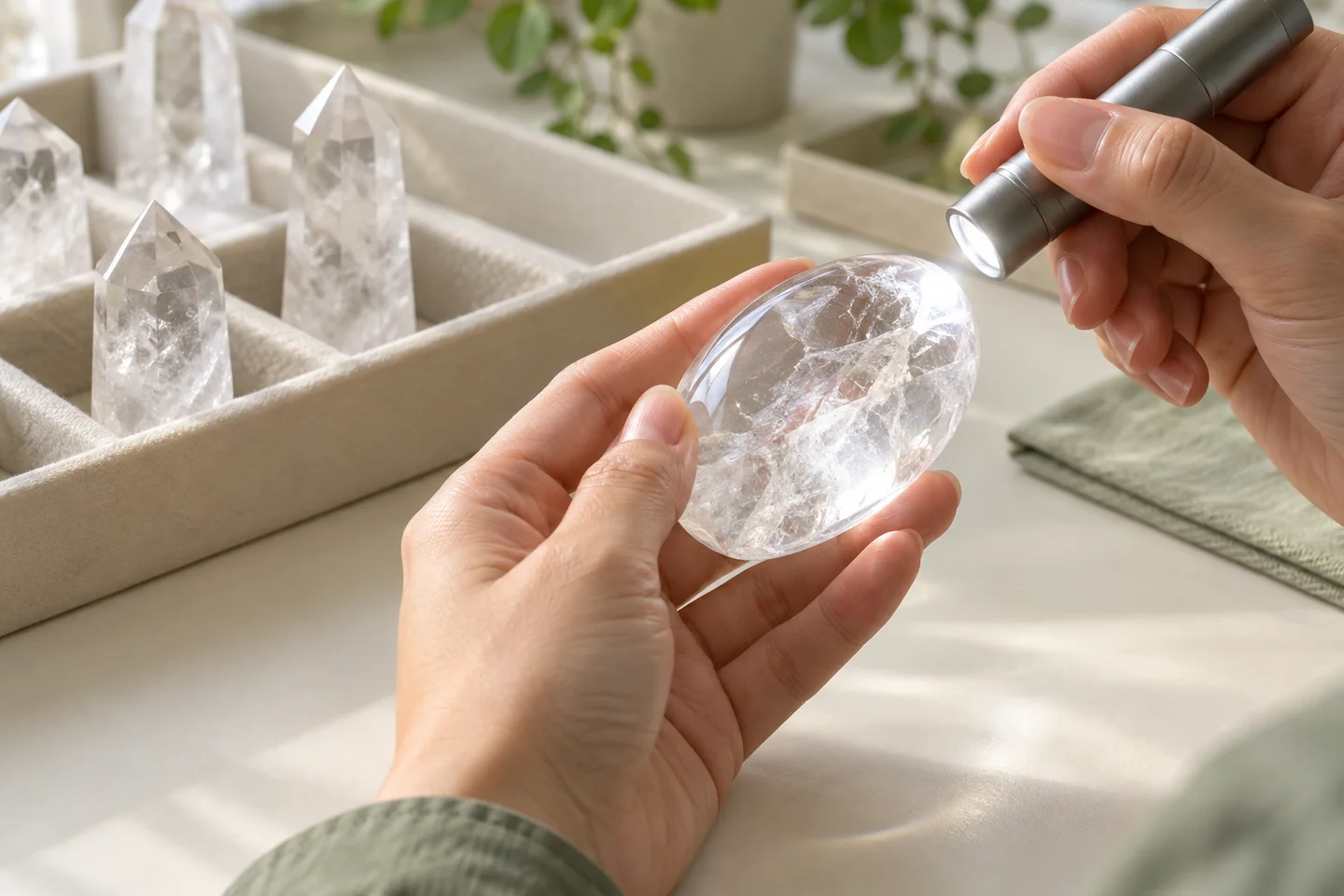
Seller tip: When inspecting incoming inventory, use a simple LED flashlight at a low angle across the polished surface12. True surface scratches and polish marks become visible under raking light. Internal features remain visible regardless of light angle. This 30-second test helps you catch issues before they reach your customer.
Which Clear Quartz Product Shapes Face the Highest Scratch Risk?
Not all clear quartz products face equal risk. A tumbled stone in a velvet pouch lives a very different life than a polished tower displayed under shop lights or a bracelet worn daily. Sellers should evaluate scratch and damage risk by product form, not just by material hardness.
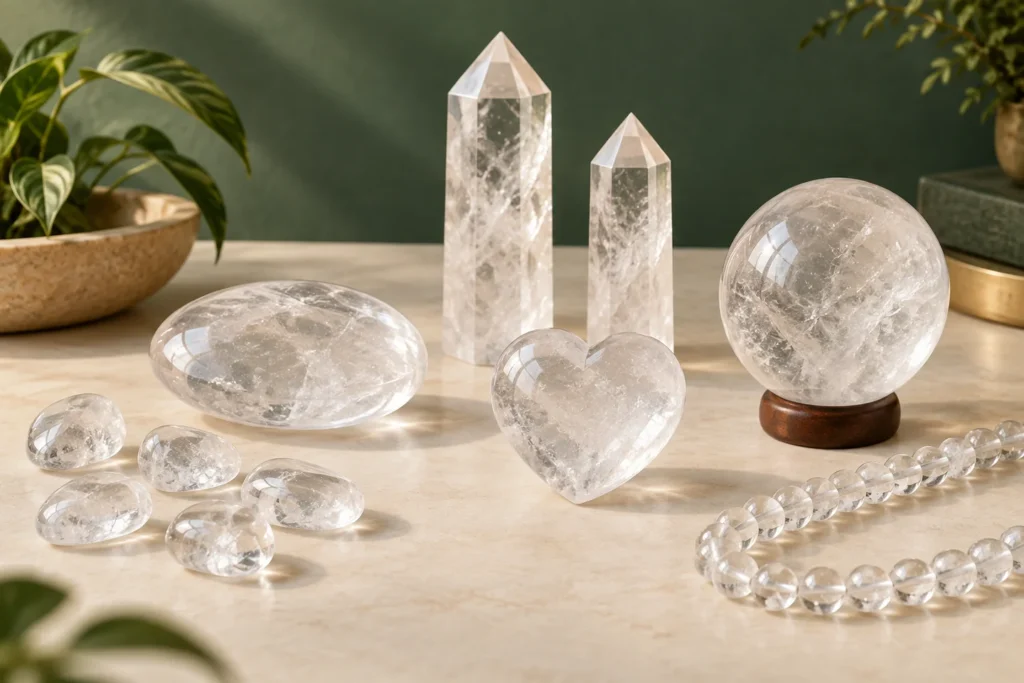
The shape, finish, and intended use of a clear quartz product determine how vulnerable its surfaces are to scratching, chipping, and abrasion. Towers and points face the highest chipping risk, spheres are vulnerable to rolling contact, and bracelets endure the most repeated abrasion from daily wear.
Risk Breakdown by Product Shape
Towers and Points
The tip is the most fragile part. It's thin, often comes to a sharp edge, and chips easily from even minor impact. The flat polished faces can scratch if towers are stored touching each other without wrapping. In bulk shipments, tower tips are the single most common damage point we see in buyer quality complaints.
Spheres
Spheres have no vulnerable edges, which helps with chipping. However, their curved polished surface shows every mark clearly. If spheres roll against each other or against hard surfaces during transit, they can develop micro-abrasions or small dings. Proper sphere stands and individual wrapping are essential.
Palm Stones and Worry Stones
These are designed for handling, which means repeated skin contact and potential contact with keys, coins, or other pocket items. While most of those items won't scratch quartz, sand or grit in pockets or bags can. Over time, frequently handled palm stones may lose some surface luster even without visible scratches.
Tumbled Stones
Tumbles are the most forgiving shape. Their rounded edges resist chipping, and their surfaces are often finished to a slightly lower polish grade than display pieces. Minor surface marks are less visible on a tumbled stone. Bulk packaging with many tumbles touching is generally acceptable, though mixing tumbles of different hardness levels (e.g., quartz with fluorite) should be avoided.
Carvings and Figurines
Fine details — thin wings, extended limbs, facial features — are highly vulnerable to chipping and breakage. The more intricate the carving, the more careful the packaging must be. Scratches on large flat carved surfaces are less common but show clearly on high-polish finishes.
Bracelets and Bead Strands
Beads rub against each other on the elastic or wire, creating bead-to-bead contact abrasion over time. Since all beads are the same hardness, they can gradually dull each other. For retailers, this means bracelet stock that sits in display for months may show slight luster loss compared to fresh inventory.
Packaging Recommendations by Shape
| Product Shape | Primary Risk | Recommended Packaging |
|---|---|---|
| Tower / Point | Tip chipping, face scratching | Individual foam wrap, tip cap or extra padding |
| Sphere | Rolling contact, surface dings | Individual wrap + sphere holder or ring |
| Palm stone | Pocket abrasion, luster loss | Individual pouch or foam slot |
| Tumbled stone | Mixed-hardness abrasion | Bulk bag okay for same-hardness; separate softer stones |
| Carving | Detail chipping, breakage | Individual foam cradle, avoid stacking |
| Bracelet | Bead-to-bead abrasion | Individual bag, avoid tight compression |
How Can Sellers Reduce Scratch Complaints and Return Disputes?
Even with good product quality, surface-related complaints are one of the most frequent issues in the clear quartz resale business. The solution isn't just better packaging — it's better communication at every stage of the customer relationship.
Sellers can minimize scratch-related disputes by combining accurate product descriptions, pre-shipment inspection photos, proper packaging, and proactive customer education about what is and isn't a defect in natural crystal products.
Pre-Sale: Set Expectations Accurately
Your product description is your first line of defense against disputes. Consider including language like:
- "Clear quartz is a natural stone rated Mohs 7 — relatively scratch-resistant but not scratch-proof."
- "Natural features such as internal veils, rainbows, and small inclusions are part of the stone and are not surface damage."
- "Minor polishing marks may be visible under certain lighting angles. These are artifacts of the manufacturing process."
This kind of transparency doesn't reduce sales. In our experience working with crystal shops and e-commerce sellers, it actually builds trust and filters out unreasonable expectations before they become disputes.
During Fulfillment: Inspect and Document
For higher-value pieces — towers over a certain size, spheres, statement carvings — consider photographing each piece under raking light before shipping. This creates a visual record of the product's condition at the time it left your hands. If a customer claims a scratch appeared during shipping, you have documentation.
A simple inspection checklist:
- Check tips and edges for chips under good lighting
- Run a fingernail across any visible lines to determine if they're surface or internal
- Rotate the piece under angled light to reveal polish marks or abrasions
- Photograph any notable natural features so they aren't mistaken for damage later
Post-Sale: Educate Your Customers
Include a small care card or digital guide with orders that explains:
- Clear quartz is durable but can be damaged by impact or contact with harder materials
- Store pieces separately or wrapped to prevent contact marks
- Clean with a soft cloth; avoid abrasive cleaners
- Internal lines and rainbow features are natural, not cracks or scratches
This small investment in customer education pays for itself many times over in reduced returns and better reviews.
Frequently Asked Questions
Can clear quartz scratch glass?
Yes. Clear quartz at Mohs 7 is harder than glass at approximately Mohs 5.5, so it will scratch glass surfaces. This is actually a traditional field test used to help identify quartz. For sellers, this means you should be cautious about displaying clear quartz directly on glass shelves without protective padding.
Will clear quartz scratch if I store multiple pieces together?
Quartz can scratch quartz. If polished clear quartz pieces contact each other — especially during transport or in bulk storage — they can create mutual surface abrasion. Wrapping pieces individually or using foam dividers prevents this. Tumbled stones are more forgiving, but high-polish display pieces should always be separated.
How do I tell customers about natural marks inside clear quartz?
Be upfront in your listings. Describe internal features — veils, rainbows, phantoms, and inclusions — as natural characteristics, not flaws. Use close-up photos that show these features clearly. Most experienced crystal buyers value natural internal features, but first-time buyers may need education.
Does the polish quality of clear quartz affect how easily it shows scratches?
Yes. A higher-quality polish creates a more reflective surface, which makes any subsequent mark more visible by contrast. Matte or satin-finish pieces are more forgiving in terms of visible surface wear. Consider the intended use when choosing polish grades for your inventory.
Should I worry about clear quartz bracelets scratching during wear?
Moderate concern is warranted. Bracelet beads contact each other constantly, and while quartz is durable, bead-to-bead friction over weeks of daily wear can gradually reduce surface luster. Advise customers to remove bracelets during physical work and to store them flat rather than bunched together.
Conclusion
So, does clear quartz scratch easily? The practical answer is no — its Mohs 7 hardness makes it more resistant to scratching than the vast majority of materials it encounters in retail, display, and everyday handling. But "scratch-resistant" is not "scratch-proof," and many surface concerns that buyers raise aren't actually scratches at all. For sellers, the real skill lies in distinguishing true scratches from chips, inclusions, polish marks, and natural internal features — and in communicating these distinctions clearly to customers.
Smart packaging by product shape, honest product descriptions, pre-shipment inspection, and simple customer education materials are the most effective ways to protect both your inventory and your reputation. If you're sourcing clear quartz products for resale and want to discuss surface quality standards, packaging options, or inspection processes for your specific product mix, reach out to us at GD Crystal — we're happy to help.
References
- "Mohs scale", https://en.wikipedia.org/wiki/Mohs_scale. A mineralogical reference identifies quartz as the Mohs hardness 7 index mineral, supporting the article's use of Mohs 7 for clear quartz. Evidence role: definition; source type: encyclopedia. Supports: Quartz is listed as having hardness 7 on the Mohs scale.. ↩
- "Mohs Hardness Scale", https://www.nps.gov/articles/mohs-hardness-scale.htm. Educational geology references commonly list fingernails, copper coins, glass, and steel knife blades below quartz on the Mohs scale, supporting the inference that these objects usually do not scratch quartz. Evidence role: general_support; source type: education. Supports: Common field-test materials such as fingernails, copper coins, glass, and steel blades have lower Mohs hardness values than quartz.. Scope note: The support is contextual because the exact hardness of a key or steel blade varies by alloy and manufacture. ↩
- "Mohs scale", https://en.wikipedia.org/wiki/Mohs_scale. References on the Mohs hardness scale explain that minerals ranked higher on the scale can scratch those ranked lower, supporting the claim that minerals harder than quartz can scratch it. Evidence role: mechanism; source type: encyclopedia. Supports: On the Mohs scale, a harder mineral scratches a softer mineral.. ↩
- "Mohs scale", https://en.wikipedia.org/wiki/Mohs_scale. Hardness tables list quartz at Mohs 7, topaz at 8, corundum at 9, and silicon carbide near 9 to 9.5, supporting the article's examples of materials capable of scratching quartz. Evidence role: general_support; source type: research. Supports: Topaz, corundum, and silicon carbide are harder than quartz on the Mohs scale, while quartz can abrade quartz under contact.. Scope note: The source would support hardness relationships, while actual scratching also depends on pressure, particle shape, and contact conditions. ↩
- "Mohs scale", https://en.wikipedia.org/wiki/Mohs_scale. Geology teaching references describe the Mohs scale as an ordinal comparison of scratch resistance, not a linear engineering measurement of absolute hardness. Evidence role: definition; source type: education. Supports: The Mohs scale ranks minerals by relative scratch resistance rather than measuring absolute hardness.. ↩
- "Fracture toughness and hardness evaluation of three …", https://pubmed.ncbi.nlm.nih.gov/12726702/. Materials-science sources distinguish hardness from toughness, supporting the article's point that a hard mineral may still chip or fracture. Evidence role: definition; source type: education. Supports: Hardness measures resistance to indentation or scratching, while toughness relates to resistance to fracture or crack propagation.. ↩
- "Conchoidal fracture", https://en.wikipedia.org/wiki/Conchoidal_fracture. Mineralogical references describe quartz as showing conchoidal fracture, supporting the article's explanation that impacts can remove curved chips from quartz surfaces or edges. Evidence role: definition; source type: encyclopedia. Supports: Quartz is described as having conchoidal fracture.. ↩
- "Quartz – Common Minerals", https://commonminerals.esci.umn.edu/minerals-o-s/quartz. Geological sources identify quartz as a common constituent of sand and sediment, providing support for the article's statement that quartz-bearing grit can abrade polished quartz surfaces. Evidence role: general_support; source type: government. Supports: Quartz is a common and abundant constituent of sand and sediment-derived dust.. Scope note: The support is contextual because dust composition varies by location and environment. ↩
- "Unusual Purple Fluid in Quartz", https://www.gia.edu/gems-gemology/fall-2022-microworld-unusual-purple-fluid-in-quartz. Mineralogical and gemological sources describe internal fractures and inclusion features in quartz, supporting the article's distinction between natural internal features and surface scratches. Evidence role: general_support; source type: research. Supports: Quartz can contain internal fractures, fluid inclusions, and veil-like features that affect light transmission and appearance.. Scope note: The support is contextual because terminology such as "veil" and "rainbow" is also used informally in the gem trade. ↩
- "Fluid inclusion", https://en.wikipedia.org/wiki/Fluid_inclusion. Studies of quartz inclusions and crystal growth document fluid inclusions, mineral inclusions, and growth zoning, supporting the article's explanation that visible internal lines or clouds need not be surface damage. Evidence role: general_support; source type: paper. Supports: Quartz crystals can preserve mineral inclusions, fluid inclusions, and growth features that appear as visible internal structures.. Scope note: The source would support the existence of these features in quartz generally, not the condition of any individual retail specimen. ↩
- "Impact of different polishing techniques on surface roughness …", https://pmc.ncbi.nlm.nih.gov/articles/PMC12297648/. Surface-finishing literature shows that abrasive polishing can leave fine scratches and directional surface texture, supporting the article's description of polishing marks on shaped quartz pieces. Evidence role: mechanism; source type: paper. Supports: Abrasive machining and polishing can create fine scratches or directional surface features depending on abrasive size and process conditions.. Scope note: The support is contextual because the exact appearance depends on the specific polishing equipment, abrasive sequence, and quality control used. ↩
- "Raking light", https://en.wikipedia.org/wiki/Raking_light. Conservation and inspection sources describe raking light as a method for emphasizing surface texture and defects, supporting the article's suggestion to inspect polished quartz under low-angle illumination. Evidence role: mechanism; source type: institution. Supports: Raking light accentuates surface relief and makes scratches or tool marks easier to see.. Scope note: The support is contextual because it addresses visual inspection principles rather than quartz retail inspection specifically. ↩