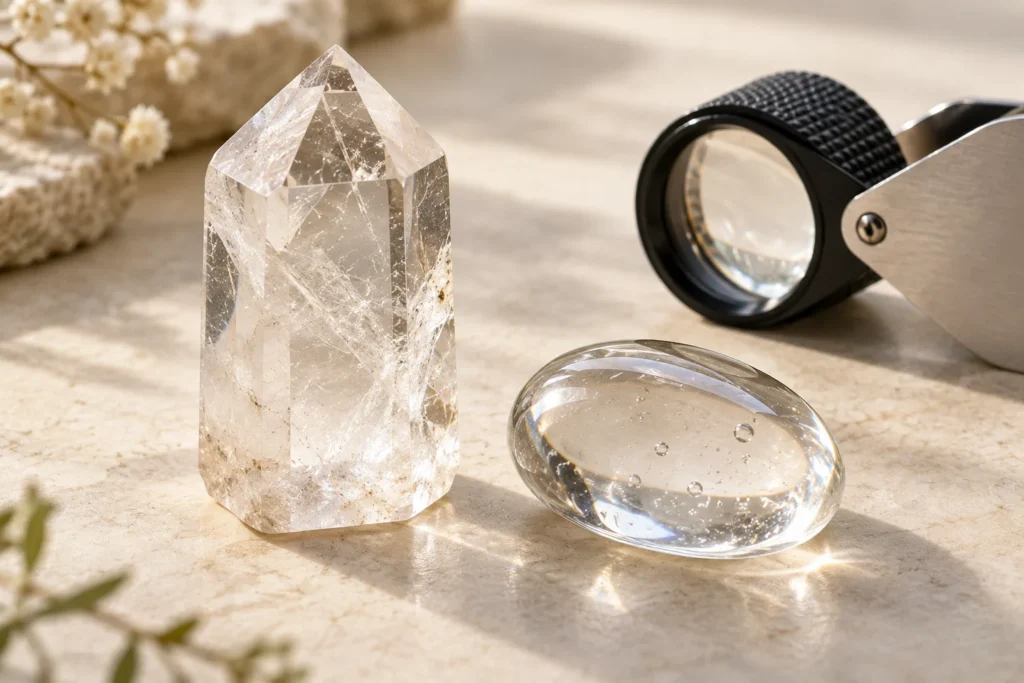
Sourcing clear quartz crystal for resale sounds straightforward — until you receive a shipment and realize some pieces look suspiciously perfect. The frustration of discovering mislabeled material after listing it in your shop or sending it to customers is real, costly, and avoidable. The key is learning how to evaluate authenticity before you commit to a purchase order.
You can tell if a clear quartz crystal is real by examining multiple indicators together — internal inclusions, natural imperfections, weight consistency, and supplier transparency about material origin and treatment. No single home test is conclusive.1 For B2B buyers, verifying clear quartz authenticity is a procurement risk question that requires visual screening, supplier disclosure, sample confirmation, and, when stakes are high, third-party gemological testing.
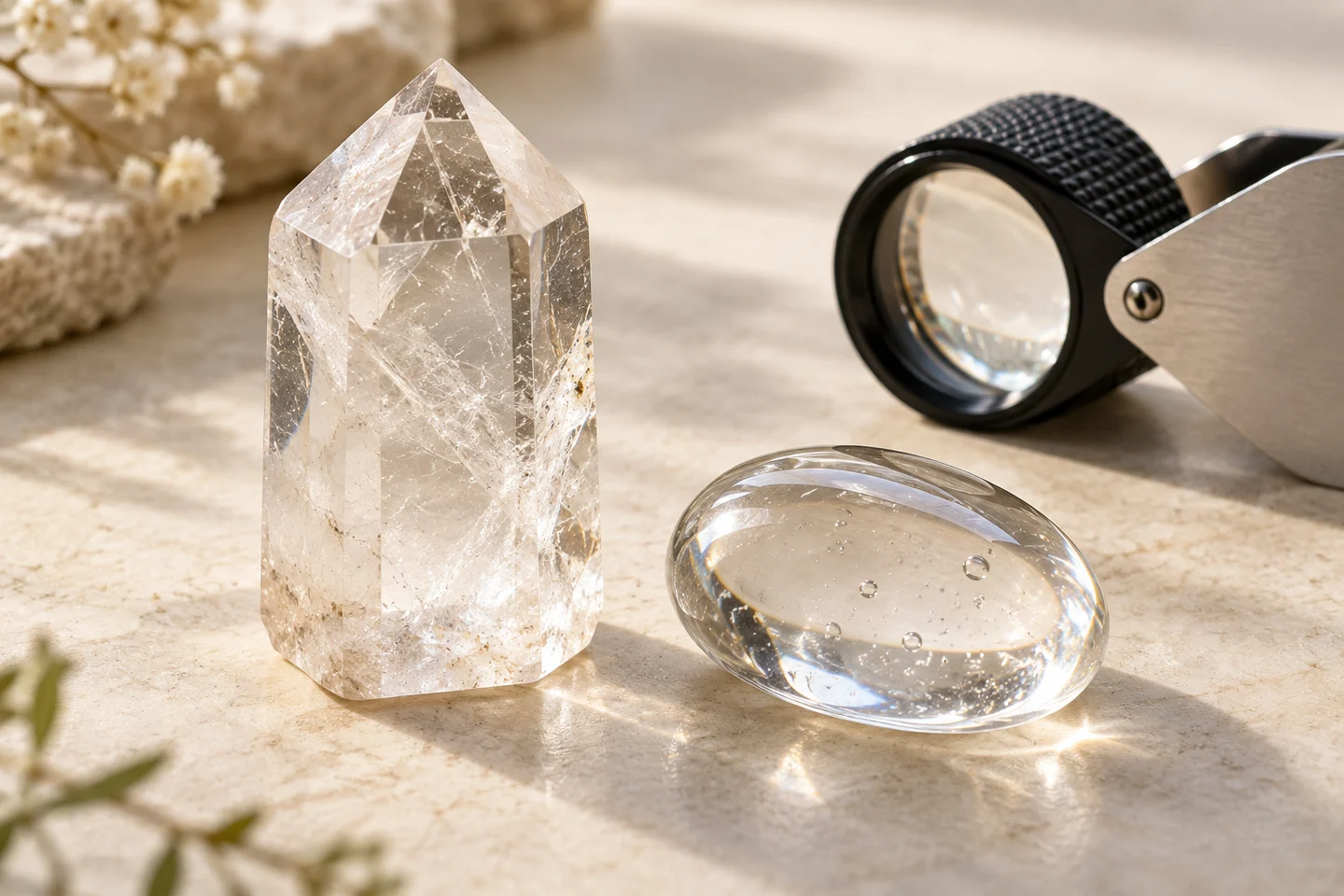
But what exactly should you look for, and what common advice should you ignore? Below, I break down the categories of "not real," explain why popular single-test methods often fail, and share the practical screening steps I use after more than 15 years of processing and supplying clear quartz products from our facility in Suzhou, China.
What Does "Real Clear Quartz" Actually Mean for Buyers?
Most online guides frame clear quartz authentication as a simple real-versus-fake question. But for anyone buying wholesale quantities for resale, this binary framing misses the nuances that actually create purchasing risk.
The term "real clear quartz crystal" can mean natural, untreated quartz — but the marketplace also includes glass imitations, synthetic quartz, treated or enhanced quartz2, and products with vague or inaccurate material descriptions. Each category carries different implications for your product listings, customer trust, and return rates.
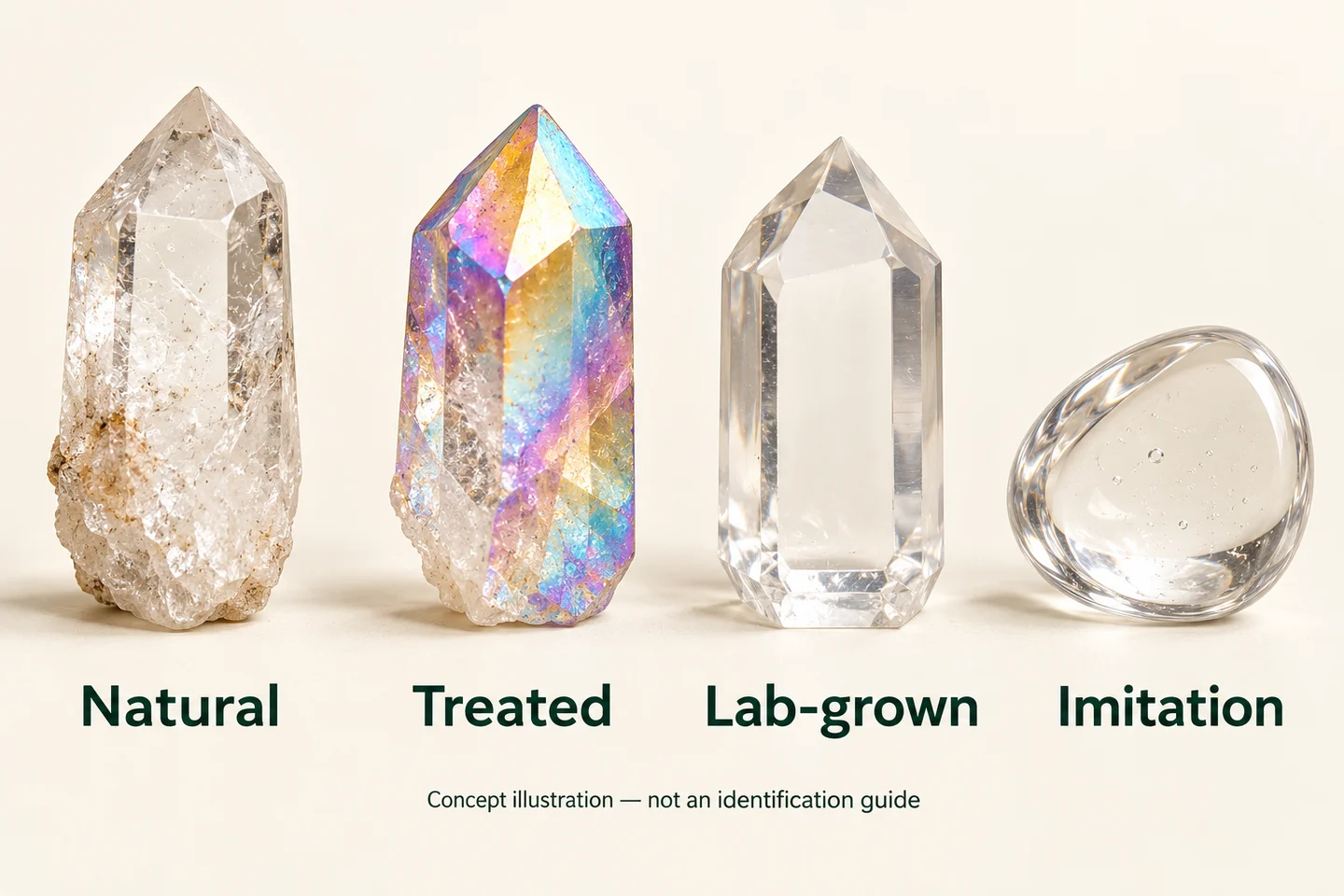
Five Material Categories You Should Know
Before evaluating any piece, it helps to understand what you might actually be looking at:
| Category | Description | Commercial Risk |
|---|---|---|
| Natural clear quartz | Mined quartz, may have inclusions, veils, or minor cloudiness | Low risk if properly disclosed |
| Glass imitation | Man-made glass sold as quartz | High risk — mislabeling, returns, reputation damage |
| Synthetic quartz3 | Lab-grown silicon dioxide, chemically identical to natural quartz | Moderate risk if not disclosed; some buyers accept it knowingly |
| Treated/enhanced quartz | Natural quartz that has been heated, coated, or irradiated | Moderate risk if treatment is undisclosed |
| Vague or inaccurate labeling | Supplier does not clearly state material type or treatment | Often the most common source of problems |
The last category deserves special attention. In my experience supplying wholesale clear quartz towers, spheres, palm stones, and carvings, the most frequent issue buyers face is not outright counterfeiting — it is unclear product descriptions from suppliers who do not confirm material specifics. A supplier who cannot or will not answer direct questions about whether a product is natural, synthetic, or treated is a larger risk factor than any visual flaw in the stone itself.
Why This Matters for Resale
If you sell clear quartz as "natural" and it turns out to be glass or synthetic without disclosure, your customers lose trust, and depending on your market, you may face compliance issues. Conversely, some buyers knowingly purchase synthetic quartz for certain product lines where cost matters more than natural origin. The risk is not in the material itself — it is in the gap between what your listing says and what the product actually is.
Bottom line: Reframe your authentication process from "Is this real?" to "What exactly is this material, and can my supplier confirm it?"
Why Do Common Single-Test Methods Fail?
If you search online for how to test clear quartz crystal, you will find dozens of guides recommending the cold touch test, the bubble test, the scratch test, or even the fire test. These methods are popular because they sound simple. The problem is that each one, used alone, can mislead you.
Single tests can produce false positives and false negatives. They may fail to distinguish between natural quartz and synthetic quartz (which share physical properties), they can damage finished products, and they give a false sense of certainty that discourages deeper verification.
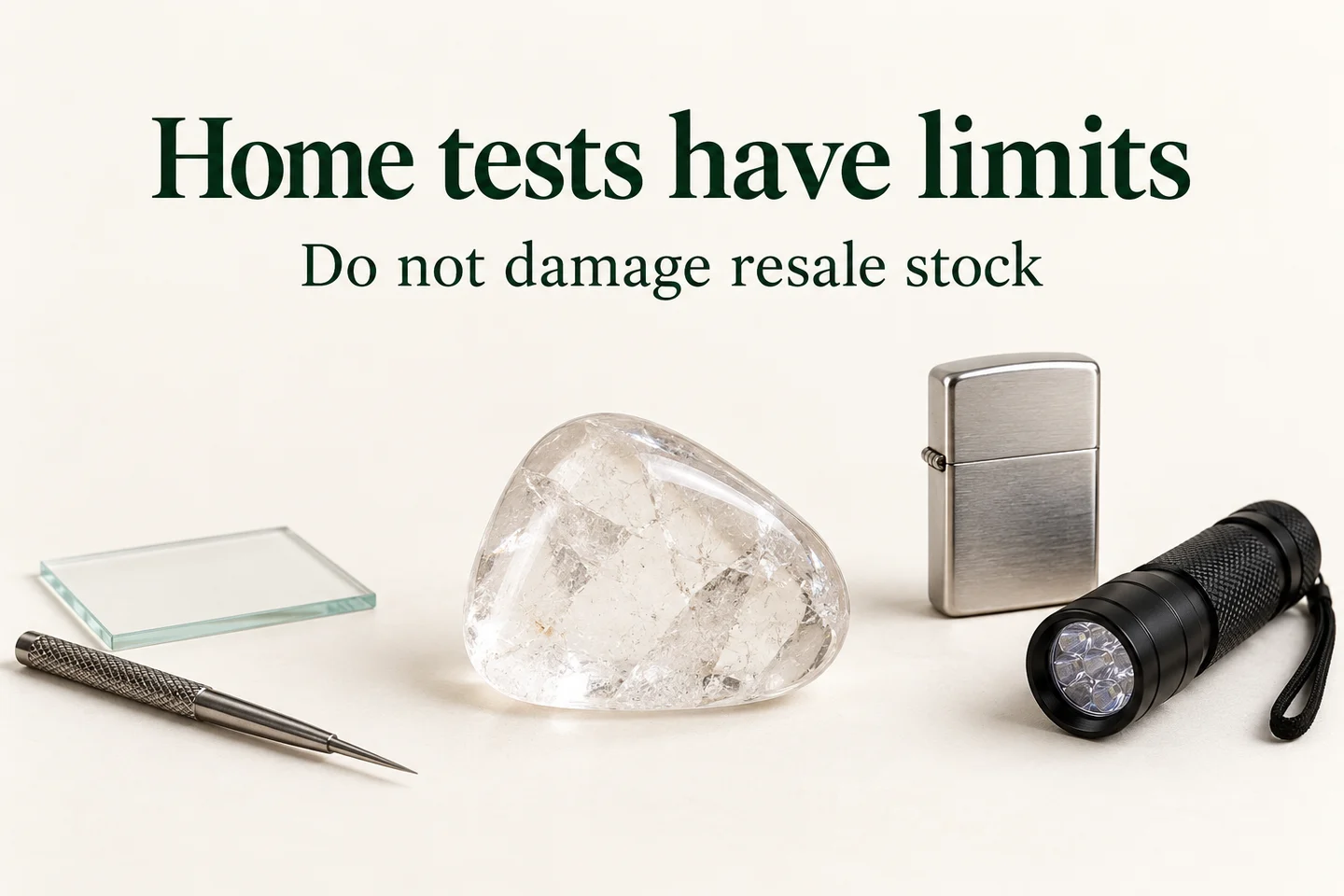
Breaking Down the Most Common Tests
Let me walk through the tests buyers ask me about most often and explain their limitations:
1. The Cold Touch Test
Claim: Real quartz feels cold to the touch, while glass warms up quickly.
Reality: Both natural quartz and glass feel cool initially. Quartz does have higher thermal conductivity than common glass4, so it may feel cooler for slightly longer. But this difference is subtle, subjective, and nearly impossible to use reliably without a thermal conductivity meter. Synthetic quartz feels identical to natural quartz. This test tells you almost nothing useful in a wholesale inspection setting.
2. The Bubble Test
Claim: Glass contains round air bubbles; real quartz does not.
Reality: Some glass does contain bubbles, and spotting them can be a helpful clue. However, high-quality glass imitations may have few or no visible bubbles. Meanwhile, natural quartz can contain fluid inclusions5 that look similar to bubbles under casual observation. This test can support a suspicion but cannot confirm authenticity on its own.
3. The Scratch Test
Claim: Quartz (Mohs hardness 7) scratches glass (Mohs hardness ~5.5)6, so if it scratches glass, it is real.
Reality: This test confirms hardness, not origin. Synthetic quartz has the same hardness as natural quartz. Some harder glass formulations resist scratching. And deliberately scratching finished products — especially polished spheres, towers, or carvings meant for resale — damages inventory. I do not recommend this for evaluating wholesale goods.
4. The Fire Test
Claim: Holding a flame to the crystal will reveal glass (which may crack or melt differently).
Reality: This is destructive. It can crack natural quartz from thermal shock just as easily as glass.7 It provides no way to distinguish natural from synthetic quartz. It risks injury. There is no professional context where this test makes sense for evaluating B2B inventory.
5. The Transparency/Perfection Test
Claim: If a crystal is perfectly clear with no inclusions, it is probably fake.
Reality: This is where things get nuanced. Very high clarity can be a warning sign — but high-grade natural clear quartz exists and can be remarkably clean. Dismissing every clean piece as fake means you would reject legitimate premium material. Conversely, assuming all slightly included pieces are natural ignores the fact that some glass imitations are made with intentional imperfections.
The takeaway: These tests can serve as weak screening clues when combined with other evidence, but none of them should be treated as proof. For B2B purchasing decisions, rely on a combination of visual inspection, supplier communication, and professional testing.
What Can Buyers Reasonably Check Before Purchasing?
You do not need a gemological lab to perform useful screening. There are practical steps you can take during the sourcing and sample evaluation stage that significantly reduce your risk of receiving mislabeled clear quartz crystal products.
Before placing a bulk order, buyers should evaluate internal characteristics, product consistency, batch-specific photos, and supplier responses to direct material questions. These steps, taken together, form a much stronger authentication approach than any single test.
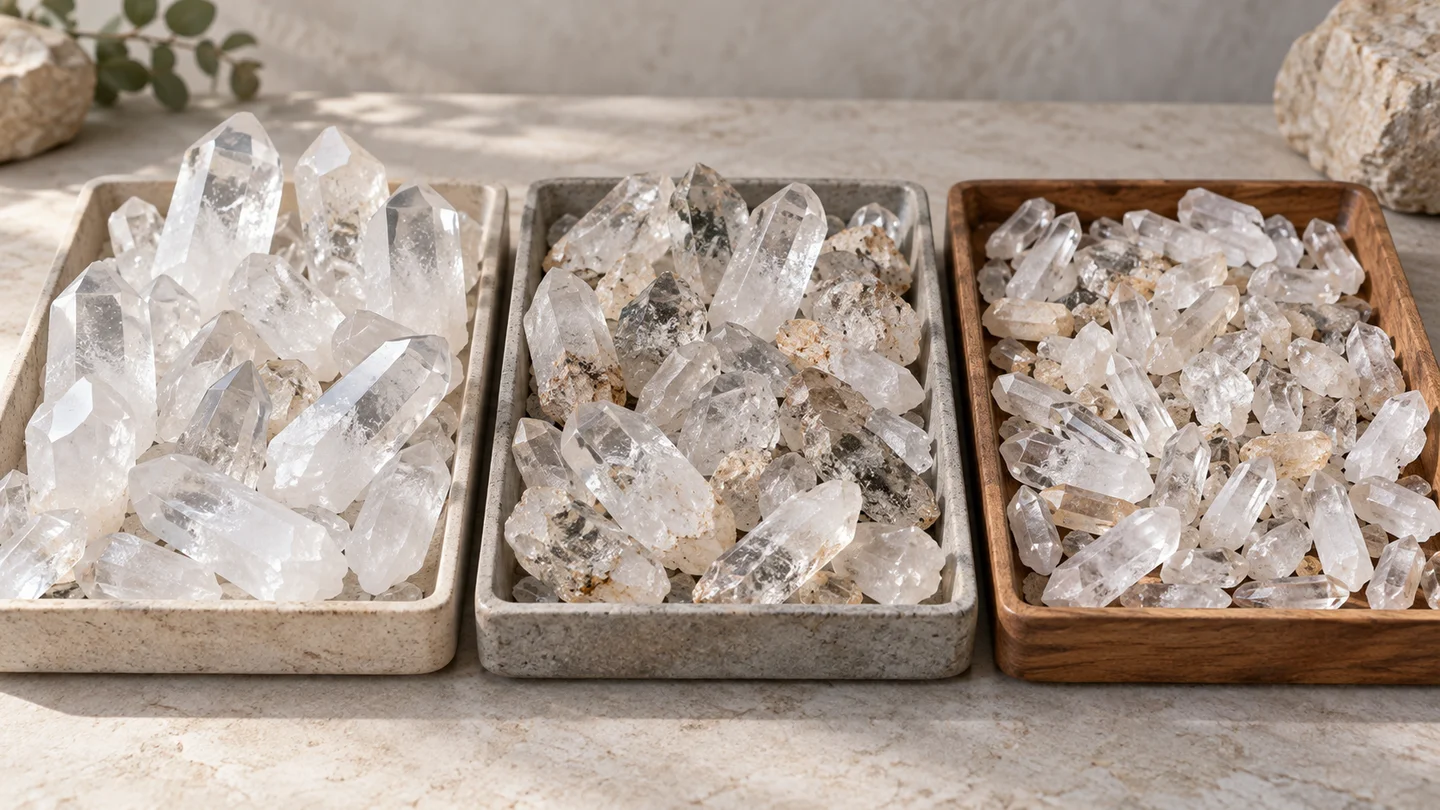
Visual Clues to Examine
When you receive samples or evaluate product photos, look for these indicators:
- Natural inclusions: Inclusions can provide useful clues, but some synthetic quartz and glass can show natural-looking internal features; inclusions alone do not establish natural origin.
- Rainbow refractions: Natural internal fractures often create rainbow light effects when viewed at certain angles. While not exclusive to natural quartz, their presence alongside other inclusions strengthens confidence.
- Surface texture: Polished natural quartz may still show subtle natural texture variations. Glass imitations sometimes have a slightly different luster or feel, though this requires handling experience to notice consistently.
- Weight and density: Natural quartz (specific gravity ~2.65) and glass (varies, often 2.2–2.5 for soda-lime glass) differ slightly in density.8 If a piece feels noticeably lighter than expected for its size, it may warrant closer examination. This is a weak clue on its own but useful in combination.
Product and Batch Consistency Checks
For wholesale orders, consider these practical steps:
- Request current batch photos. Do not rely on catalog images or old sample photos. Ask to see the actual batch you are ordering from. If a supplier cannot provide current-batch photos, treat that as a flag.
- Check for unnatural uniformity. If every piece in a large batch is identically clear with no variation in inclusions, cloudiness, or shape irregularity, that level of consistency is unusual for natural quartz. Natural material varies from piece to piece.9
- Compare across product forms. If the same supplier offers towers, spheres, and carvings all in impossibly perfect clarity at unusually low prices, ask questions. Pricing that seems too good for the stated quality and material may indicate substitution.
Supplier Communication as a Screening Tool
This is where I see the biggest difference between buyers who have problems and buyers who do not. Ask direct questions and evaluate the quality of the answers:
- "Is this natural quartz or synthetic?"
- "Has any treatment been applied — heating, coating, or irradiation?"
- "Can you confirm the material for this specific batch?"
- "Can I order a sample before committing to the full quantity?"
A supplier who answers clearly, specifies material details per batch, and welcomes sample orders is a lower-risk partner. A supplier who avoids these questions, gives vague answers, or insists on large orders with no sample option deserves more scrutiny.
At GD Crystal, we handle these questions routinely. We confirm material type, treatment status, and product specifications on a per-batch basis. We know that what was available last month may differ from what we are processing now — and we communicate that upfront rather than letting buyers assume continuity.
Does High Clarity Mean a Clear Quartz Crystal Is Fake?
This is one of the most common misconceptions I encounter from buyers. Many guides suggest that if a clear quartz piece has no visible inclusions, it is probably glass or synthetic. This oversimplification can lead to bad purchasing decisions in both directions.
High clarity in clear quartz crystal does not automatically indicate that the material is fake. Very clean natural quartz exists10, particularly from certain mining regions. However, high-clarity pieces do require more careful confirmation because they visually overlap with glass and synthetic alternatives.
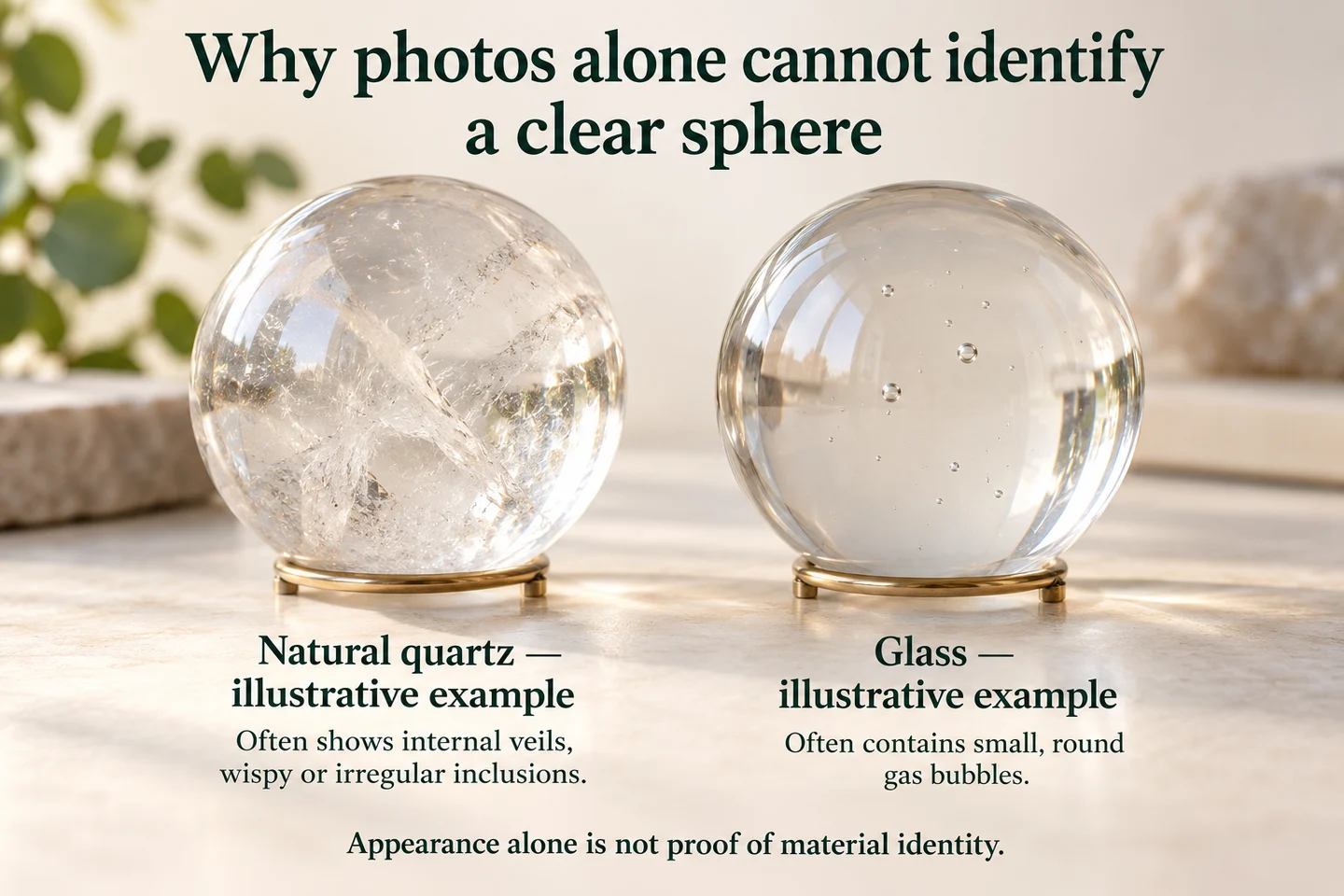
Understanding Clarity in Natural Quartz
Natural clear quartz occurs across a wide spectrum of clarity. Some deposits produce material with significant inclusions, cloudiness, and fractures. Others — particularly well-known sources in Brazil, Madagascar, and certain regions in China — yield quartz that is remarkably transparent with minimal internal features.
Here is how I think about clarity evaluation for wholesale purposes:
| Clarity Level | What to Expect | Verification Approach |
|---|---|---|
| Low clarity (cloudy, heavily included) | Appearance alone cannot confirm natural origin | Visual screening plus supplier disclosure and sample confirmation; independent testing when needed. |
| Medium clarity (some veils, minor inclusions) | Appearance alone cannot confirm natural origin | Visual screening plus supplier disclosure and sample confirmation; independent testing when needed. |
| High clarity (near-perfect transparency) | Could be natural, synthetic, or glass | Requires supplier disclosure + sample confirmation; consider third-party testing for large or high-value orders |
The Practical Implication
If you are sourcing premium clear quartz — say, high-clarity spheres or display towers for a retail brand — do not reject the material simply because it looks "too good." Instead, increase your verification effort proportionally to the clarity level and order value. Request samples. Ask your supplier to confirm the material source. And for brand-sensitive orders, consider investing in third-party testing.
This approach lets you access genuinely premium natural quartz without overpaying for glass, and without dismissing legitimate material out of excessive caution.
When Should You Use Third-Party Gemological Testing?
For everyday small orders and routine restocking, the visual and supplier-communication steps I described above are usually sufficient. But there are situations where independent verification is worth the cost and effort.
Third-party gemological testing is recommended for high-value orders, brand-launch products, or any situation where material misrepresentation would cause significant financial or reputational harm. A qualified gemological lab can distinguish natural quartz from synthetic quartz and glass using equipment and techniques that are not available through home testing.
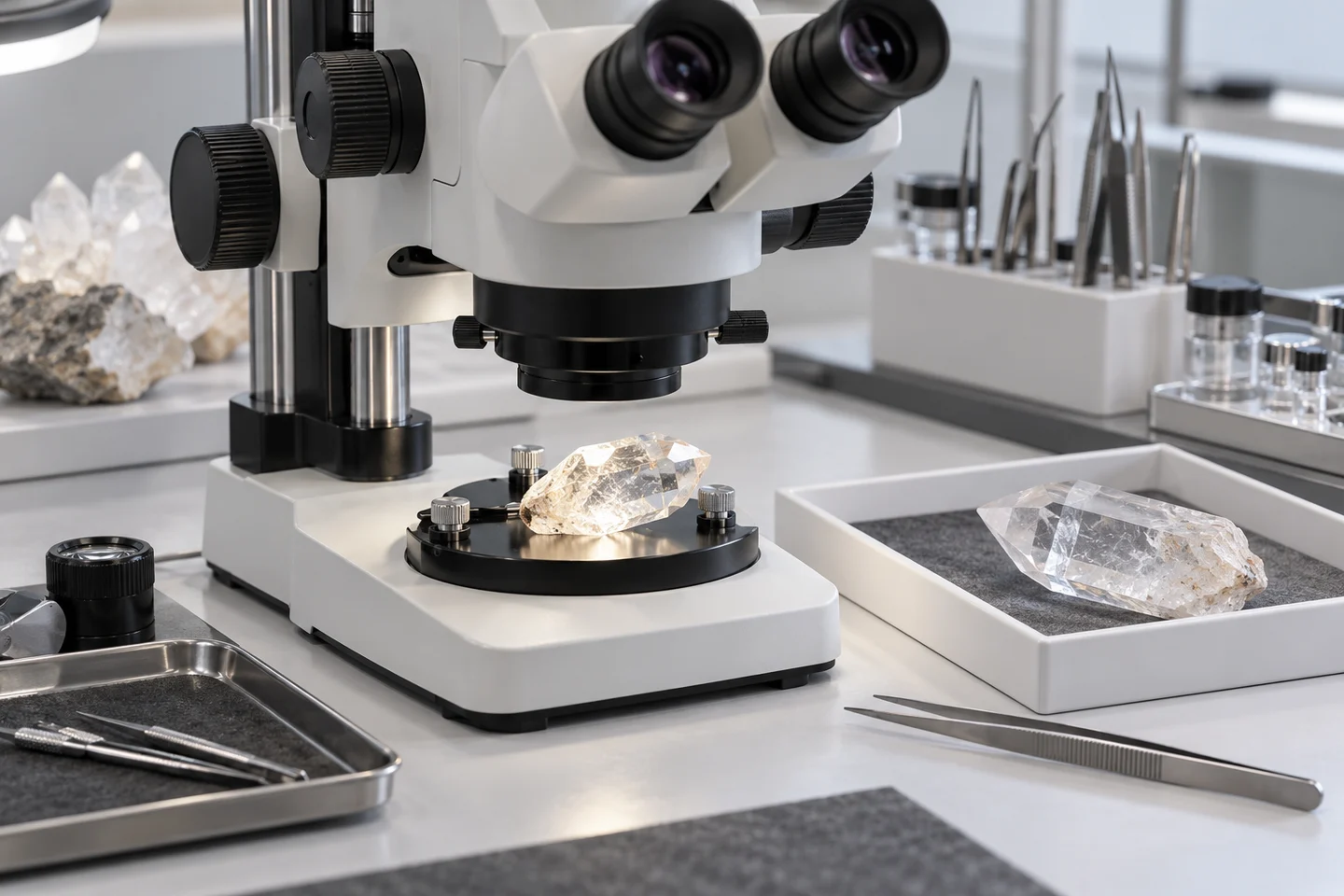
What Professional Testing Can Determine
Gemological laboratories use a combination of methods that far exceed what any visual inspection can achieve:
- Refractive index measurement: Natural and synthetic quartz share the same refractive index (~1.544–1.553), but glass differs.11 This test reliably separates glass from quartz.
- Specific gravity testing: Precise density measurements can distinguish quartz from glass and other imitations.
- Microscopic examination: Trained gemologists can identify growth patterns, inclusions, and structural features that indicate natural versus synthetic origin.
- Spectroscopic analysis: Advanced techniques like infrared spectroscopy or Raman spectroscopy can confirm mineral identity and detect treatments.12
When Is It Worth the Investment?
Consider third-party testing in these scenarios:
- First orders with a new supplier where the total value justifies the testing cost
- Products you plan to sell with "natural" claims that your brand reputation depends on
- Unusually high-clarity material at prices that seem inconsistent with natural premium quartz
- Customer disputes or returns where you need documentation to resolve the issue
- Regulatory or marketplace compliance requirements that demand material certificates
I want to be clear: GD Crystal is a processing and wholesale supplier, not a gemological laboratory. We provide accurate material descriptions based on our sourcing and processing experience, and we welcome buyers who want to verify material through independent testing. That transparency is part of how long-term supplier relationships work.
Frequently Asked Questions
Can you tell if clear quartz is real just by looking at it?
Visual inspection can reveal helpful clues — such as natural inclusions, veils, or rainbow refractions — but it cannot provide certainty on its own. Combining visual evaluation with supplier disclosure and, when needed, professional testing gives you a much more reliable assessment than any single observation.
Is synthetic quartz the same as fake quartz?
Not exactly. Synthetic quartz is lab-grown silicon dioxide with the same chemical composition and hardness as natural quartz. It is not "fake" in the sense that glass is, but it should be disclosed. The commercial risk comes from selling synthetic material as natural without proper labeling.
Does a low price always mean clear quartz is fake?
Not always, but pricing that is significantly below market norms for the stated quality and material type is a warning sign. It could indicate glass substitution, undisclosed treatment, or lower-grade material than described. Always ask suppliers how they achieve their pricing.
Should I scratch-test every clear quartz piece I buy?
No. Scratch testing confirms hardness but cannot distinguish natural from synthetic quartz, and it damages polished products. For wholesale inventory meant for resale, this test creates more problems than it solves. Use non-destructive screening methods and supplier verification instead.
How does GD Crystal handle material verification questions from buyers?
We confirm material type, treatment status, and product specifications on a per-batch basis. We provide current-batch photos, support sample orders before bulk commitments, and welcome buyers who choose to pursue independent third-party testing for their own assurance.
Conclusion
Telling if a clear quartz crystal is real is not about mastering one clever trick. It is about combining visual screening, supplier communication, sample evaluation, and professional testing into a layered approach that matches the value and risk level of your order. No single home test — not cold touch, not scratch resistance, not bubble spotting — can reliably confirm authenticity by itself.
For B2B buyers sourcing clear quartz products for resale, the most effective authentication strategy starts with choosing a supplier who communicates material details clearly and honestly, batch by batch. That is the standard we work to maintain at GD Crystal across our full range of towers, spheres, palm stones, carvings, and other product forms.
Ready to source clear quartz with confidence? Send us your material requirements, target sizes, quantities, product photos or reference styles, and any testing preferences. We will provide a quotation with specific batch details and support sample orders so you can evaluate before committing. Contact GD Crystal →
References
- "Synthetic Rock Crystal Quartz Cluster with Natural-Looking Inclusions", https://www.gia.edu/gems-gemology/winter-2022-gemnews-synthetic-rock-crystal-quartz. Gemological identification references describe quartz authentication as relying on combined observations such as optical properties, density, hardness, inclusions, and instrumental testing, supporting the view that no single home test is definitive. Evidence role: expert_consensus; source type: institution. Supports: The source should support that quartz identification is based on a combination of diagnostic properties and, when necessary, gemological testing rather than a single informal observation.. Scope note: Such sources may not evaluate every popular internet home test directly, but they establish the professional standard of multi-factor identification. ↩
- "An Introduction to Simulants or Imitation Gem Materials", https://www.gia.edu/gem-imitation. Gemological references distinguish natural quartz from synthetic quartz, treated material, and non-quartz simulants such as glass, providing terminology for the material categories relevant to resale disclosure. Evidence role: definition; source type: institution. Supports: The source should document the recognized distinctions among natural quartz, synthetic quartz, treated quartz, and simulants such as glass.. Scope note: The source supports the classification framework rather than proving the frequency of each category in a specific wholesale market. ↩
- "Quartz", https://en.wikipedia.org/wiki/Quartz. Materials-science and mineralogical sources describe synthetic quartz as manufactured crystalline silicon dioxide, the same chemical composition as natural quartz, while differing in growth environment and possible internal features. Evidence role: definition; source type: research. Supports: The source should support that synthetic quartz is manufactured crystalline SiO2 and shares the chemical composition of natural quartz.. Scope note: Chemical equivalence does not by itself establish that a particular specimen is synthetic or natural. ↩
- "Soda–lime glass", https://en.wikipedia.org/wiki/Soda%E2%80%93lime_glass. Published materials-property data report thermal conductivity values for crystalline quartz that are higher than those of common soda-lime glass, explaining why quartz may feel cool for longer under comparable handling conditions. Evidence role: mechanism; source type: research. Supports: The source should provide comparative thermal conductivity values for quartz and common glass.. Scope note: Thermal feel also depends on temperature, size, surface finish, and handling conditions, so the property comparison does not validate touch as a reliable authentication test. ↩
- "Fluid inclusion", https://en.wikipedia.org/wiki/Fluid_inclusion. Geology references describe quartz as a common host for fluid inclusions—microscopic trapped fluids formed during crystal growth or later geological processes—supporting the caution that such features can resemble bubbles to non-specialists. Evidence role: mechanism; source type: education. Supports: The source should support that quartz commonly hosts fluid inclusions and explain their appearance or formation.. Scope note: The source supports the existence of fluid inclusions in quartz but may not specifically compare them with bubbles in manufactured glass. ↩
- "Mineral Gemstones", https://pubs.usgs.gov/gip/gemstones/mineral.html. Mineral-identification references list quartz at Mohs hardness 7 and commonly place glass near 5.5, supporting the statement that quartz can scratch ordinary glass under suitable conditions. Evidence role: general_support; source type: government. Supports: The source should confirm quartz's Mohs hardness and the approximate hardness of glass or mineral-identification comparison using glass.. Scope note: Hardness comparison supports material resistance to scratching, not natural origin; synthetic quartz would show similar hardness. ↩
- "Thermal shock", https://en.wikipedia.org/wiki/Thermal_shock. Materials-science literature on brittle ceramics and silica phases explains that rapid heating or cooling can create thermal stresses sufficient to initiate cracking, supporting the caution that flame exposure can damage quartz specimens. Evidence role: mechanism; source type: paper. Supports: The source should explain that rapid temperature changes can generate thermal stresses and cracking in brittle materials such as quartz or silica.. Scope note: The source may address thermal shock generally rather than testing polished retail quartz objects with a household flame. ↩
- "Mineral Gemstones", https://pubs.usgs.gov/gip/gemstones/mineral.html. Mineral and materials-property data list quartz at approximately 2.65 specific gravity and common soda-lime glass in a generally lower density range, supporting density as a possible comparative clue. Evidence role: statistic; source type: research. Supports: The source should provide specific gravity or density values for quartz and common soda-lime glass.. Scope note: Density ranges overlap across glass formulations and finished-object geometries, so this comparison is contextual rather than proof of authenticity. ↩
- "Determination of relative growth rates of natural quartz crystals", https://pubmed.ncbi.nlm.nih.gov/10786791/. Geological sources describe quartz crystals as products of variable growth environments that can incorporate inclusions, fractures, zoning, and other internal features, supporting the expectation of piece-to-piece variation in natural material. Evidence role: general_support; source type: education. Supports: The source should explain that natural quartz forms under variable geological conditions and may contain inclusions, fractures, zoning, or other internal variations.. Scope note: This supports a general screening principle, not a quantitative threshold for how much variation a wholesale batch must display. ↩
- "Quartz", https://en.wikipedia.org/wiki/Quartz. Mineralogical encyclopedias define rock crystal as the colorless, transparent variety of quartz, supporting the statement that naturally occurring quartz can be very clear. Evidence role: definition; source type: encyclopedia. Supports: The source should support that rock crystal is the colorless transparent variety of natural quartz.. Scope note: The source confirms that clear natural quartz exists but does not authenticate any specific high-clarity commercial specimen. ↩
- "Quartz", https://en.wikipedia.org/wiki/Quartz. Gemological references report quartz refractive indices of approximately 1.544–1.553 and use refractive-index measurement as a standard diagnostic property, supporting its use in distinguishing quartz from many glass simulants. Evidence role: statistic; source type: institution. Supports: The source should confirm quartz refractive-index values and explain that refractive index is used in gem identification.. Scope note: The measurement separates quartz from many glasses but does not by itself distinguish natural quartz from synthetic quartz. ↩
- "Raman Spectroscopy and X-Ray Diffraction: Phase Identification of …", https://www.gia.edu/gems-gemology/winter-2024-raman-spectroscopy-and-xrd. Peer-reviewed gemological and mineralogical studies describe Raman and infrared spectroscopy as non-destructive methods for identifying mineral phases and characterizing features associated with certain treatments, supporting their relevance to quartz verification. Evidence role: mechanism; source type: paper. Supports: The source should explain that Raman and infrared spectroscopy are established analytical tools for mineral identification and, in some cases, treatment detection.. Scope note: Spectroscopy can confirm mineral identity, but treatment detection depends on the treatment type, instrument configuration, and interpretive expertise. ↩