When sourcing clear quartz for resale, many buyers assume this common crystal must always be cheap — or, paradoxically, that high transparency commands a steep premium. Both assumptions lead to poor purchasing decisions. The real answer depends on what you are actually buying: the product form, the clarity grade, the size, and the quantity all shape the final cost.1
Clear quartz is not inherently more or less expensive than other crystals. Its price varies dramatically based on product form (sphere, tower, tumble stone, carving), transparency and visual grade, dimensions, processing complexity, order quantity, and finishing standard. A polished high-clarity sphere can cost many times more per kilogram than a bag of cloudy tumble stones — yet both are sold as "clear quartz."
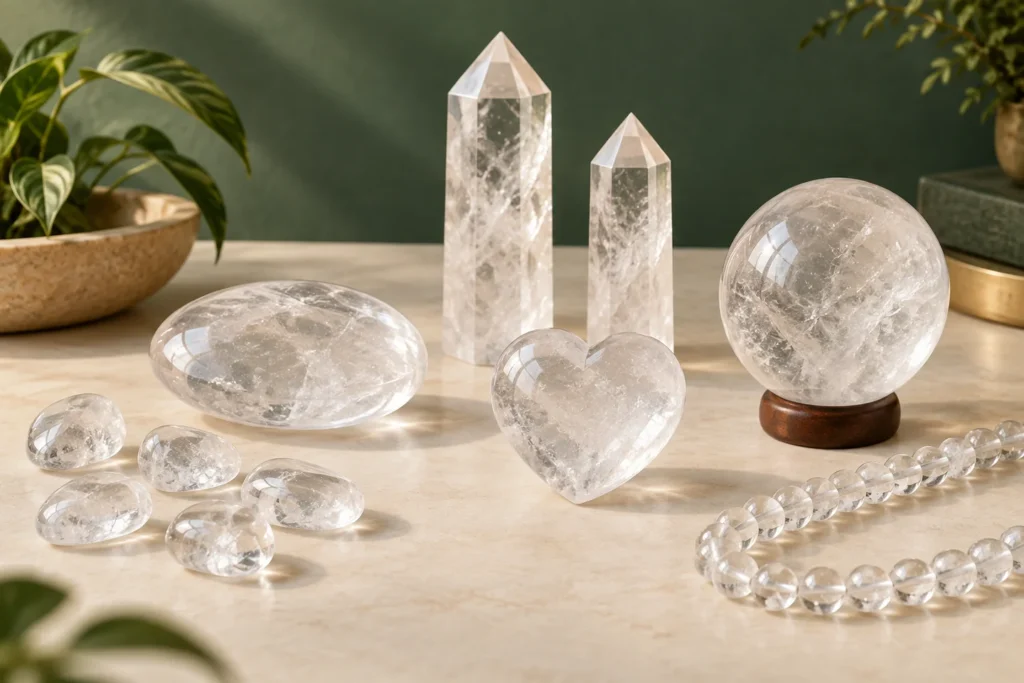
So the question "is clear quartz more expensive?" cannot be answered with a single yes or no. What matters for B2B buyers is understanding which factors move the price up or down — and how to compare supplier quotes without misleading yourself. Below, I break down the key variables that determine clear quartz cost, drawing from our experience processing and supplying these products from Suzhou, China.
Why does the same "clear quartz" have such different prices?
Walk through any wholesale catalog and you will see clear quartz listed at wildly different price points. That inconsistency confuses new buyers and even experienced retailers who haven't sourced directly from factories before.
The price gap exists because "clear quartz" is a material name, not a product specification. Two items sharing that label can differ in every dimension that affects cost: shape, size, clarity, surface finish, and processing waste rate. Understanding these differences is the single most important step in evaluating whether a clear quartz product is fairly priced.
Product form is the largest price driver
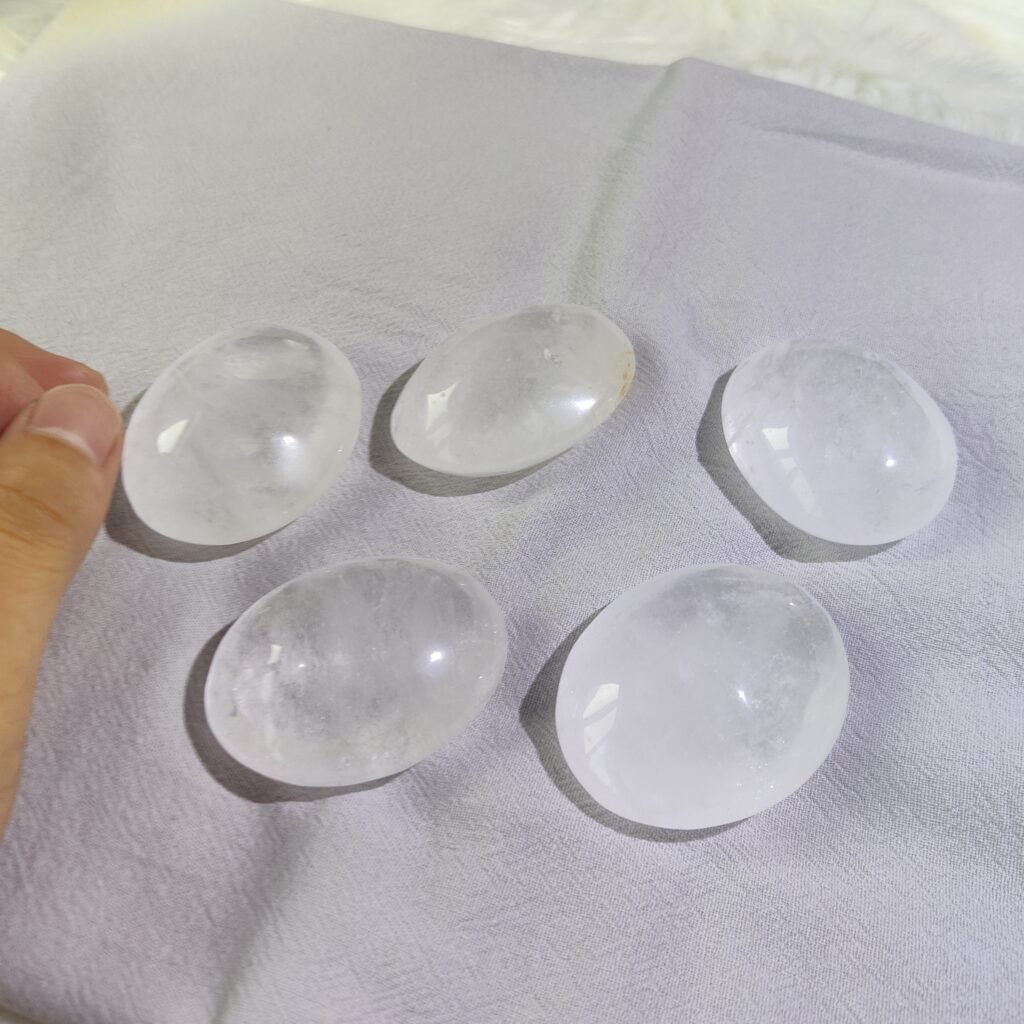
In my experience supplying crystal retailers, the product form — tower, sphere, palm stone, heart, carving, tumble stone, bracelet, or raw specimen — is often a bigger cost factor than the raw material itself. Here is why:
- Spheres require cutting a rough block into a near-perfect round. Material waste is high. Any internal crack or visible inclusion that appears after shaping can make the piece unsellable at the target grade. Polishing a sphere to optical-level smoothness adds time and labor.
- Towers (points) involve cutting, shaping a tapered form, and polishing multiple facets. Waste is moderate but alignment matters — the point must be centered and the base stable.
- Tumble stones are processed in bulk using tumbling machines. Individual labor per piece is low, waste is low, and slight inclusions are acceptable. This makes them the most affordable per-unit form in most cases.
- Carvings and figurines depend on design complexity. A simple heart shape costs far less to produce than a detailed animal carving that requires hand finishing.
- Bracelets (bead strands) need consistently sized, drilled, and polished beads. Consistency across a strand is critical — one cloudy bead in a high-clarity bracelet downgrades the whole piece.
| Product Form | Relative Processing Complexity | Typical Waste Rate | Unit Cost Tendency |
|---|---|---|---|
| Tumble stones | Low | Low | Lowest |
| Palm stones | Low–Medium | Low–Medium | Low |
| Hearts | Medium | Medium | Moderate |
| Towers / Points | Medium–High | Medium | Moderate–High |
| Spheres | High | High | High |
| Carvings / Figurines | High (varies by design) | Medium–High | High |
| Bead bracelets | Medium (consistency-dependent) | Medium | Moderate–High |
Key takeaway: Never compare prices between product forms and conclude that one supplier is "cheaper." A supplier quoting $2 per tumble stone and another quoting $15 per sphere are not selling the same thing, even if both items are clear quartz.
Size amplifies cost non-linearly
A 4 cm clear quartz sphere is not simply "twice the price" of a 2 cm sphere.2 Larger pieces require larger rough material with fewer internal flaws over a bigger volume.3 Finding a clean, inclusion-free block big enough for a 10 cm sphere is significantly harder than sourcing material for a 4 cm one. Processing time, polishing effort, and breakage risk all increase with size.
For B2B buyers planning inventory, this means your cost curve steepens as you move into display-grade, large-format clear quartz. Budget accordingly and consider whether your retail price point can absorb that jump.
Does clarity grade really change the clear quartz price that much?
Many first-time buyers ask us for "clear quartz" without specifying a clarity expectation — then are surprised when quotes come back at very different levels. The word "clear" in clear quartz is misleading because it suggests uniform transparency, but real products sit on a wide spectrum.
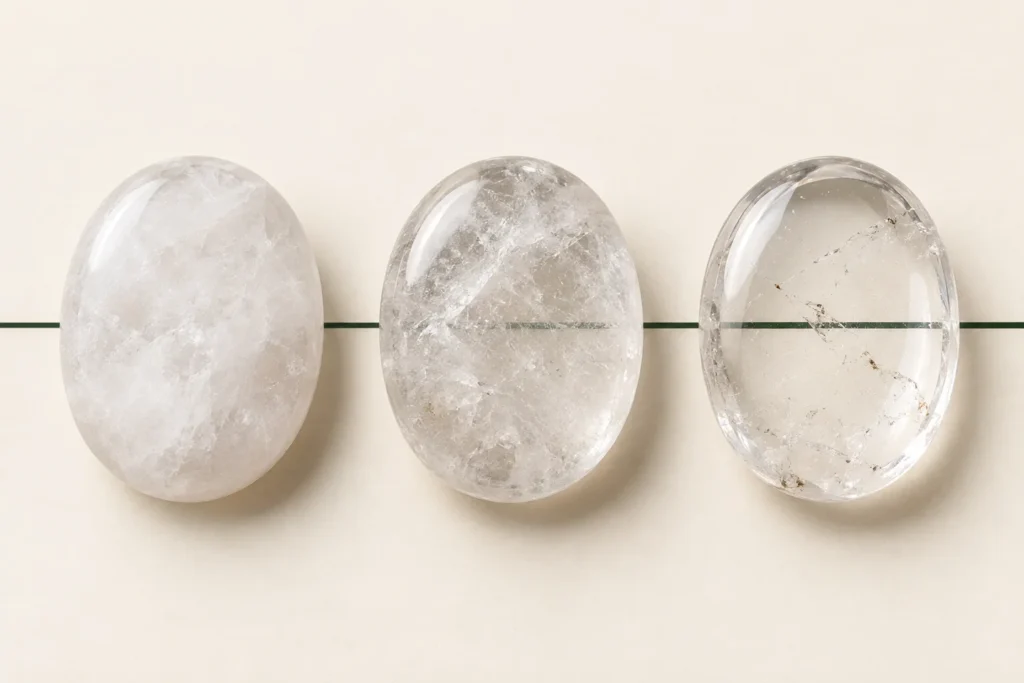
Yes, clarity grade substantially affects clear quartz pricing. High-transparency pieces with minimal inclusions, no visible cracks, and consistent optical quality command a significant premium over cloudy, inclusion-heavy, or surface-imperfect material.4 For the same product form and size, the price difference between low and high clarity can easily be 3× to 10× or more.
What defines "grade" in practice?
There is no universal, industry-standardized grading system for clear quartz in the wholesale crystal market.5 Unlike diamonds, which follow GIA's 4Cs6, crystal products are typically graded by suppliers using their own internal criteria. Common factors include:
- Transparency: Can you see through the piece clearly, or is it milky, hazy, or opaque in sections?
- Inclusions: Are there visible internal features — fractures, phantoms, cloudiness, mineral inclusions, or rainbow effects? Some inclusions add value (rainbow flash can be desirable); others reduce it.
- Surface finish: Are there scratches, pitting, or unpolished patches? Factory polishing quality varies.
- Cracks and chips: Any structural damage dramatically lowers value.
- Consistency across a batch: For bulk orders, how uniform are the pieces? Inconsistent batches are harder to price for retail.
Because grading is not standardized, I always recommend buyers request actual batch photos or video before placing an order. A label like "AA grade" from one supplier may not match "AA grade" from another. At GD Crystal, we communicate clarity expectations with photos and written descriptions for each inquiry, and we encourage buyers to confirm exactly what visual standard they need.
Matching clarity to your resale channel
Here is where procurement strategy matters more than raw cost:
- Premium display products (high-end crystal shops, collectors): Invest in high-clarity pieces. Your customers will inspect closely and expect optical quality. The higher unit cost is justified by higher retail margins.
- Entry-level retail and gift sets: Mid-grade clarity with good surface finish is usually the sweet spot. Slight internal cloudiness is acceptable if the piece looks attractive on a shelf.
- Tumble stone bags, mixed SKU sets, or impulse-buy price points: Lower clarity is fine. Customers buying a $3–$5 tumble stone are not expecting optical-grade material.
- Online sales (ecommerce): Consistency within a listing matters more than absolute top grade. If your product photos show a certain look, every piece shipped should match that standard reasonably well.
Practical tip: Define your retail price point and customer expectation before asking for quotes. Telling a supplier "I need clear quartz spheres, 5–6 cm, mid-grade clarity, for a $15–$20 retail price point" gives us far more to work with than simply asking "how much is clear quartz?"
How should B2B buyers compare clear quartz quotes fairly?
The biggest pricing risk for wholesale crystal buyers is comparing unlike products. I have seen buyers choose a lower quote without realizing the sizes were smaller, the clarity lower, or the finishing rougher. That kind of mismatch leads to customer complaints, returns, and eroded margins.
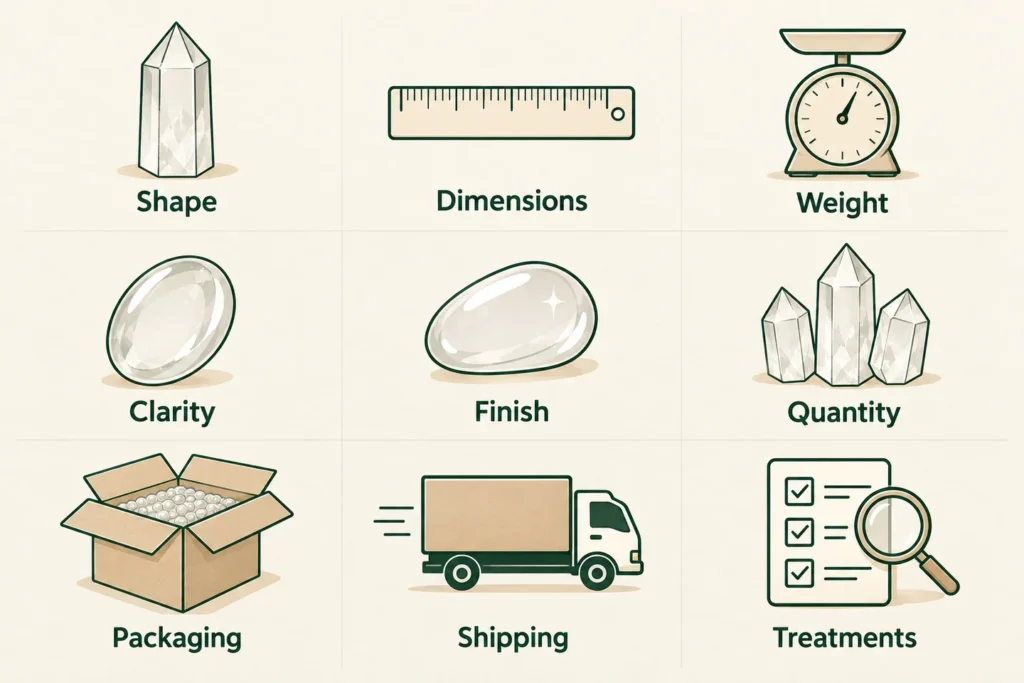
To compare clear quartz quotes fairly, buyers must align every variable: product form, approximate dimensions and weight range, clarity or visual grade, surface finish standard, order quantity, packaging, and shipping terms. Only when these factors match can you meaningfully evaluate which supplier offers better value.
A comparison checklist for buyers
Before deciding that one quote is "more expensive," verify these parameters match across suppliers:
- Product form: Same shape? (Tower vs. tower, not tower vs. obelisk with different proportions.)
- Dimensions: Same size range in centimeters or inches? A 6–7 cm tower and an 8–10 cm tower are different products.
- Weight range: Especially relevant for items sold by weight (tumble stones, rough material).
- Clarity and grade: Did both suppliers describe or show the same visual standard? Request photos from the same angle and lighting if possible.
- Surface finish: Polished, matte, rough-cut? Polishing level affects both look and cost.
- Quantity and MOQ: Larger orders typically get better per-unit pricing.7 Compare at the same volume.
- Packaging: Basic bulk packing vs. individual boxes or branded packaging changes cost.
- Shipping terms: FOB, CIF, or delivered price?8 A "cheaper" FOB quote might end up more expensive once you add freight and insurance.
- Treatment or enhancement: Has the material been treated, coated, or enhanced in any way? This should be disclosed and can affect both cost and resale value.
Common comparison mistakes
| Mistake | Why It Misleads | How to Avoid |
|---|---|---|
| Comparing per-piece prices across different sizes | Larger pieces cost more; per-piece comparison is meaningless without size alignment | Always specify a size range |
| Using old quotes or catalog prices as benchmarks | Material costs, processing costs, and exchange rates change | Request fresh quotes for current batches |
| Ignoring MOQ differences | A supplier offering a lower price at 500-piece MOQ vs. another at 50-piece MOQ is not a fair comparison | Compare at the same order volume |
| Relying on photos from different batches | Natural material varies batch to batch | Ask for photos of the actual available batch |
| Judging solely on unit cost without factoring shipping and packaging | A slightly pricier per-unit quote with better packaging may reduce damage and returns | Evaluate total landed cost |
At GD Crystal, we quote based on the specific material, size, quantity, processing requirements, packaging, and delivery destination for each inquiry. We do not use fixed catalog prices because natural crystal products vary too much for a one-size-fits-all number to be honest or useful.
Is clear quartz more expensive than other popular crystals?
Buyers building a product assortment often want to know where clear quartz sits relative to rose quartz, amethyst, black obsidian, or other commonly stocked minerals. This is a reasonable question, but the answer is nuanced.
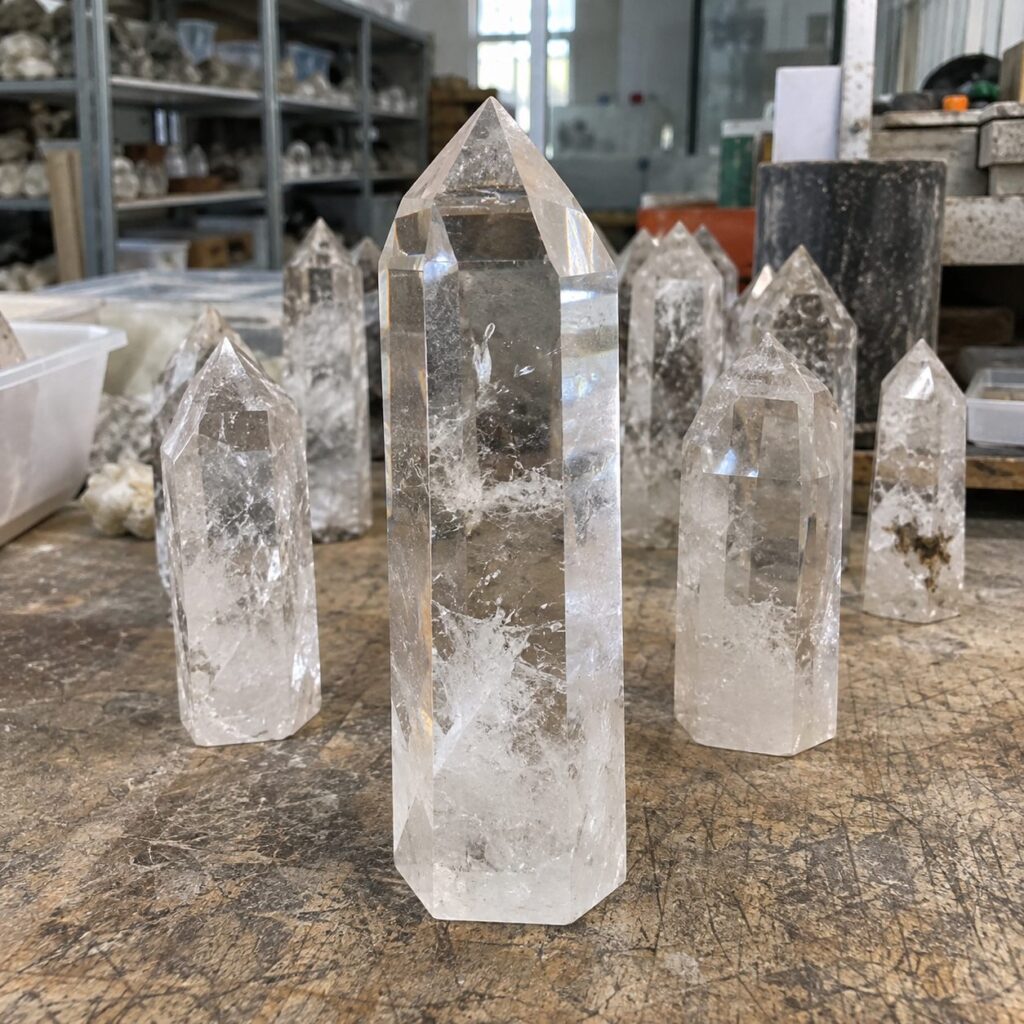
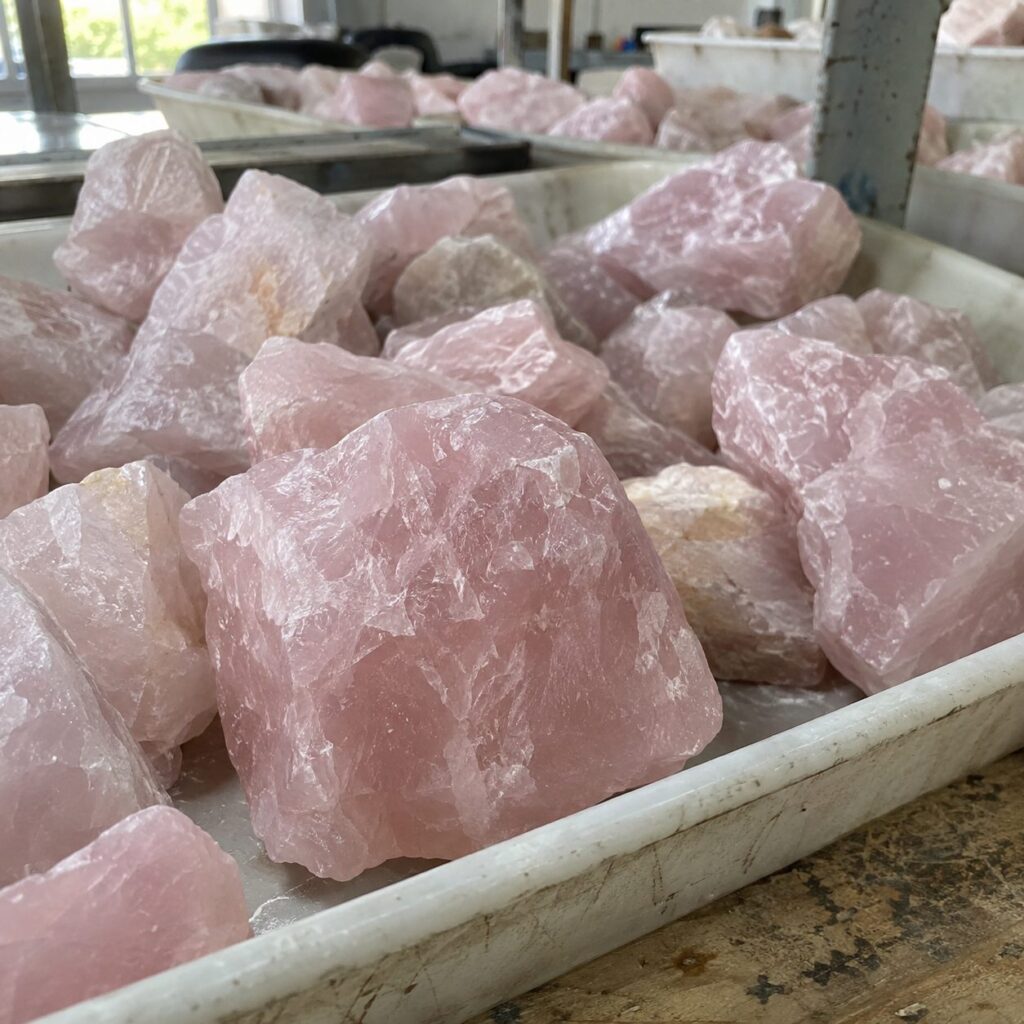
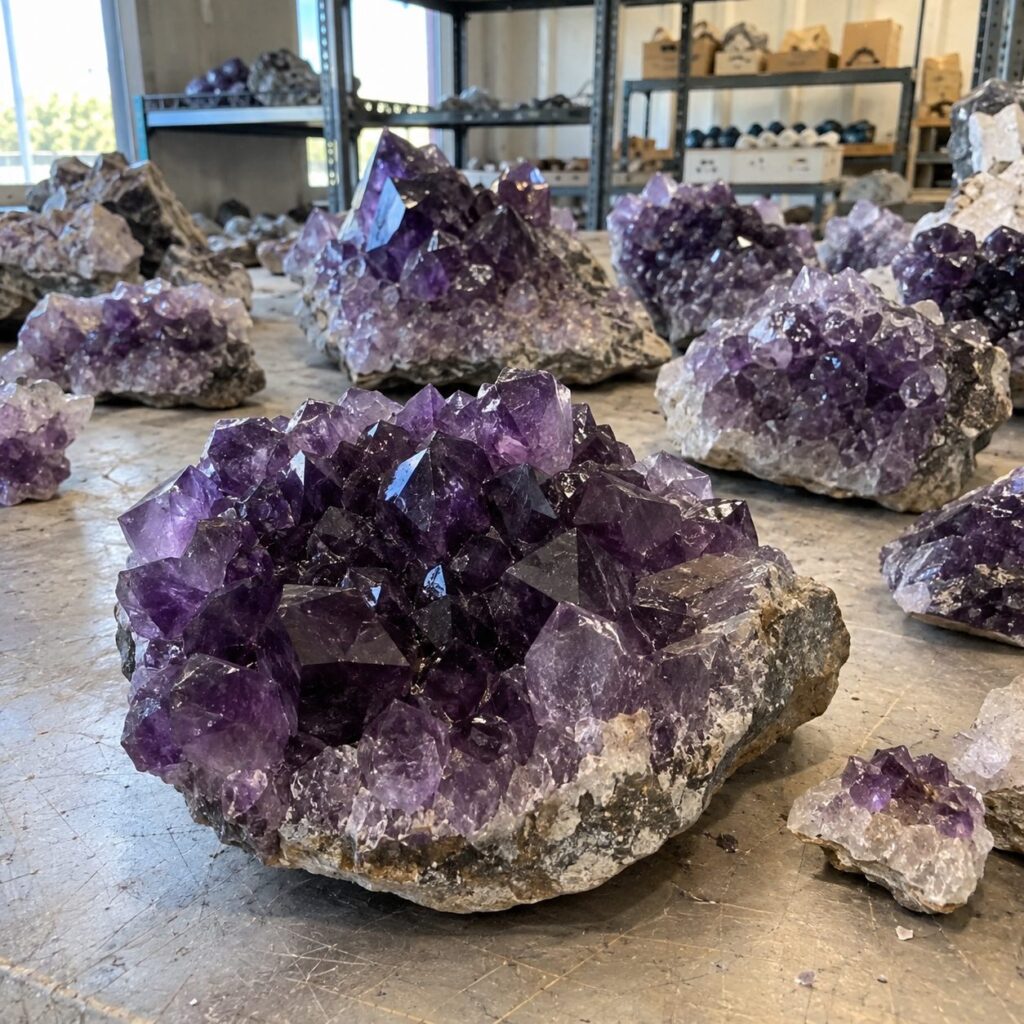
Clear quartz is generally not more expensive than most popular crystals at the raw material level.9 In many product forms, it sits in the mid-range. However, high-clarity, large, or intricately processed clear quartz items can match or exceed the cost of crystals often perceived as "more premium." The comparison only holds when you fix all other variables — same form, size, grade, and finish.
General positioning in the market
Based on our experience processing multiple crystal materials, here is a rough positioning. Note that these are broad tendencies, not fixed rules — specific grades and product forms can shift any material up or down.
| Crystal Material | General Raw Material Cost | Processing Notes |
|---|---|---|
| Clear quartz | Low–Medium | Widely available; high-clarity large pieces cost more |
| Rose quartz | Low–Medium | Abundant; deep pink and translucent grades cost more |
| Amethyst | Medium | Color saturation drives price; deep purple is premium |
| Smoky quartz | Low–Medium | Natural dark smoky can be pricier; treated material is cheaper |
| Black obsidian | Low | Easy to source and process |
| Fluorite | Medium | Color variety; fragile, higher breakage in processing |
| Labradorite | Medium–High | Flash quality is the main value driver |
| Lapis lazuli | High | Material cost is inherently higher |
Important caveat: These rankings shift constantly based on mining output, seasonal demand, and batch availability. Do not use this table as a fixed price guide. Always request current quotes.
Why "more expensive" is the wrong question for assortment planning
For B2B buyers, the productive question is not "which crystal is cheapest?" but rather "which clear quartz product form and grade fits my customer base and margin target?" A $1.50 cloudy clear quartz tumble stone and a $45 high-clarity clear quartz sphere serve completely different retail purposes. Neither is overpriced if it matches the right market.
Frequently Asked Questions
Is clear quartz cheap to buy wholesale?
Clear quartz can be affordable wholesale, especially in simple product forms like tumble stones, small palm stones, or rough pieces at standard clarity grades. However, large, high-clarity, or complex forms (spheres, detailed carvings) carry higher costs. Always specify your product form, size, and grade when requesting wholesale pricing.
Why do two clear quartz products look so different in price?
The difference almost always comes down to product form, clarity grade, size, and processing complexity. A polished sphere wastes more raw material and requires more labor than a tumble stone. Higher transparency demands better source material. These factors stack and can create significant price gaps within the same crystal type.
Should I choose clear quartz or another crystal for my store?
That depends on your customer base and product mix. Clear quartz is versatile and widely recognized, making it a reliable SKU for most crystal retailers. Consider stocking a range of forms and price points rather than committing to a single grade. Discuss your assortment goals with your supplier to find the best fit.
How do I know if a clear quartz quote is fair?
Align every variable — product form, dimensions, clarity grade, finish quality, quantity, packaging, and shipping terms — before comparing quotes. Request batch photos. If a quote seems unusually low, ask what grade and size range is included. A fair quote reflects the actual product specification, not just the material name.
Does GD Crystal offer sample orders for clear quartz?
We welcome trial order discussions. For new buyers, we recommend starting with a smaller initial order to evaluate product quality, consistency, and communication before scaling up. Specific MOQs, pricing, and sample terms are confirmed on a per-inquiry basis depending on the product type and specifications you need.
Conclusion
So, is clear quartz more expensive? The honest answer is: it depends entirely on what you are buying and what you are comparing it to. Clear quartz pricing is shaped by product form, clarity grade, dimensions, processing complexity, order volume, and finishing standards — not by the material name alone. For B2B buyers sourcing for resale, the most productive approach is to define your target customer, retail price point, and visual expectations first, then work with your supplier to identify the clear quartz grade and product form that fits.
At GD Crystal, we help retailers and crystal brands navigate exactly these decisions. If you are evaluating clear quartz products for your store or online shop, reach out with your product specifications, target quantities, and resale scenario — we will provide a straightforward quote based on what is currently available and what makes sense for your business.
References
- "Colored Gemstone Value Factors", https://www.gia.edu/gia-news-research/value-factors-design-cut-quality-colored-gemstone-value-factors. Gemological guidance from institutions such as GIA identifies color, clarity, cutting, and size as important factors in gemstone value, while standard economic discussions of scale explain why larger orders may reduce unit costs; this provides contextual support rather than a quartz-specific wholesale price formula. Evidence role: expert_consensus; source type: institution. Supports: Gemological and business sources should support that visual quality, size, cutting or manufacturing work, and volume purchased can affect gemstone or mineral product prices.. Scope note: Contextual support; it does not directly prove the price structure of every clear quartz supplier. ↩
- "Volume", https://www.grc.nasa.gov/www/k-12/airplane/volume.html. Standard geometry references state that sphere volume is 4/3πr³, so doubling diameter multiplies volume by eight; this supports the non-linear material requirement behind larger quartz spheres, though it does not by itself establish the final market price. Evidence role: mechanism; source type: education. Supports: A source should support that the volume of a sphere scales with the cube of radius or diameter, making a 4 cm sphere contain eight times the volume of a 2 cm sphere.. Scope note: Contextual mechanism; pricing also depends on clarity, labor, yield, and demand. ↩
- "Colored Gemstone Value Factors", https://www.gia.edu/gia-news-research/value-factors-design-cut-quality-colored-gemstone-value-factors. Gemological sources describe clarity, inclusions, fractures, and size as factors in evaluating gem material, supporting the view that larger visually clean rough is more demanding to source; the evidence is general to gem materials rather than a direct survey of clear quartz factory inventories. Evidence role: expert_consensus; source type: institution. Supports: A gemological source should support that clarity, inclusions, fractures, and size affect gemstone quality and that large clean material is generally more difficult to source.. Scope note: Contextual support; it does not quantify availability of large clear quartz rough. ↩
- "GIA 4Cs Clarity", https://www.gia.edu/gia-about/4cs-clarity. GIA and comparable gemological references identify clarity, transparency, inclusions, fractures, and surface condition as quality factors in gemstones, supporting the statement that cleaner and more transparent quartz pieces can carry a premium; the source may not provide a quartz-specific multiplier. Evidence role: expert_consensus; source type: institution. Supports: A source should support that transparency, clarity, inclusions, fractures, and surface condition influence gemstone quality and value.. Scope note: Contextual support; it supports the quality-value relationship but not a precise wholesale price premium. ↩
- "Why doesn't GIA issue grading reports for colored stones?", https://www.gia.edu/FAQ/gia-faq-analysis-gradinggrading-report-colored-stone. Gemological institutions commonly note that colored stones and non-diamond gem materials lack a single universal grading system comparable to diamond grading, which supports the claim that wholesale clear quartz grades are not standardized; this is indirect unless the source specifically names clear quartz. Evidence role: expert_consensus; source type: institution. Supports: A source should support that, unlike diamonds, many non-diamond gemstones and mineral products do not have a single universally accepted grading system.. Scope note: Contextual support; a direct clear-quartz wholesale grading survey would be stronger. ↩
- "Understanding the 4Cs of Diamond Quality", https://4cs.gia.edu/en-us/4cs-of-diamond-quality/. The Gemological Institute of America defines the 4Cs of diamond quality as color, clarity, cut, and carat weight, supporting the article's comparison between standardized diamond grading and less standardized clear quartz descriptions. Evidence role: definition; source type: institution. Supports: A source should define GIA's 4Cs as color, clarity, cut, and carat weight in diamond quality evaluation.. ↩
- "Economies of scale", https://en.wikipedia.org/wiki/Economies_of_scale. Economics education sources define economies of scale as reductions in average cost as output or purchasing volume increases, supporting the general statement that larger wholesale orders can receive lower per-unit pricing; supplier-specific minimums may still override this pattern. Evidence role: definition; source type: education. Supports: A source should explain economies of scale or quantity discounts as mechanisms that can reduce per-unit costs at larger volumes.. Scope note: General economic support; not a guarantee for every clear quartz order. ↩
- "Know Your Incoterms", https://www.trade.gov/know-your-incoterms. International Chamber of Commerce Incoterms define trade terms such as FOB and CIF and allocate freight, insurance, delivery, and risk responsibilities between buyer and seller, supporting the article's warning that quote comparisons must account for shipping terms. Evidence role: definition; source type: institution. Supports: A source should define FOB and CIF Incoterms and explain how freight, insurance, and risk responsibilities differ.. ↩
- "Silica Statistics and Information | U.S. Geological Survey", https://www.usgs.gov/centers/national-minerals-information-center/silica-statistics-and-information. Encyclopedic mineral references describe quartz as one of the most abundant minerals in Earth's crust, providing contextual support for its general raw-material availability; this does not directly prove current wholesale prices relative to every popular crystal. Evidence role: general_support; source type: encyclopedia. Supports: A source should support that quartz is a very common and abundant mineral, providing context for why ordinary clear quartz rough can be relatively accessible.. Scope note: Contextual support; market pricing still depends on grade, form, locality, and demand. ↩