Quartz lamps are one of the most searched decorative stone products1, yet buyers who stock them based on pretty photos alone often face surprises at unboxing. Color variation, translucency differences, base incompatibility, and unclear pricing structures can turn an exciting new product line into a sourcing headache. The real benefit of a quartz lamp becomes clear only when you understand what drives its retail and wholesale value.
The primary benefits of a quartz lamp for B2B buyers are its strong visual display appeal, natural giftability, and ability to differentiate a retail product mix. When light passes through natural quartz, it highlights unique textures and translucency that attract customer attention in-store and online. However, these benefits are realized only when buyers confirm material type, dimensions, lamp base specifications, packaging, MOQ, and delivery details before placing an order.
Understanding these benefits at a practical, sourcing level matters far more than vague descriptions. Below, I'll break down exactly how quartz lamps create commercial value, where buyers commonly misjudge the product, and what you need to confirm with your supplier before committing to an order.
Why Do Quartz Lamps Create Stronger Retail Displays?
Retailers constantly search for products that draw the eye without heavy merchandising effort. A quartz lamp, when properly lit, does that work passively — but the display impact depends on factors most buyers don't evaluate until it's too late.
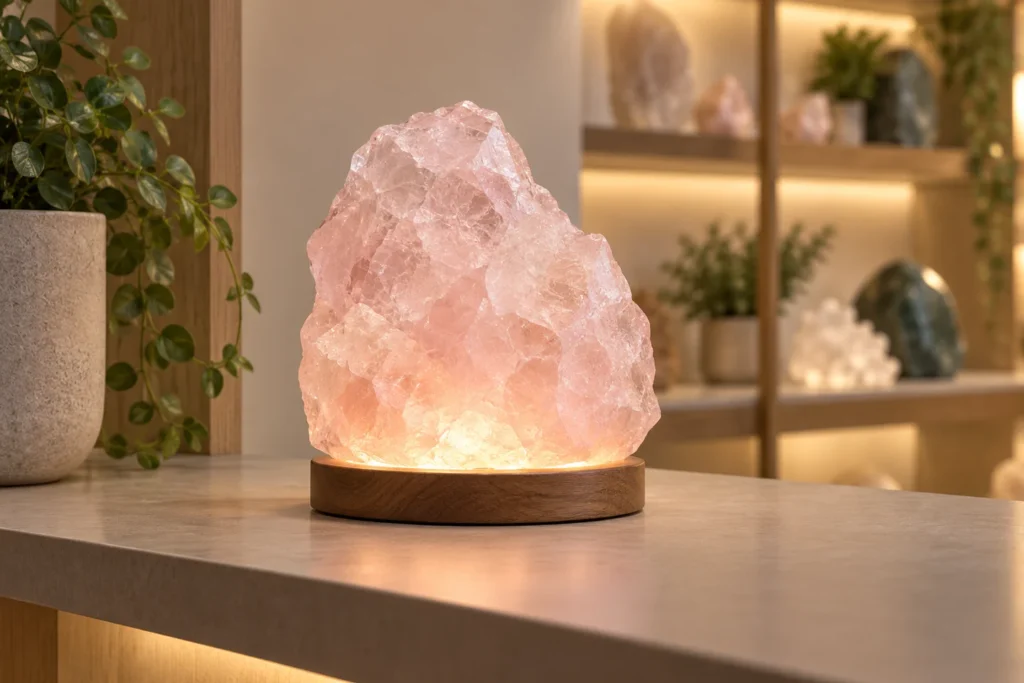
A quartz lamp's primary display benefit is the interaction between natural stone and light. Translucent quartz varieties glow from within, creating warmth and visual depth that manufactured décor cannot easily replicate.2 This makes quartz lamps effective as window displays, shelf focal points, gift-area centerpieces, and livestream or product photography backdrops.

How Light Interaction Drives Visual Appeal
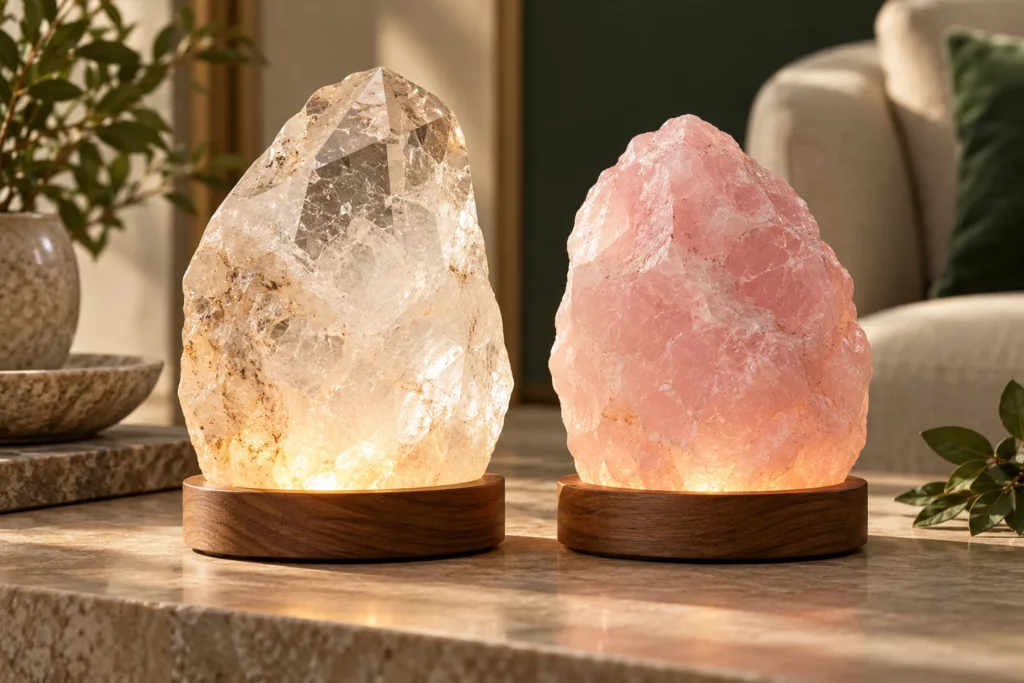
The reason quartz lamps stand out is physics, not marketing.3 Natural quartz — depending on its mineral composition, crystal structure, and thickness — transmits, scatters, or absorbs light differently.4 A rose quartz lamp with good translucency will produce a soft pink glow. A clear quartz point lamp will cast sharp light and shadow patterns. A smoky quartz piece may absorb more light, creating a moody, warm atmosphere.
For retailers, this means:
- Window displays: A lit quartz lamp draws foot traffic, especially during evening hours. The warm glow is visible from outside and creates curiosity.
- Shelf displays: Even a small quartz lamp adds dimension to a flat product shelf. It breaks the monotony of unlit items and encourages customers to linger.
- Gift areas: Quartz lamps positioned in a gift section signal "premium" and "unique" without requiring additional signage.
- Livestream and e-commerce photography: Many online sellers use backlit quartz lamps as background props. The natural light effect adds perceived value to the entire scene.
Not All Quartz Lamps Display the Same Way
This is where many buyers make their first mistake. Two quartz lamps of the same listed material can look completely different when lit. The variables include:
| Factor | Impact on Display |
|---|---|
| Translucency | Higher translucency = stronger glow; opaque pieces may not light up at all |
| Thickness | Thicker walls diffuse light more, thinner walls transmit light sharply |
| Natural inclusions/cracks | Can create beautiful light patterns or dark spots — varies by piece |
| Color saturation | Deep-colored quartz absorbs more light; pale varieties glow more easily |
| Lamp base type | LED vs. incandescent, warm vs. cool tone, single vs. multi-point — all change the effect |
| Size and shape | Tall points project light differently than wide spheres or carved shapes |
In supplier-buyer discussions, one of the most common early questions is: "Will it look like the photo?" The honest answer is that natural stone varies piece to piece. A responsible supplier will discuss batch characteristics, offer sample orders, and set expectations about natural variation rather than guarantee exact photo matches.
Key takeaway for buyers: Request video of the lamp lit — not just static photos — and ask about translucency grading if the supplier offers it. This single step reduces display disappointment significantly.
What Commercial Value Do Quartz Lamps Offer Beyond Decoration?
Many buyers initially consider quartz lamps purely decorative. While that's their core category, their commercial value extends into gifting, seasonal merchandising, and product line differentiation — areas where margins and sell-through rates often exceed basic crystal inventory.
Quartz lamps serve as high-perceived-value gift items, seasonal display products, and cross-sell or upsell opportunities. Their uniqueness — no two natural pieces are identical5 — supports premium pricing and reduces direct price comparison with competitors who carry mass-produced alternatives.
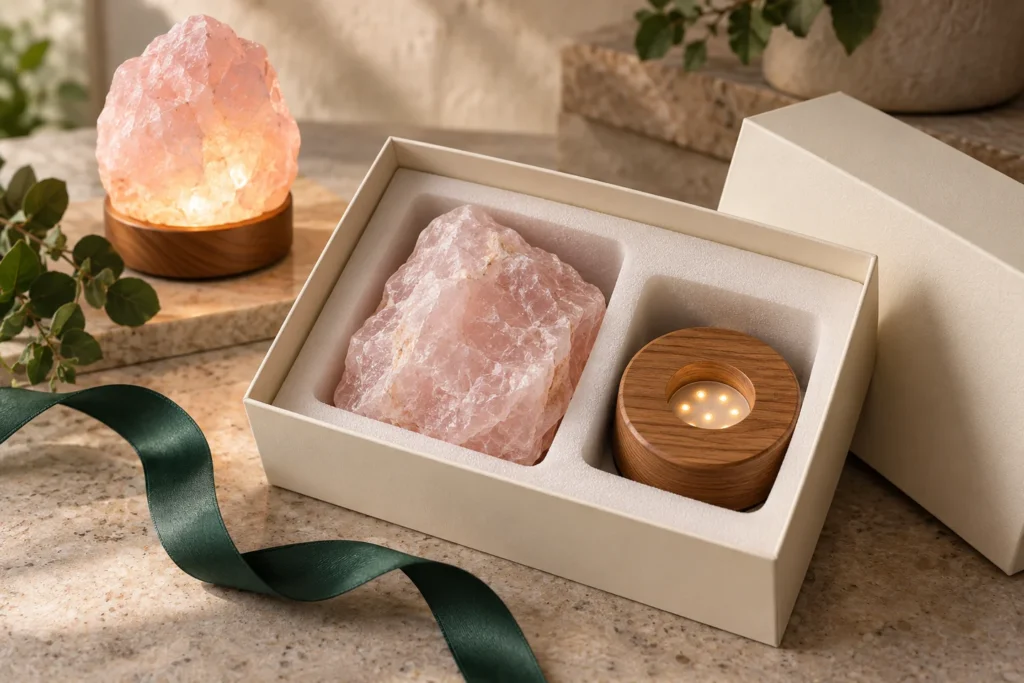
Gifting and Seasonal Sales Potential
Quartz lamps naturally fit several retail gifting occasions:
- Holiday seasons (Christmas, Valentine's Day, Mother's Day): Rose quartz lamps and amethyst lamps are popular gift searches during these periods.
- Housewarming and home décor gifts: A quartz lamp is a distinctive alternative to mass-market candles or diffusers.
- Corporate and boutique gifting: Some buyers order small-batch branded quartz lamps for corporate gift programs or subscription boxes.
The gift angle matters commercially because gift buyers are typically less price-sensitive and more brand-loyal.6 A crystal shop that positions quartz lamps as "ready-to-gift" — with appropriate packaging — can command higher retail prices than the same lamp sold as loose inventory.
Product Mix Differentiation
In a crowded crystal retail market, quartz lamps help stores differentiate. Here's how experienced retailers use them:
- Entry-point premium product: A customer who browses tumbled stones at $3–$5 may upgrade to a $40–$80 quartz lamp as an impulse or occasion purchase.
- Exclusive or limited offerings: Because natural stone varies by batch, retailers can market certain quartz lamps as limited or one-of-a-kind pieces.
- Cross-category appeal: Quartz lamps attract not only crystal enthusiasts but also home décor shoppers, interior design buyers, and gift seekers — broadening the store's customer base.
- Add-on and upsell item: A quartz lamp pairs naturally with other crystal products (tumbled stones, incense holders, display stands), increasing average order value.
What Quartz Lamps Are Not Best Positioned As
I want to be direct here, because this affects how buyers should market these products downstream:
- Not medical or therapeutic devices. While some end consumers associate crystals with wellness, quartz lamps should not be marketed with health claims7. This creates legal and reputational risk for retailers.
- Not guaranteed mood or energy products. Phrases like "this lamp will improve your sleep" or "attracts positive energy" are subjective and unverifiable. Responsible sellers describe the aesthetic and decorative qualities instead.
- Not identical to salt lamps or other functional lamps. Quartz lamps are decorative first. They are not designed as primary light sources or air purifiers.
For B2B buyers: Frame quartz lamps in your product listings as decorative, gift-worthy, and visually unique. This positioning is legally safer, commercially stronger, and more sustainable than wellness-based claims.
Why Do Buyers Often Misjudge Quartz Lamps From Photos Alone?
One of the biggest sourcing risks with quartz lamps is the gap between catalog expectations and delivered reality. This isn't necessarily a supplier quality issue — it's a natural consequence of working with geological materials where no two pieces are the same.
Buyers misjudge quartz lamps from photos because photographs flatten three-dimensional translucency, hide batch-to-batch variation in color and texture, and cannot convey how a lamp looks when actually lit. Without confirming material grade, light source, and piece-selection criteria, the delivered product may not match the buyer's retail vision.
Common Misjudgments and How to Avoid Them
Here are the specific areas where I see buyers make assumptions that lead to problems:
1. Translucency assumptions
A photo of a lamp with studio backlighting will make the quartz appear far more translucent than it is under normal retail lighting. Ask for photos or video under standard room lighting and with the lamp's own base lit.
2. Color accuracy
Screen calibration, photography white balance, and post-processing all affect how quartz color appears.8 Rose quartz can look anywhere from pale milky white to deep pink depending on the photo. Request unedited photos or video, and if possible, order a sample first.
3. Surface finish and cracks
Natural quartz often has surface features — small fissures, mineral inclusions, rough patches — that may be invisible in a small catalog photo but quite visible in person. These are natural characteristics, not defects, but they affect retail presentation. Discuss acceptable quality thresholds with your supplier before ordering.
4. Size and weight surprises
A lamp described as "15 cm tall" can feel very different depending on its base width, stone thickness, and total weight. Weight affects shipping cost significantly.9 Always confirm dimensions and weight ranges.
5. Lamp base and light source
This is often overlooked. The lamp base determines:
| Base Specification | Why It Matters |
|---|---|
| LED vs. incandescent bulb | LED lasts longer and runs cooler; incandescent gives warmer tone but generates heat10 |
| Warm white vs. cool white | Warm light enhances rose quartz and amethyst; cool light can make them look washed out |
| USB vs. plug-in vs. battery | Affects retail flexibility and destination-country electrical compatibility11 |
| Base material and finish | Wooden, metal, or acrylic bases change the overall aesthetic and perceived value |
| Cord length and switch type | Practical details that affect end-customer satisfaction |
Before quoting, suppliers usually need to confirm the lamp base specification because it directly impacts unit cost, packaging requirements, and destination compliance.
The Sample Order Solution
In my experience, the single most effective risk-reduction step is a sample order. Most reputable suppliers accommodate small sample quantities so buyers can evaluate the actual product — lit and unlit — before committing to a bulk purchase. This is especially important for quartz lamps because the lit appearance is the product's primary selling point, and no catalog can fully replicate it.
What Should Buyers Confirm Before Ordering Quartz Lamps?
The question "what are the benefits of a quartz lamp?" should ultimately lead to a purchasing checklist. Benefits only materialize when the product you receive matches your retail context — and that requires detailed confirmation before any price comparison.
Before ordering quartz lamps, buyers should confirm material type and grade, dimensions and weight range, lamp base specifications, packaging requirements, MOQ and mixed-order terms, lead time, and shipping arrangements to their destination. Skipping any of these steps introduces risk that the delivered product won't meet resale expectations.
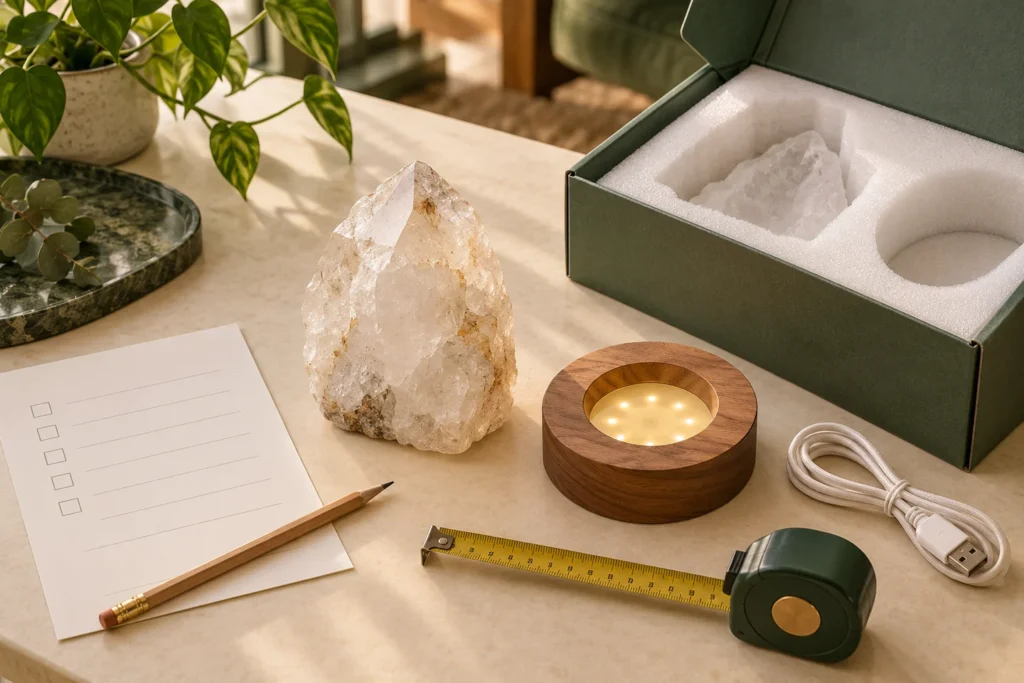
The Complete Quartz Lamp Sourcing Checklist
Here's the checklist I recommend based on the questions that come up most frequently in buyer-supplier communication:
Material and Appearance
- Quartz variety: Clear quartz, rose quartz, amethyst, smoky quartz, citrine, or other?
- Treatment disclosure: Is the material natural, heated, dyed, or coated? (This affects downstream marketing claims and customer trust.)
- Translucency level: What translucency can be expected for this batch?
- Surface finish: Polished, raw/natural, or partially polished?
- Acceptable variation range: What level of color, shape, and inclusion variation is standard for this material and price point?
Dimensions, Weight, and Shape
- Height and width ranges (not just a single number — natural products vary)
- Weight range per piece (critical for shipping cost calculation)
- Shape: Point/tower, sphere, freeform, carved shape, rough/natural cluster?
Lamp Base and Electrical
- Light source: LED, incandescent, or other?
- Color temperature: Warm white, neutral, or cool white?
- Power source: USB, AC plug (which standard?), battery?
- Certifications: Does the electrical component carry any safety certifications relevant to the destination market12? (Buyers should verify these documents independently.)
- Cord length, switch type, and base material
Packaging and Shipping
- Inner packaging: Foam, molded tray, individual box?
- Outer carton specs: How many units per carton? Carton dimensions and gross weight?
- Fragile handling: Is additional protective packaging included, and at what cost?
- Shipping method: Sea freight, air freight, or express courier?
- Destination and import requirements
Commercial Terms
- MOQ per SKU and per order
- Mixed-order terms: Can different quartz varieties or lamp styles be combined to meet MOQ?
- Unit price structure: Does price vary by material, size, or order quantity?
- Sample availability and cost
- Lead time for production and delivery
- Payment terms
Important note: Material availability, pricing, and lead times change between batches and seasons. Historical photos or old price lists should not be treated as current stock or pricing commitments. Confirm all details per inquiry.
Why This Checklist Protects Your Investment
Each item on this list directly affects either your cost, your product presentation, or your customer's experience. Missing even one — say, ordering warm-white LED bases when your quartz variety looks best under neutral light — can undermine the entire display benefit that makes quartz lamps worth stocking in the first place.
The buyers who get the best results from quartz lamps are those who treat the sourcing process as a collaborative specification exercise, not a quick catalog-and-click purchase.
Frequently Asked Questions
Are quartz lamps suitable for all retail store types?
Quartz lamps work well in crystal shops, gift stores, home décor retailers, and e-commerce. They can also serve as display accents in wellness studios, boutique hotels, and lifestyle brands. However, their fit depends on your customer base's price tolerance and interest in natural stone products. Evaluate with a sample order before committing to bulk.
Do all quartz lamps glow the same way when lit?
No. The glow depends on the quartz variety, translucency, thickness, natural inclusions, and the lamp base's light source and color temperature. Two lamps of the same material can look quite different. Always request lit photos or video from your supplier and consider ordering samples to evaluate the actual light effect.
What is a typical MOQ for quartz lamps from a B2B supplier?
MOQ varies by supplier, material, size, and customization level. Some suppliers offer lower minimums for sample or trial orders, while production runs of custom sizes or packaging may require higher quantities. MOQ, pricing, and mixed-order terms should be confirmed per inquiry, as they change with material availability.
Should I market quartz lamps with healing or energy claims?
I recommend against it for commercial resale. Health and energy claims are unverifiable, may violate consumer protection regulations in many markets, and can expose your business to legal risk. Position quartz lamps as decorative, gift-worthy, and visually unique — this approach is commercially stronger and more sustainable.
How should quartz lamps be packaged for international shipping?
Quartz lamps require careful packaging due to their fragile nature. Individual foam or molded-tray inner packaging is standard. Outer cartons should be appropriately sized to prevent movement during transit. Discuss packaging specifications and any additional protective options with your supplier, factoring in the added weight and cost for shipping calculations.
Conclusion
The real benefits of a quartz lamp come down to three things for B2B buyers: strong visual display appeal, natural gift-market fit, and product mix differentiation. These benefits are practical and commercially measurable — but they only deliver results when the sourcing details are right. Material type, translucency, lamp base specifications, packaging, MOQ, and delivery logistics all need to be confirmed before you compare prices or place an order.
If you're evaluating whether quartz lamps belong in your product lineup, start with a clear sourcing checklist rather than a catalog browse. At GD Crystal, we supply quartz lamps and decorative crystal products direct from our Suzhou facility, with over 15 years of processing experience. We're happy to discuss material options, sample orders, and specifications tailored to your business needs.
References
- "Google Trends", https://trends.google.com/trends/explore?date=all&geo=US&q=pendant%20lights. Search-trend data can contextualize consumer interest in quartz lamps relative to related decorative stone products, although such data indicate online search behavior rather than confirmed purchase demand. Evidence role: statistic; source type: other. Supports: A neutral search-trend or keyword-volume source should show whether search interest in quartz lamps is high relative to comparable decorative stone products.. Scope note: Search data would support visibility or interest, not actual sales volume or wholesale demand. ↩
- "Transparency and translucency", https://en.wikipedia.org/wiki/Transparency_and_translucency. Mineralogical references describe quartz as a transparent-to-translucent silicate mineral whose optical appearance varies with inclusions, impurities, and crystal form, providing context for why illuminated pieces can show internal glow and depth. Evidence role: mechanism; source type: encyclopedia. Supports: A mineralogical reference should support that quartz can be transparent to translucent and that optical appearance varies with impurities, inclusions, and crystal structure.. Scope note: This supports the material mechanism generally, not the display performance of any specific quartz lamp. ↩
- "Quartz", https://www.science.smith.edu/geosciences/petrology/petrography/quartz/quartz.html. Educational mineralogy sources explain that quartz exhibits characteristic optical properties, including transparency to translucency and variation caused by inclusions or impurities, which helps explain its visual response to illumination. Evidence role: mechanism; source type: education. Supports: A university or mineralogy source should explain quartz optical properties such as transparency, refractive behavior, inclusions, and color-causing impurities.. Scope note: The source would explain physical plausibility rather than measure consumer response to quartz lamps. ↩
- "Optical transmission and spectroscopic ellipsometry data of …", https://pmc.ncbi.nlm.nih.gov/articles/PMC13112477/. Optical studies of quartz show that light transmission and absorption depend on material composition, defects, inclusions, and optical path length, supporting the claim that different pieces can illuminate differently. Evidence role: mechanism; source type: paper. Supports: A peer-reviewed or technical paper should support that quartz optical transmission and absorption are affected by crystal characteristics, impurities, and path length.. Scope note: Technical optical measurements may not directly address decorative lamps or retail lighting conditions. ↩
- "Collection – All Sorts of Quartz", https://naturalhistory.si.edu/education/teaching-resources/featured-collections/all-sorts-quartz. Mineralogical references describe quartz as occurring in varied colors, crystal habits, transparencies, and inclusion patterns, supporting the general claim that natural quartz pieces differ from one another. Evidence role: general_support; source type: encyclopedia. Supports: A mineralogical reference should support that quartz specimens vary in color, inclusions, habit, and transparency due to natural formation conditions.. Scope note: The source supports natural variation broadly, not a literal proof that every individual retail item is unique. ↩
- "Decomposing Brand Loyalty: An Examination of … – PMC – NIH", https://pmc.ncbi.nlm.nih.gov/articles/PMC11851547/. Consumer-behavior research on gift purchasing indicates that gift contexts can alter willingness to pay and brand-related decision criteria, offering contextual support for the commercial value of gift positioning. Evidence role: expert_consensus; source type: paper. Supports: Consumer-behavior research should support whether gift purchases are associated with different willingness-to-pay, perceived risk, or brand considerations compared with self-purchases.. Scope note: The evidence would be general to gift buying and may not directly measure quartz lamp purchases. ↩
- "FTC Policy Statement Regarding Advertising Substantiation", https://www.ftc.gov/legal-library/browse/ftc-policy-statement-regarding-advertising-substantiation. Consumer-protection guidance states that health-related advertising claims must be truthful, not misleading, and supported by competent and reliable evidence, supporting caution against unsubstantiated health claims for quartz lamps. Evidence role: expert_consensus; source type: government. Supports: A consumer-protection authority should support that health-related advertising claims require competent and reliable evidence and may be actionable if misleading.. Scope note: The source establishes advertising-substantiation requirements generally and does not specifically regulate quartz lamps as a product category. ↩
- "What is the difference between color calibration and white …", https://photo.stackexchange.com/questions/105146/what-is-the-difference-between-color-calibration-and-white-balance. Color-imaging references explain that white balance settings, display calibration, and image processing can change recorded or perceived color, supporting the caution that product photographs may not accurately represent quartz color. Evidence role: mechanism; source type: education. Supports: A color-science or photography source should explain how white balance, device calibration, and editing affect perceived and displayed color.. Scope note: This supports the imaging mechanism generally, not the accuracy of any specific supplier photograph. ↩
- "Mail & Shipping Services", https://www.usps.com/ship/mail-shipping-services.htm. Postal rate guidance shows that parcel shipping costs are commonly calculated using weight, dimensions, destination, and service level, supporting the need to confirm quartz lamp weight before ordering. Evidence role: general_support; source type: government. Supports: A postal or shipping authority should support that parcel rates are commonly determined by weight, dimensions, service level, and destination.. Scope note: The source supports shipping-rate factors generally; exact costs depend on carrier contracts and route-specific terms. ↩
- "Learn About LED Lighting", https://www.energystar.gov/products/learn-about-led-lighting. Government energy-efficiency guidance notes that LED lamps generally use less energy, last longer, and emit less heat than incandescent lamps, supporting the sourcing distinction between LED and incandescent bases. Evidence role: general_support; source type: government. Supports: A government energy-efficiency source should support general differences between LED and incandescent lighting, including lifespan, heat output, and energy use.. Scope note: The source supports general lamp technology differences, not the exact performance of a particular supplier's lamp base. ↩
- "Electrical Products (Household)", https://www.cpsc.gov/Business–Manufacturing/Business-Education/Business-Guidance/Household-Electrical-Products. International electrical-standard references document that mains voltage, frequency, plug types, and safety requirements vary by jurisdiction, supporting the need to verify destination-country compatibility for lamp components. Evidence role: general_support; source type: institution. Supports: An international standards or electrical-safety institution should support that plug types, voltages, and electrical safety requirements vary across markets.. Scope note: The source establishes regulatory and technical variability, not compliance of any individual product. ↩
- "Electrical Products (Household)", https://www.cpsc.gov/Business–Manufacturing/Business-Education/Business-Guidance/Household-Electrical-Products. Product-safety and conformity-assessment guidance for electrical goods states that products placed on a market must meet applicable safety requirements and, where required, bear relevant conformity markings or documentation. Evidence role: general_support; source type: government. Supports: A government product-safety or market-access source should support that electrical products must meet applicable safety and conformity requirements in the market where they are sold.. Scope note: The source supports the need to verify compliance generally; required certifications vary by jurisdiction and product configuration. ↩