Clear quartz geodes attract attention in any retail setting, but many buyers struggle to evaluate whether they're worth stocking. The uniqueness that makes geodes appealing also makes them harder to compare and price. For retailers and ecommerce sellers, the real benefits of clear quartz geodes go far beyond metaphysical claims — they're about visual differentiation, display versatility, and commercial potential when sourced carefully.
The primary benefits of clear quartz geodes for crystal retailers are their one-of-a-kind natural appearance, strong display and photography appeal, built-in storytelling value as geological formations, and the ability to differentiate inventory from standardized crystal shapes. These benefits translate directly into customer engagement and margin potential — but only when buyers evaluate size, crystal quality, batch variation, and packaging before ordering.
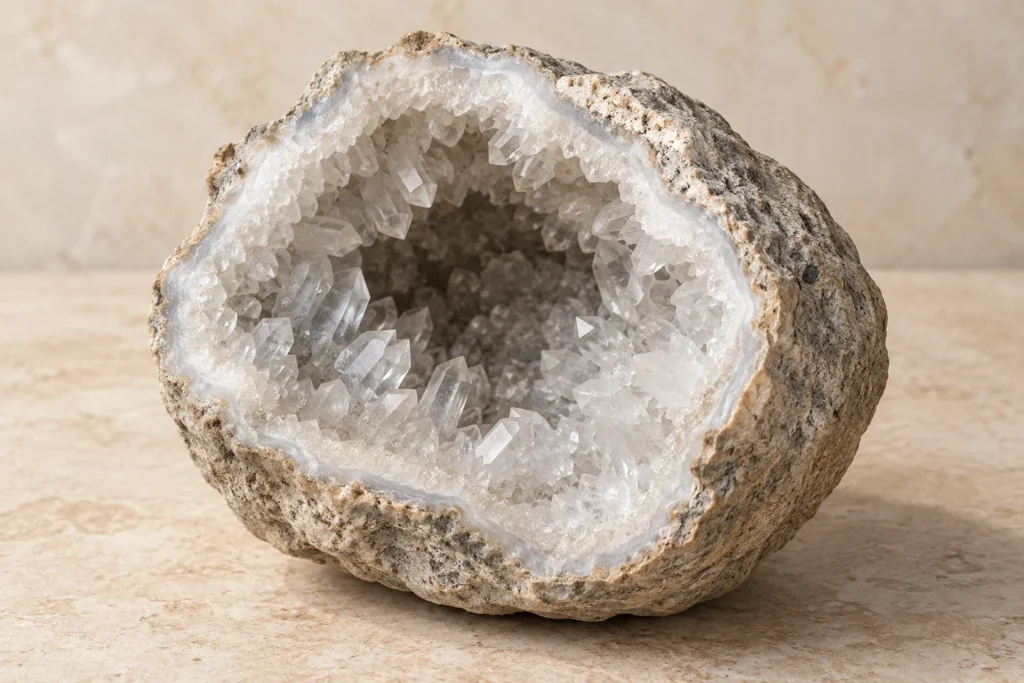
Understanding these benefits in commercial terms can help you decide whether clear quartz geodes belong in your product mix. Below, I break down each advantage from a procurement and retail perspective, covering everything from visual appeal and display logistics to shipping risk and supplier evaluation.
Why Do Clear Quartz Geodes Stand Out as Retail Products?
Most crystal inventory — towers, spheres, tumbled stones, palm stones — follows standardized shapes. That consistency is useful for bulk ordering, but it also means your shelf can look a lot like your competitor's. Clear quartz geodes break that pattern immediately.
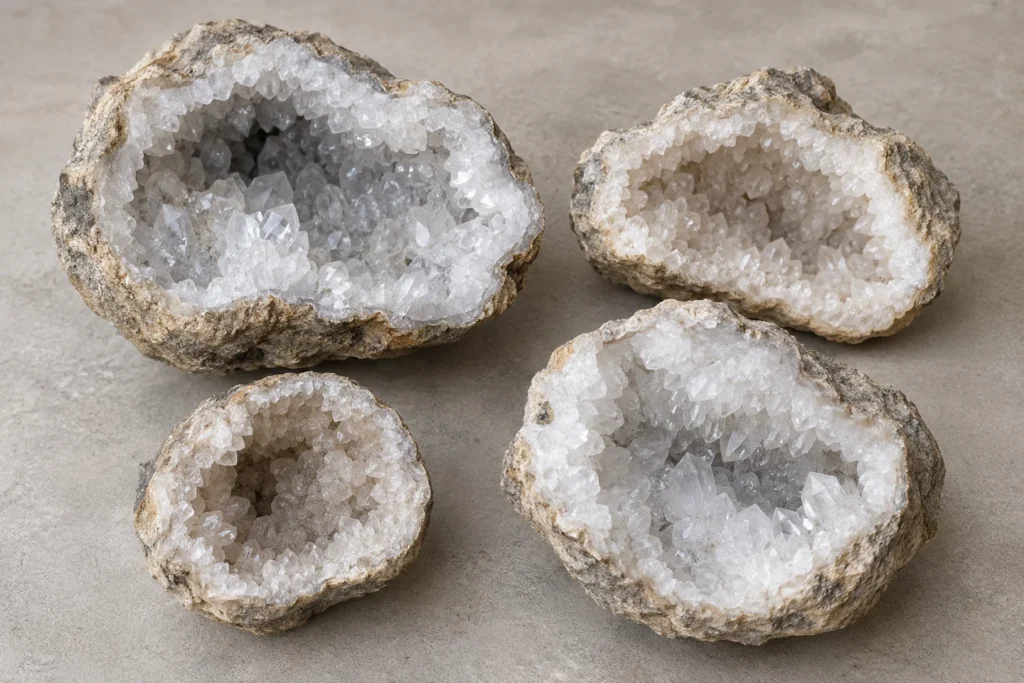
The standout benefit of clear quartz geodes for retailers is natural uniqueness at scale. Every geode has a different cavity size, crystal formation, and exterior shape.1 This means each piece on your shelf or in your online listing looks distinct, giving customers a reason to buy this piece rather than waiting for the next restock.
How Natural Variation Creates Commercial Value
In wholesale communication, buyers often ask me: "Can you guarantee every piece looks like the sample photo?" With clear quartz geodes, the honest answer is no — and that's actually the point.
Natural variation is what makes geodes compelling for several retail contexts:
- In-store display: Customers can browse multiple geodes and feel they're choosing something personal. This tactile selection process increases engagement time and conversion.2
- Ecommerce listings: Each geode can be photographed and sold as a unique item, supporting higher perceived value than standardized shapes sold by generic specification3.
- Livestream sales: Sellers can present each geode individually, turning the reveal of the crystal interior into an event. This format thrives on surprise and one-of-a-kind appeal.
Here's a quick comparison of how clear quartz geodes differ from standardized crystal products in a retail context:
| Factor | Standardized Shapes (Towers, Spheres) | Clear Quartz Geodes |
|---|---|---|
| Visual uniformity | High — similar appearance across units | Low — each piece is naturally unique |
| Photography approach | One photo can represent many units | Individual photos recommended |
| Customer engagement | Specification-based selection | Discovery-based, tactile selection |
| Price justification | Size/weight driven | Visual quality + crystal visibility driven |
| Inventory differentiation | Moderate | High |
| Reorder predictability | High | Lower — batch-dependent |
This comparison isn't about one category being better than another. It's about understanding that clear quartz geodes fill a different role in your product mix. They're discovery products — items that draw customers in and create memorable buying experiences.
The Storytelling Advantage
Clear quartz geodes come with a built-in story. Even customers with no crystal knowledge understand the concept: an ordinary-looking rock that reveals sparkling crystals inside. This makes geodes far easier to explain than many other crystal products.
For product descriptions, signage, or livestream narration, you can describe:
- How geodes form in volcanic or sedimentary rock cavities over geological time4
- Why the crystal points inside grow inward toward the center5
- What determines whether a geode has large, visible points versus a druzy coating
This storytelling element supports higher perceived value without requiring any unverified metaphysical claims. You're simply explaining a natural process — and customers find that genuinely interesting.
What Makes Clear Quartz Geodes Easy to Display and Photograph?
Display-friendliness is a practical concern that many first-time geode buyers overlook during procurement. A beautiful geode that won't stand upright on a shelf, or that looks flat and unimpressive in photos, won't generate the sales its crystal quality might deserve.
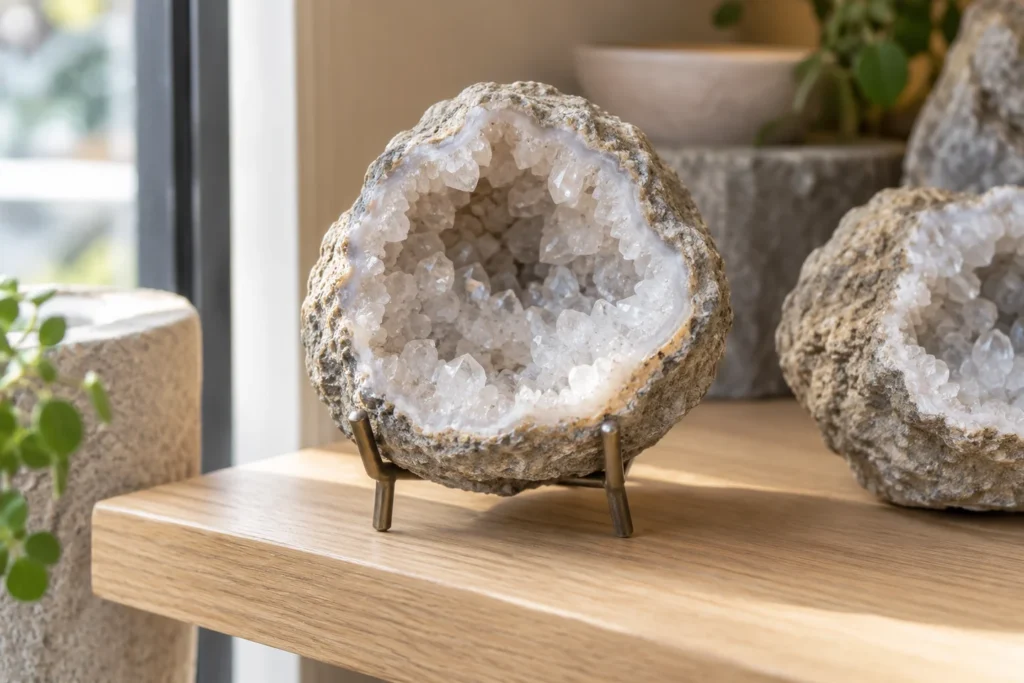
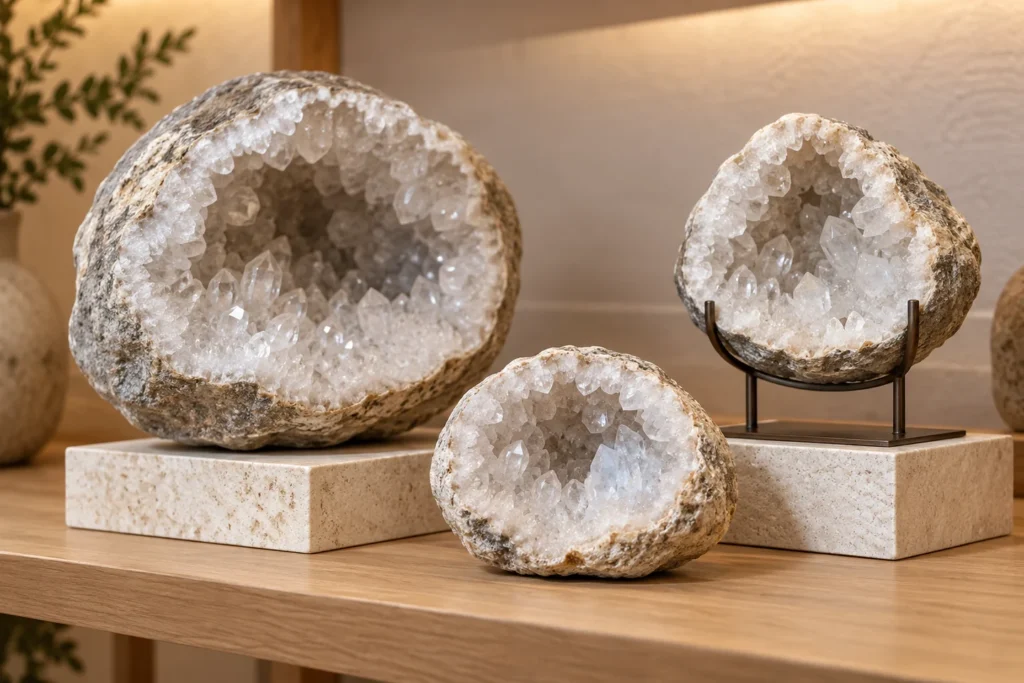
Clear quartz geodes are naturally display-friendly because their open cavity creates visual depth, their crystal points catch and reflect light6, and many pieces have a stable base when cut or naturally flat on one side. For photography, the contrast between the rough exterior and sparkling interior produces eye-catching images with minimal styling effort.
Display Stability and Presentation
For retail display, buyers usually need to confirm a few things before ordering:
- Has the geode been cut or left whole? Cut geodes (sliced in half or with one side removed) are far easier to display because the crystal interior is immediately visible. Whole, uncut geodes rely on the customer opening or imagining the interior.
- Does the piece sit flat? Some geodes have a naturally stable base. Others need a stand or support. If you're ordering in bulk, ask your supplier whether pieces are pre-selected for display stability or if you'll need stands.
- What's the opening angle? A geode with a wide opening shows more crystal. A narrow opening creates mystery but reduces immediate visual impact in photos.
In my experience handling geode orders, the most common display-related complaint from retailers is receiving pieces that won't stand upright without support. This is worth clarifying during the inquiry stage, especially for larger pieces that are heavy and difficult to prop up.
Photography Tips for Ecommerce Sellers
Clear quartz geodes are naturally photogenic, but a few procurement-stage decisions affect how well they photograph:
- Crystal transparency and clarity: Clear quartz points that are transparent or semi-transparent catch light beautifully.7 Milky or heavily included points still look interesting but produce a different aesthetic.
- Size relative to the cavity: Large visible crystal points in a proportional cavity photograph better than tiny crystals in a large, mostly empty space.
- Surface condition: Chips, scratches, or dull surfaces on the crystal points reduce photographic appeal. Ask about surface condition and damage inspection before shipment.
Pro tip: When requesting product photos from a supplier, ask for images taken with natural light and without heavy editing. This gives you a realistic preview of how pieces will photograph in your own studio setup.
How Should Buyers Evaluate Clear Quartz Geode Quality for Wholesale?
Price per piece or per kilogram is the first number most buyers look at. But with clear quartz geodes, unit price alone tells you very little. Two geodes at the same weight can have vastly different commercial value depending on crystal visibility, aesthetic appeal, and condition.
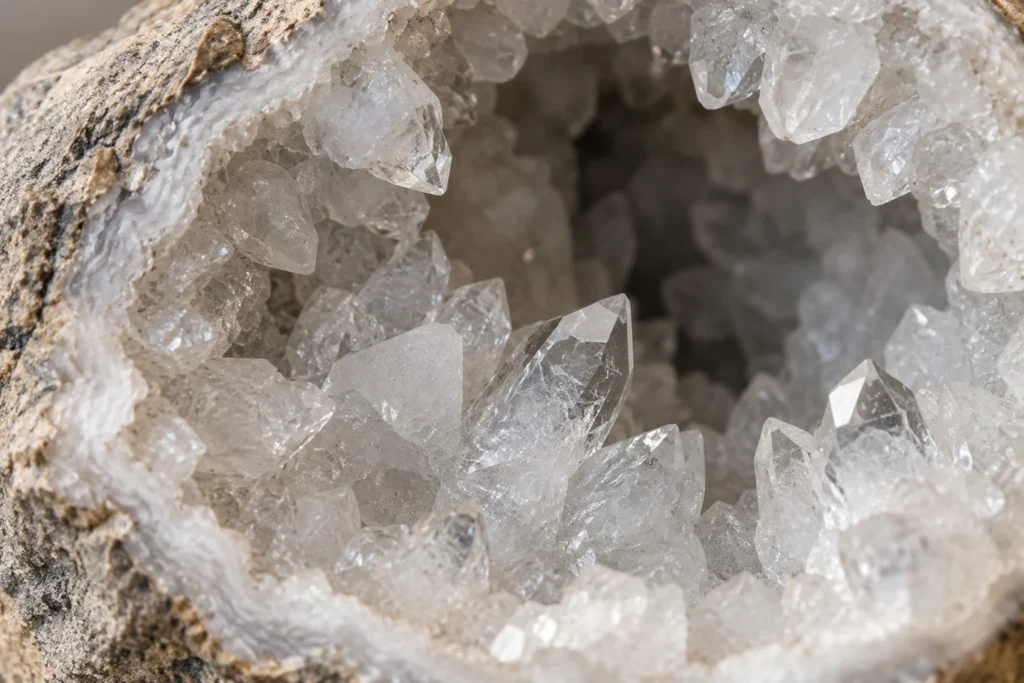
Wholesale buyers should evaluate clear quartz geodes across multiple quality dimensions: crystal clarity and point size, cavity depth and openness, exterior shape and stability, surface condition (chips, fractures, repairs), overall size and weight, and display readiness. Comparing suppliers on unit price without accounting for these factors leads to disappointing shipments.
Key Quality Factors for Procurement
Here's a practical breakdown of what to evaluate when sourcing clear quartz geodes:
| Quality Factor | What to Look For | Why It Matters |
|---|---|---|
| Crystal point size | Visible, well-defined points vs. micro-druzy | Larger points = more dramatic display and photos |
| Transparency | Clear to semi-transparent points | Transparent points catch light; milky points look softer |
| Cavity openness | Wide opening showing crystal interior | Wider = more immediate visual impact |
| Exterior condition | Clean, no major cracks or repairs | Affects perceived quality and shelf appeal |
| Display stability | Flat base or self-standing | Reduces need for separate stands |
| Surface damage | No chips on crystal tips | Damaged tips significantly reduce retail value |
| Color | Water-clear vs. smoky tint vs. inclusions | Different color profiles suit different customer preferences |
Why Batch Variation Requires Real-Time Confirmation
Because geodes are natural products, no two batches are identical. A photo from a previous shipment may not represent current available stock. I've seen buyers place reorders based on images from six months ago, only to find that the new batch has smaller crystal points or different cavity shapes.
Best practices for managing batch variation:
- Request current stock photos — not catalog images or previous batch pictures
- Ask for item-by-item photos for higher-value pieces (typically larger sizes)
- Confirm size and weight ranges rather than relying on a single specification
- Discuss grading criteria with your supplier — are pieces sorted by visual quality, weight, or both?
- Order samples or trial quantities before committing to large volumes
At GD Crystal, we typically communicate specific batch details during the inquiry process. We don't use historical photos as current stock guarantees, and we recommend that buyers — especially first-time geode buyers — start with a smaller trial order to assess the product firsthand.
What Are the Shipping and Packaging Risks for Clear Quartz Geodes?
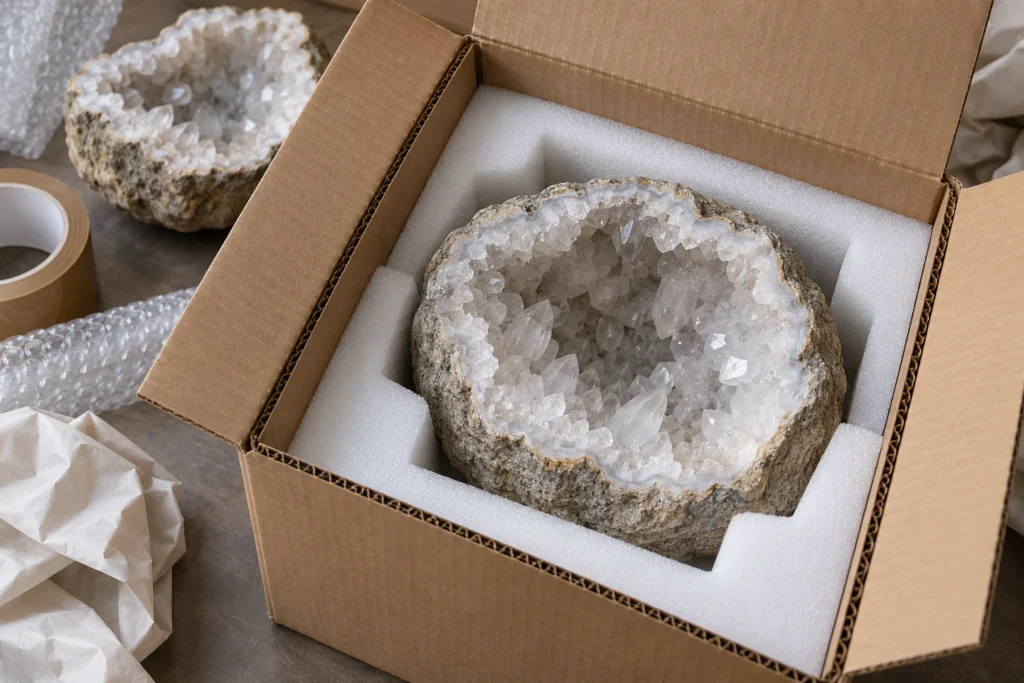
Geodes are more fragile than they look. The crystal points inside are exposed and brittle, and the exterior rock can crack under impact.8 Shipping damage is one of the most common reasons retailers lose money on geode purchases.
The main shipping risks for clear quartz geodes are broken crystal points, cracked exteriors, and pieces shifting inside packaging during transit. Proper individual wrapping, cavity protection, and box reinforcement are essential.9 Buyers should discuss packaging methods and damage policies with suppliers before placing orders, not after receiving a damaged shipment.
Packaging Requirements
For geode shipments, the following packaging practices help minimize damage:
- Individual wrapping: Each geode should be wrapped separately. Foam, bubble wrap, or soft cloth prevents pieces from contacting each other.
- Cavity protection: The open crystal interior needs cushioning material placed inside the cavity to prevent point breakage. This is the most overlooked packaging step.
- Box filling: Dead space inside shipping boxes should be filled with packing material so pieces don't shift during handling.
- Weight distribution: Heavy geodes should not be stacked on top of lighter, more fragile pieces.
- Outer box reinforcement: For international freight, double-boxing or reinforced cardboard significantly reduces crush damage risk.
Freight Implications
Clear quartz geodes are heavy relative to their display value. A single medium-sized geode might weigh 1–5 kg or more. This means:
- Freight costs per piece are higher than for lightweight products like tumbled stones or small palm stones
- Volumetric weight can exceed actual weight for large, irregularly shaped geodes, increasing air freight costs10
- Sea freight is more cost-effective for large orders but adds transit time and moisture exposure risk
When evaluating the total cost of stocking geodes, factor in not just the product price but also:
- Packaging material costs
- Freight cost per kilogram or cubic meter
- Import duties and taxes (which vary by destination country)
- Potential damage replacement costs
Important: Ask your supplier about their packaging method before placing an order. If a supplier can't describe their geode packaging process clearly, that's a meaningful risk signal.
Are Clear Quartz Geodes Profitable Enough to Stock?
Profitability depends on your retail model, customer base, and how well you manage procurement costs. Geodes can deliver strong margins — but only if you source carefully and price based on visual quality, not just weight.
Clear quartz geodes can be highly profitable for retailers who price based on aesthetic appeal and uniqueness rather than cost-per-gram. Their natural variation supports individual pricing, and their display presence can drive foot traffic or online engagement. However, profitability requires realistic cost accounting that includes freight, packaging, and potential damage losses.
Pricing Strategies That Work
Different retail channels call for different geode pricing approaches:
- Physical retail stores: Price each geode individually based on visual appeal. Customers who can see and touch the piece will pay more for exceptional specimens. Group similar-quality pieces at price tiers (e.g., small display geodes at one price point, statement pieces at a premium).
- Ecommerce (individual listings): Photograph each piece and list it separately. This is more labor-intensive but supports higher margins because buyers feel they're selecting a unique item.
- Ecommerce (lot sales): Sell geodes in curated sets (e.g., "3-piece clear quartz geode set") at a bundled price. This moves more inventory per transaction but requires consistent quality within each set.
- Livestream sales: Geodes are ideal for live reveals. The drama of showing the crystal interior drives impulse purchases and often achieves prices above standard listings.
Margin Considerations
A simplified margin calculation for clear quartz geodes should include:
| Cost Component | Notes |
|---|---|
| Product cost (FOB or landed) | Per-piece or per-kg cost from supplier |
| Freight allocation | Share of shipping cost per piece |
| Packaging materials | Supplier-side + your own retail packaging |
| Damage allowance | 3–8% depending on supplier packaging quality |
| Photography/listing labor | Especially for individually listed pieces |
| Target retail price | Based on visual quality tier, not just weight |
In my experience, retailers who treat every geode as a unique SKU — photographing it, grading it, and pricing it individually — consistently achieve better margins than those who bulk-price geodes by weight alone.
Frequently Asked Questions
Do clear quartz geodes have healing properties?
Many consumers associate clear quartz with healing or spiritual benefits. These claims are part of popular crystal culture, not verified scientific findings.11 As a supplier, we focus on product quality, visual appeal, and commercial suitability. Retailers should represent geode benefits honestly and in accordance with local advertising regulations.
What size clear quartz geodes sell best for retail?
In wholesale communication, small to medium geodes (roughly 8–15 cm) tend to be the most popular for retail because they're affordable, easy to display, and manageable to ship. Larger statement pieces sell at higher margins but move more slowly. Your ideal size mix depends on your customer base and average order value.
How do I confirm the quality of clear quartz geodes before ordering?
Request current batch photos — ideally individual piece photos for higher-value items. Ask about crystal point size, cavity openness, and surface condition. Start with a trial order to evaluate real product quality, packaging, and shipping outcomes before committing to larger quantities.
Can clear quartz geodes be shipped safely internationally?
Yes, but proper packaging is essential. Each geode needs individual wrapping, cavity cushioning, and a well-packed outer box. Discuss packaging methods with your supplier in advance. Sea freight is more economical for large orders, while air freight is faster but costlier per kilogram.
What is the typical MOQ for clear quartz geodes?
MOQ varies by supplier and by product size. At GD Crystal, minimum order quantities depend on the specific geode type, size range, and current availability. We recommend contacting us directly with your target specifications so we can provide an accurate quote based on current stock.
Conclusion
The real benefits of clear quartz geodes are commercial and visual, not mystical. Their natural uniqueness, display versatility, storytelling appeal, and photographic impact make them a strong addition to any crystal retailer's product mix. But realizing those benefits requires thoughtful procurement: evaluating crystal quality beyond unit price, confirming batch details with current photos, discussing packaging to minimize shipping damage, and pricing based on aesthetic value rather than weight alone.
If you're considering adding clear quartz geodes to your inventory, I encourage you to start with a focused trial order. At GD Crystal, we work with retailers and ecommerce sellers to select, quote, and package geodes based on your specific display and resale needs. Reach out to us with your target size, quantity, and quality preferences — we'll respond with current stock photos, pricing, and shipping options so you can make a confident sourcing decision.
References
- "Geode", https://en.wikipedia.org/wiki/Geode. A geological reference on geodes supports that they form as mineral-lined cavities in rock and commonly differ in size, external form, and internal crystal habit; this supports the geological basis for natural variation, though it does not quantify variation in retail batches. Evidence role: general_support; source type: encyclopedia. Supports: Geodes are mineral-lined rock cavities that can vary in size, shape, and internal crystal development.. Scope note: Contextual support only; it does not provide batch-level commercial data. ↩
- ""Haptic information processing and need for touch in …", https://digitalcommons.memphis.edu/facpubs/11794/. Peer-reviewed research on consumer haptics supports that physical touch can increase product evaluation confidence and purchase intention; this provides a mechanism for the claim, although the studies are not specific to quartz geodes. Evidence role: mechanism; source type: paper. Supports: Consumer research has found that tactile interaction with products can affect perceived ownership, evaluation confidence, and purchase intention.. Scope note: Contextual support from retail psychology, not direct evidence from crystal retail stores. ↩
- "Research on the mechanism of perceived value of cultural …", https://pmc.ncbi.nlm.nih.gov/articles/PMC12965538/. Consumer-behavior research indicates that perceived product uniqueness and scarcity can increase perceived value or willingness to pay; this supports the pricing logic in general terms, but it does not prove higher prices for clear quartz geodes specifically. Evidence role: general_support; source type: paper. Supports: Research in consumer behavior links perceived uniqueness or scarcity with higher perceived value or willingness to pay.. Scope note: Contextual support; geode-specific pricing data would be needed for direct proof. ↩
- "Geode", https://en.wikipedia.org/wiki/Geode. An educational geology source supports that geodes commonly form when mineral-bearing fluids deposit crystals inside cavities in volcanic or sedimentary rocks over geological timescales. Evidence role: mechanism; source type: education. Supports: Geodes form when mineral-rich fluids deposit crystals inside cavities in volcanic or sedimentary rocks over long periods.. ↩
- "HOW DOES AN AMETHYST GEODE FORM? …", https://www.facebook.com/Saltshac/posts/how-does-an-amethyst-geode-form-an-amethyst-geode-starts-with-something-spectacu/1528198749344992/. Mineralogy education sources describe geode crystals as precipitating along cavity walls and growing into the open interior space, supporting the explanation of inward-pointing crystal growth. Evidence role: mechanism; source type: education. Supports: Minerals precipitate on the inner walls of a geode cavity and crystal faces grow into the open space.. ↩
- "Quartz", https://en.wikipedia.org/wiki/Quartz. Mineralogical references describe quartz as transparent to translucent with vitreous luster, supporting the physical basis for crystal faces catching and reflecting light; the source does not measure retail display performance. Evidence role: mechanism; source type: research. Supports: Quartz is commonly transparent to translucent and has a vitreous luster, which explains why crystal faces can reflect and transmit light.. Scope note: Contextual optical support, not a study of merchandising outcomes. ↩
- "3.3 Mineral Luster, Transparency, Color, and Streak", https://open.maricopa.edu/geologylab/chapter/mineral-luster-transparency-color-and-streak/. A mineralogical encyclopedia can support that clear quartz is transparent to translucent and exhibits vitreous luster, which explains why such points interact strongly with light in photographs; the aesthetic judgment remains editorial. Evidence role: mechanism; source type: encyclopedia. Supports: Clear quartz can be transparent to translucent and has optical properties that allow visible light transmission and surface reflection.. Scope note: Supports the optical mechanism, not the subjective claim that the result is beautiful. ↩
- "Conchoidal fracture", https://en.wikipedia.org/wiki/Conchoidal_fracture. Mineralogical references describe quartz as a hard but brittle mineral with conchoidal fracture, supporting the claim that exposed crystal points can break under impact; the source does not test packaged geodes in shipping conditions. Evidence role: mechanism; source type: encyclopedia. Supports: Quartz is hard but brittle and can fracture under impact, while rock matrices can also crack when subjected to shock.. Scope note: Material-property support only; it does not quantify shipping damage rates. ↩
- "ASTM D4169 – Westpak", https://westpak.com/test-standards/astm-d4169/. Packaging standards and transport-testing guidance support the use of cushioning, immobilization, and reinforced outer containers for fragile goods in distribution; this supports the packaging principles, though not a geode-specific protocol. Evidence role: general_support; source type: institution. Supports: Packaging standards for fragile goods emphasize cushioning, immobilization, and container strength to protect items during distribution.. Scope note: Contextual support from general fragile-goods packaging standards. ↩
- "Volume Calculator | Aviationcargo", http://aviationcargo.dhl.com/business-tools/volume-calculator. Air-cargo guidance from an industry institution supports that freight charges may be based on volumetric weight when it exceeds actual weight, explaining why bulky irregular geodes can cost more to ship by air. Evidence role: mechanism; source type: institution. Supports: Air freight carriers commonly calculate charges using volumetric weight when it exceeds actual weight.. ↩
- "Placebo effects in alternative medical treatments for anxiety", https://pmc.ncbi.nlm.nih.gov/articles/PMC13064771/. Medical and psychological literature does not provide verified clinical evidence that quartz crystals have healing effects beyond belief-related or placebo mechanisms, supporting the article’s distinction between popular crystal culture and scientific findings. Evidence role: expert_consensus; source type: paper. Supports: Scientific literature does not establish crystal healing as an evidence-based medical treatment, and reported effects are commonly discussed in relation to belief or placebo mechanisms.. ↩