If you've searched for the benefits of clear quartz lamp, you've probably found pages filled with vague promises about energy cleansing and spiritual healing. That kind of content rarely helps a buyer who needs to decide whether this product belongs in their next wholesale order. The real benefit starts with understanding what a clear quartz lamp actually delivers as a resale product.
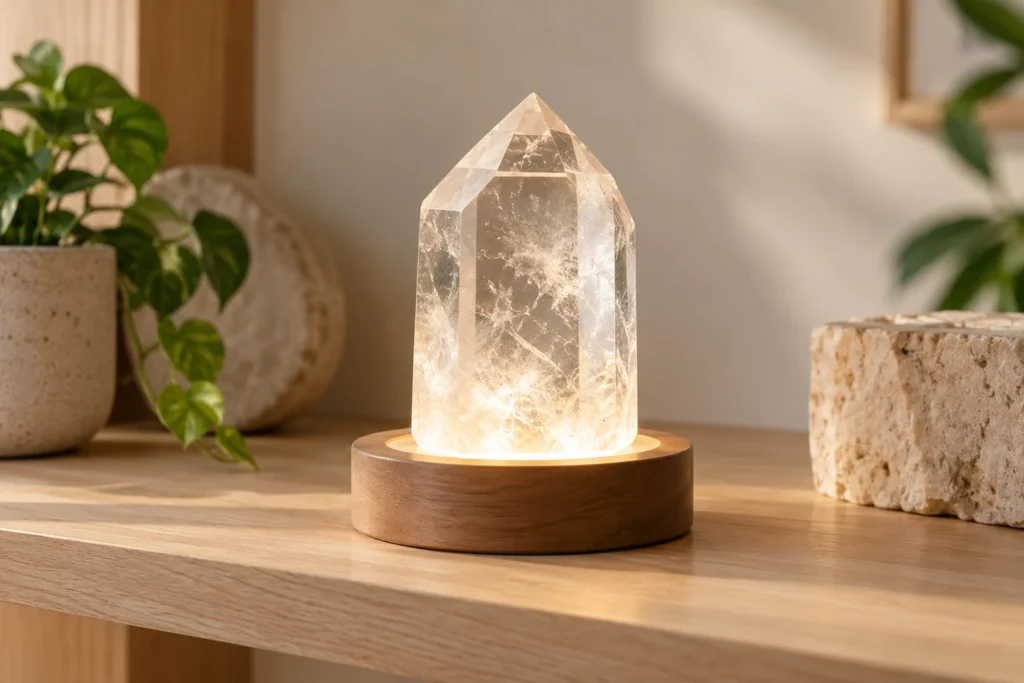
A clear quartz lamp offers a clean, premium decorative atmosphere that appeals to gift buyers, home décor shoppers, and crystal collectors. Its primary benefit for B2B buyers is strong visual appeal and perceived value at the point of sale. However, realizing that benefit depends entirely on selecting the right size, lamp base, packaging, and shipping plan for your specific retail channel.
That answer might seem underwhelming compared to the metaphysical claims you'll find elsewhere. But if you're sourcing clear quartz lamps for resale, the practical details are what protect your margin and your customer experience. Below, I'll walk through exactly what makes these lamps valuable in a wholesale context — and what questions you should be asking before you request a quote.
Why Do So Many Retailers Stock Clear Quartz Lamps?
Walk into any successful crystal shop or curated gift store and you'll almost certainly see a lit crystal lamp near the entrance or checkout counter. There's a reason for that. Illuminated crystal products draw attention and create an atmosphere that encourages browsing and buying.1 But which retailers actually benefit from stocking them?
Clear quartz lamps are popular among retailers because they serve as both a decorative product and an in-store merchandising tool. The neutral, bright tone of clear quartz pairs with nearly any store aesthetic, making it one of the most versatile crystal lamp options for resale.2
The Visual Appeal Factor
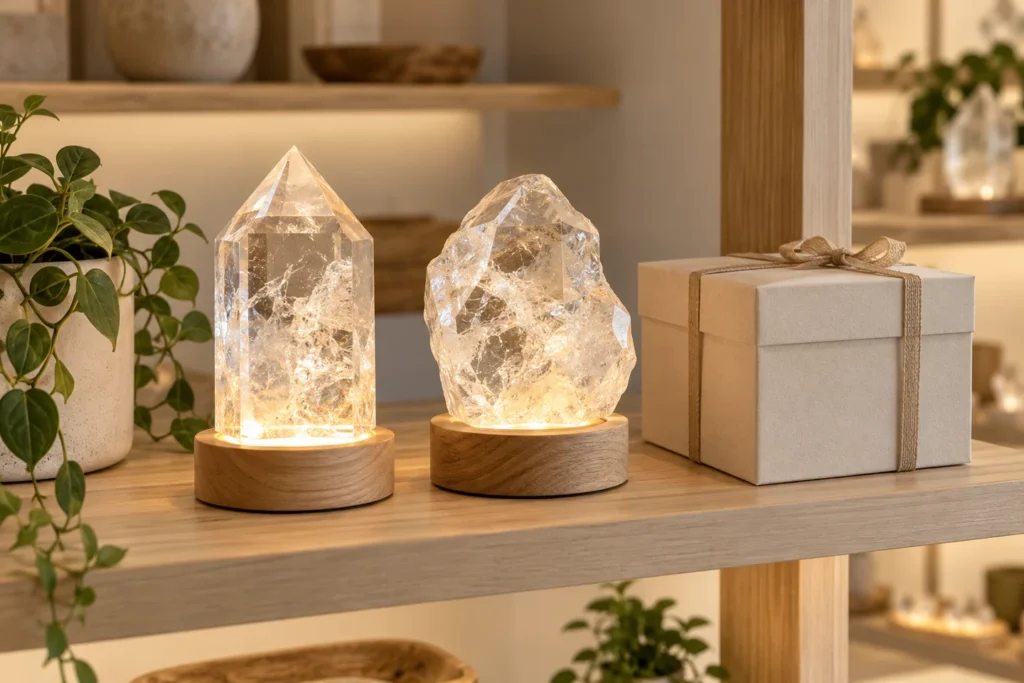
Clear quartz, unlike amethyst or rose quartz, has a neutral color profile.3 When backlit or internally lit, it produces a clean, white-to-warm glow depending on the light source. This is a significant advantage for retail settings because:
- It matches any store palette. A rose quartz lamp looks out of place in a minimalist Scandinavian-themed shop. Clear quartz does not.
- It photographs well. For e-commerce sellers, product photography is everything. Clear quartz lamps produce bright, eye-catching images without heavy editing.
- It appeals to a broader customer base. Not every end consumer identifies as a "crystal person." A clear quartz lamp can also attract buyers looking for a unique home accent or gift.4
Who Benefits Most from Stocking Them?
Not every retailer will see the same return from adding clear quartz lamps to their catalog. Based on the orders I've handled over the years, here's a rough breakdown:
| Retailer Type | Fit Level | Why |
|---|---|---|
| Independent crystal shops | High | Core product category; customers expect lamp options |
| Gift and lifestyle stores | High | Unique, high-perceived-value gift item |
| Home décor e-commerce sellers | Medium–High | Strong visual content potential; requires good packaging |
| Wholesale distributors | Medium | Demand varies by region; test orders recommended |
| Souvenir or tourist shops | Low–Medium | Price sensitivity may limit margins on lamp products |
The key takeaway is that the benefit of a clear quartz lamp is not universal. It depends on your customer, your display environment, and your price positioning.
What Practical Benefits Does a Clear Quartz Lamp Offer for Resale?
Many online articles list "benefits" of clear quartz lamps that read like wellness brochures. As a supplier, I can tell you that the buyers who place repeat orders care about a different set of benefits entirely. They want to know: will this product sell, and will it arrive in one piece?
The practical benefits of a clear quartz lamp for resale include high perceived value relative to cost, strong shelf appeal, giftability, and year-round demand that isn't tied to seasonal trends. These benefits translate directly into margin and inventory flexibility.
High Perceived Value
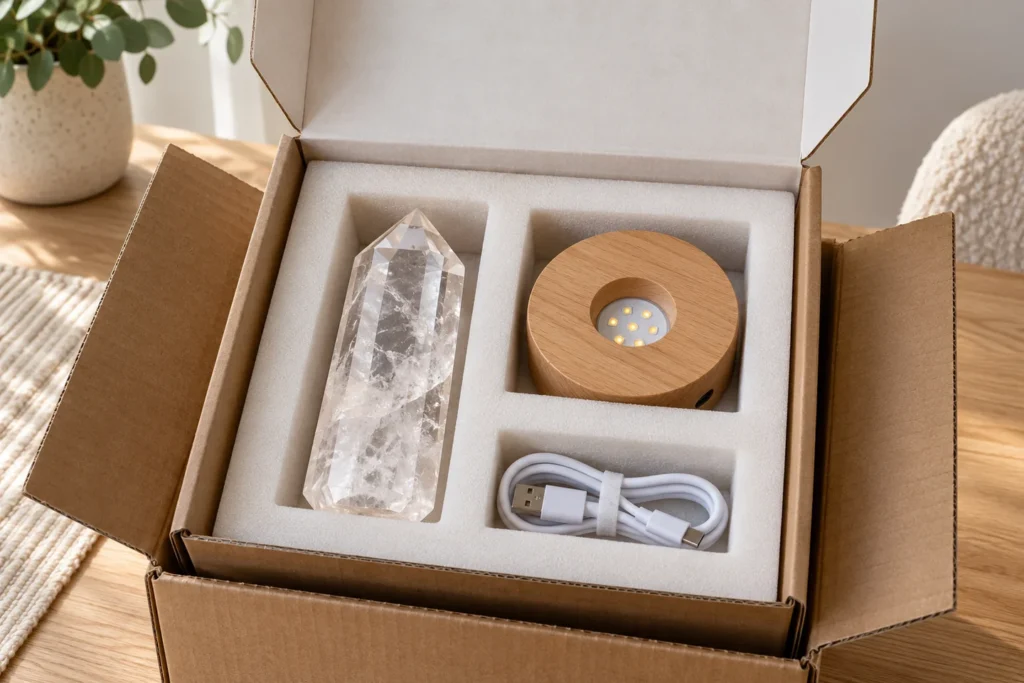
Clear quartz has a glass-like, gem-quality appearance when polished.5 Placing it on an illuminated base elevates the perceived value significantly. A raw quartz point might sell for a modest amount on its own, but the same piece mounted on a warm-light wooden base suddenly looks like a premium home accessory.
This matters because perceived value drives pricing power6. Retailers who present clear quartz lamps well — with proper lighting and clean display — report that customers are willing to pay a premium compared to unlit crystal products of similar size.
Giftability and Impulse Appeal
Crystal lamps are one of the few crystal products that cross over from the "niche collector" market into mainstream gifting.7 A clear quartz lamp is:
- Easy to understand. Even customers unfamiliar with crystals recognize it as a decorative light.
- Giftable without explanation. Unlike a raw specimen, a lamp doesn't require the buyer to know anything about minerals.
- Impulse-friendly at the right price point. Small clear quartz lamps in the $25–$60 retail range (depending on your market) sit in the sweet spot for impulse gift purchases.
Year-Round Demand
Unlike seasonal décor items, crystal lamps sell consistently throughout the year.8 They see a natural uptick during the holiday gifting season, but they don't go dead in spring or summer. This makes inventory planning more predictable — a genuine operational benefit for small retailers managing tight cash flow.
A Note on Wellness Claims
You will find sources claiming that clear quartz lamps purify air, reduce electromagnetic radiation, or promote healing. I want to be straightforward: I am not in a position to verify those claims, and I would not recommend using them as your primary selling angle for resale. Qualified professionals in relevant fields would be the appropriate source for such evaluations.
What I can confirm is that the decorative atmosphere a clear quartz lamp creates is real, measurable (customers stop and look), and commercially useful. That's the benefit I'd build a product listing around.
How Should Buyers Evaluate a Clear Quartz Lamp Before Ordering?
Here's where many first-time buyers make a mistake. They see a photo of a clear quartz lamp they like and immediately ask, "What's the price?" But a clear quartz lamp is not a single product — it's a combination of components, and each one affects cost, quality, and shipping risk.
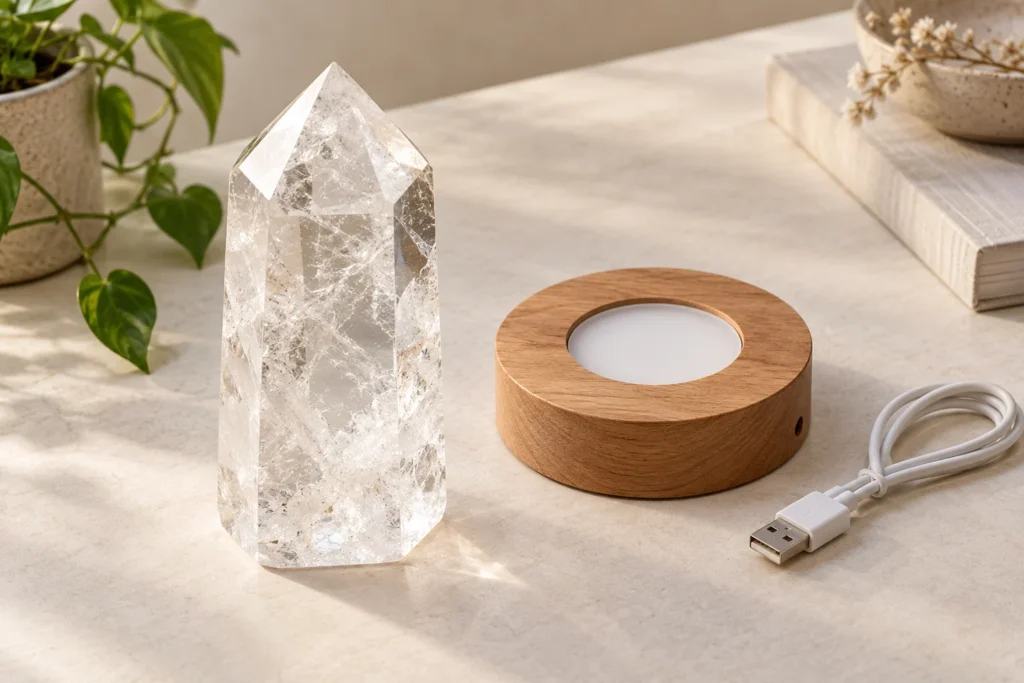
Buyers should evaluate a clear quartz lamp as a system: the crystal component, the lamp base or light source, the electrical specifications, the packaging design, and the shipping method. Each variable changes the landed cost and the customer experience.
The Crystal Component
Not all clear quartz is the same. Factors that affect appearance and cost include:
- Clarity. Highly transparent, inclusion-free quartz commands a higher price. Semi-clear or "milky" quartz is more affordable but produces a softer, less dramatic glow.
- Shape. Points, rough clusters, polished spheres, and carved shapes all create different lighting effects. Points produce a focused, dramatic beam. Clusters scatter light for ambient glow.
- Size and weight. Larger pieces cost more, but they also create more visual impact. There's a sweet spot for each retail channel — a 500g lamp might suit a gift shop, while a 3kg piece targets high-end décor buyers.
The Lamp Base and Light Source
This is the component that most first-time buyers underestimate. The lamp base determines:
| Feature | Options | Impact on Buyer |
|---|---|---|
| Light type | LED, incandescent, USB-powered | LED is most common; USB adds flexibility for display9 |
| Base material | Wood, resin, metal, acrylic | Affects perceived quality and retail price |
| Plug type | US, EU, UK, AU standards | Must match destination market |
| Certifications | CE, UL, RoHS, etc. | May be required by your market's regulations10 |
Important: We supply crystal components and can source compatible lamp bases, but we are not an electrical certification body. Buyers should verify that any electrical components meet their destination market's safety and import requirements. We recommend consulting a qualified compliance professional if you're unsure about the standards that apply.
Packaging and Shipping Risk
Crystal lamps are fragile. A cracked crystal or a broken base turns a profitable product into a return and a negative review. When evaluating an order, consider:
- Inner packaging. Foam-lined boxes, molded inserts, or double-boxing are standard for lamp products. This adds cost but reduces breakage significantly.
- Outer packaging. For ocean freight, reinforced cartons or wooden crates may be necessary. Air freight is faster but more expensive per kilogram.
- Insurance. For high-value shipments, cargo insurance is worth discussing before finalizing the order.11
I've seen buyers try to save on packaging and regret it. A 2% savings on packaging that leads to a 10% breakage rate is not a good trade.
What Information Should You Provide When Requesting a Quote?
This is the question I wish more buyers would ask first. The benefits of a clear quartz lamp only materialize if the order details are right. An incomplete inquiry leads to vague pricing, delays, and mismatched expectations.
To receive an accurate quote for clear quartz lamps, buyers should provide: the intended crystal type and shape, target size and weight range, preferred lamp base style and electrical standard, order quantity, packaging requirements, destination country, and desired delivery timeline.
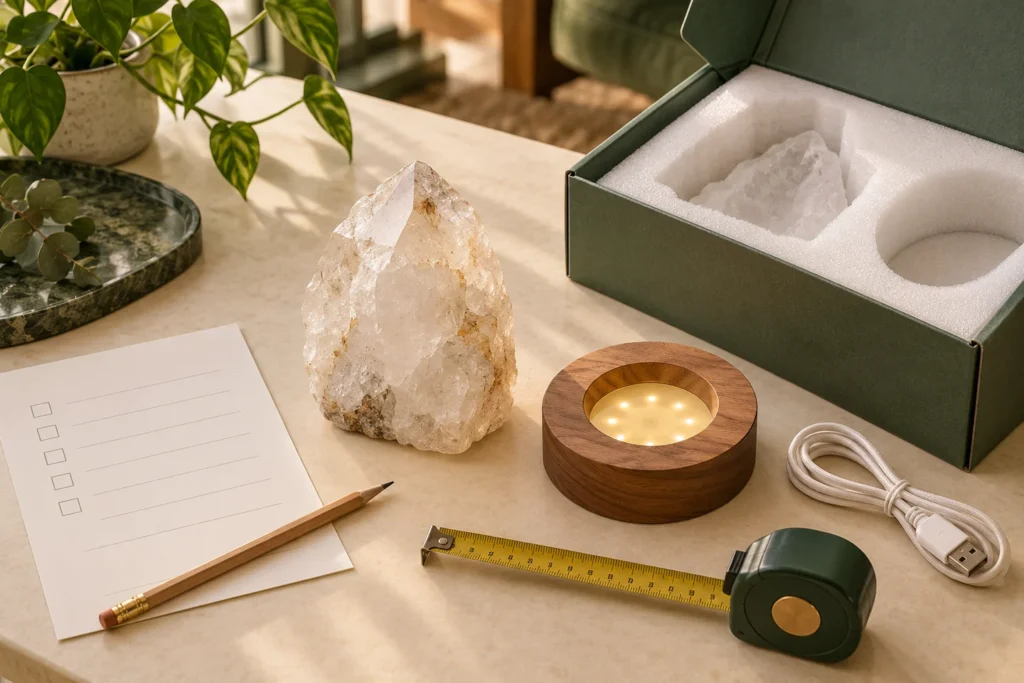
A Practical Inquiry Checklist
Here's what I recommend preparing before you reach out to any supplier — not just us:
- Crystal specification. What clarity grade, shape, and approximate size range are you looking for?
- Lamp base preference. Do you need a specific base material, light type, or plug standard?
- Quantity. How many units for the first order? Are you testing with a trial order or committing to a larger batch?
- Packaging. Do you need retail-ready packaging (gift box) or bulk packaging for your own repackaging?
- Destination. Where are the lamps shipping to? This affects freight options, customs duties, and electrical compliance.
- Timeline. When do you need delivery? Rush orders may limit material options or increase cost.
- Budget range. Even an approximate budget helps the supplier suggest realistic options instead of guessing.
Why These Details Matter
Every variable above changes the quote. A 200g clear quartz point on a basic wooden LED base, bulk-packed, shipping to the US by sea — that's a very different product from a 1kg polished quartz sphere on a metal USB base, gift-boxed, air-freighted to the UK.
There is no fixed price for "a clear quartz lamp." Old product photos or prices from previous batches may not reflect current material availability, processing costs, or freight rates. This is not evasiveness — it's how B2B crystal sourcing works. The more specific your inquiry, the faster and more accurate the quote.
How Can You Tell if a Clear Quartz Lamp Suits Your Market?
Before committing to a large order, the smartest move is to test. But testing only works if you know what you're measuring. Many buyers order a few samples, display them, and judge the result based on gut feeling. There's a better approach.
A clear quartz lamp suits your market if it generates customer engagement at your target price point, fits your store or listing aesthetic, and can be reordered consistently without major quality variation between batches.
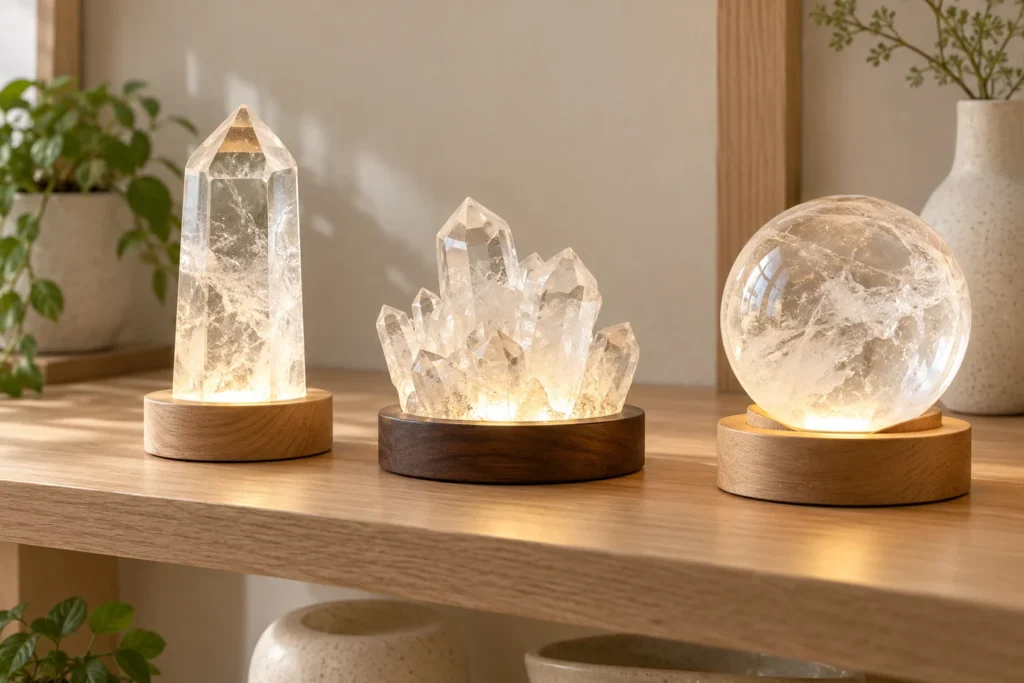
Run a Structured Test
Instead of just "seeing if it sells," try this:
- Order 2–3 variations. Different sizes, different base styles. Place them at different price points.
- Track engagement. In a physical store, note which lamp customers touch or ask about. In e-commerce, track click-through rates on listing images.
- Measure sell-through time. How many days does each variant take to sell? This tells you which combination of size, base, and price works for your audience.
- Evaluate reorder feasibility. After the test, ask yourself: can I get more of the same quality? This is where batch consistency matters.
Batch Consistency Conversations
One reality of natural crystal products is that no two pieces are identical. However, you can request consistency in:
- Clarity grade range (e.g., "80%+ transparent, minimal inclusions")
- Size and weight tolerance (e.g., "8–10 cm height, 150–250g")
- Base color and finish match across the batch
These conversations should happen before production, not after the shipment arrives. A good supplier will confirm what's achievable and set realistic expectations rather than promise perfection.
Frequently Asked Questions
Do clear quartz lamps actually purify the air?
This is a common claim, but it is not something I can verify as a crystal supplier. Clear quartz is not a salt lamp and does not operate by the same proposed mechanisms. We recommend consulting qualified professionals for any health-related claims. The demonstrated benefit is decorative atmosphere.
What is the typical MOQ for clear quartz lamps?
There is no universal MOQ. It depends on the crystal size, lamp base type, packaging, and whether the order is a trial or a production run. We discuss MOQ on a per-inquiry basis. Providing your full order details upfront helps us give you a realistic minimum.
Can I mix clear quartz lamps with other crystal lamp types in one order?
In many cases, yes. Mixed orders are common in B2B crystal sourcing. However, mixing affects packaging logistics and may influence unit pricing. Specify which types and quantities you want when you inquire so we can confirm whether mixing is practical for your order.
Do I need to worry about electrical certifications?
Yes. Electrical components in lamp products may need to comply with safety standards in your destination market (such as CE, UL, or RoHS). We are not a certification body, so buyers should verify requirements with a qualified compliance consultant before placing an order.
How fragile are clear quartz lamps during shipping?
Crystal lamps are fragile. Proper packaging — foam inserts, double-boxing, and reinforced cartons — significantly reduces breakage risk.12 We recommend discussing packaging options before finalizing any order, especially for ocean freight shipments.
Conclusion
The benefits of a clear quartz lamp are real — but they're commercial, not mystical. A well-selected clear quartz lamp creates visual impact in stores and online listings, delivers strong perceived value to end customers, and sells consistently across seasons. The key is treating it as a product-selection decision, not just a pretty light. That means confirming crystal clarity, lamp base specifications, electrical compatibility, packaging, and shipping details before expecting an accurate quote.
If you're evaluating whether clear quartz lamps belong in your next order, I'd encourage you to start with a specific inquiry rather than a general browse. Share your target size, quantity, destination, and retail scenario with us at GD Crystal, and we'll help you determine whether this product fits your business — and what it will actually cost to get it to your door.
References
- "The Impact of Lighting Type on Consumer Behavior in the …", https://digitalcommons.georgiasouthern.edu/cgi/viewcontent.cgi?article=1575&context=honors-theses. Studies of retail atmospherics report that store lighting can influence shoppers' visual attention, evaluations of the retail environment, and purchase-related responses; this evidence supports the general merchandising logic but does not specifically test clear quartz lamps. Evidence role: general_support; source type: paper. Supports: Research on retail atmospherics and lighting can support the general proposition that lighting affects attention, store evaluation, browsing time, and purchase intention.. Scope note: Contextual support only, because most studies examine lighting conditions or retail atmospherics generally rather than illuminated crystal products. ↩
- "Quartz", https://en.wikipedia.org/wiki/Quartz. Mineralogical references describe pure quartz as colorless to transparent with a vitreous luster, which supports the description of clear quartz as visually neutral; the source does not independently establish its retail versatility. Evidence role: definition; source type: encyclopedia. Supports: A mineral reference should verify that pure quartz is commonly colorless or transparent and has a vitreous appearance, explaining the basis for describing clear quartz as visually neutral.. Scope note: Supports the material description directly, but the retail-aesthetic conclusion remains contextual. ↩
- "Quartz", https://en.wikipedia.org/wiki/Quartz. Standard mineral references identify amethyst as purple quartz, rose quartz as pink quartz, and pure quartz as commonly colorless, supporting the article's distinction between clear quartz and colored quartz varieties. Evidence role: definition; source type: encyclopedia. Supports: A mineral encyclopedia should confirm that amethyst is purple quartz, rose quartz is pink quartz, and pure quartz may be colorless or clear.. ↩
- "Home Decor Market Share, Growth, Analysis, Forecast – 2035", https://www.marketresearchfuture.com/reports/home-decor-market-11525. Consumer and retail research on home décor and decorative lighting indicates that such products are commonly positioned as home accessories and gift items, providing contextual support for the claim that a clear quartz lamp can appeal beyond specialist crystal buyers. Evidence role: general_support; source type: research. Supports: A neutral market or consumer research source should show that decorative lighting and home accessories are purchased as gifts or home décor items, supporting the broader appeal claim.. Scope note: Contextual support only, because broad home décor or gift-market data may not isolate clear quartz lamps. ↩
- "Quartz", https://en.wikipedia.org/wiki/Quartz. Mineralogy references classify quartz as a mineral with vitreous luster and transparent to translucent varieties, supporting the description of polished clear quartz as glass-like in appearance. Evidence role: definition; source type: education. Supports: A university or mineral reference should describe quartz as having vitreous luster and variable transparency, explaining why polished clear quartz can look glass-like.. ↩
- "C24 – Wharton Faculty Platform – University of Pennsylvania", https://faculty.wharton.upenn.edu/wp-content/uploads/2012/04/9003_Getting_a_Read_on_Market.pdf. Marketing research links perceived customer value with willingness to pay and acceptance of price premiums, supporting the mechanism by which a more premium presentation may increase pricing power. Evidence role: mechanism; source type: paper. Supports: Marketing research should establish that perceived value is associated with willingness to pay and price premiums.. Scope note: The evidence supports the pricing mechanism generally and may not measure clear quartz lamps specifically. ↩
- "Report: U.S. decorative lighting market set for growth", https://www.homeaccentstoday.com/lighting/report-u-s-decorative-lighting-market-set-for-growth/. Research on gift purchasing and home-accessory retailing shows that decorative lighting and home décor items are established gift categories, which gives contextual support to the claim that crystal lamps can function as mainstream gifts. Evidence role: general_support; source type: research. Supports: A neutral retail or consumer research source should support that decorative lamps and home accessories are common gift categories, making the crossover claim plausible.. Scope note: The evidence would support the category logic rather than proving that crystal lamps outperform other crystal products as gifts. ↩
- "Decorative Lighting Market (2026 – 2035)", https://www.marketresearchfuture.com/reports/decorative-lighting-market-11649. Retail category data or search-interest trends for decorative lighting can document whether demand remains present across the year while rising during gift-heavy periods; such evidence would contextualize the year-round demand claim for crystal lamps. Evidence role: statistic; source type: research. Supports: A retail category report or trend data source should show relatively stable demand or search interest for decorative lighting across the year, with possible holiday increases.. Scope note: Contextual support only if the available data covers decorative lighting broadly rather than crystal lamps specifically. ↩
- "LED Adoption Report", https://www.energy.gov/cmei/ssl/led-adoption-report. Energy and lighting authorities document the broad adoption of LED technology because of its efficiency, small size, and long service life, supporting the article's statement that LED is a common light source for lamp products. Evidence role: statistic; source type: institution. Supports: An energy agency or government lighting source should document the widespread adoption of LED lighting and its suitability for efficient, compact lamp applications.. Scope note: The source may support LED prevalence generally but may not address USB-powered crystal-lamp displays directly. ↩
- "CE marking", https://en.wikipedia.org/wiki/CE_marking. Official product-safety and market-access guidance states that electrical and electronic products may be subject to jurisdiction-specific requirements such as CE marking in the European Union and restrictions under RoHS, supporting the need to verify applicable certifications before sale. Evidence role: general_support; source type: government. Supports: Official regulatory sources should confirm that electrical products sold in certain markets may need to meet safety, CE marking, or RoHS requirements.. Scope note: Specific obligations depend on product design, components, and destination jurisdiction. ↩
- "Cargo Insurance | BETA – International Trade Administration", https://beta.trade.gov/article?id=Cargo-Insurance. International trade guidance describes cargo insurance as a mechanism for covering loss or damage to goods during transport, supporting the article's advice to address insurance for high-value crystal-lamp shipments before finalizing logistics. Evidence role: general_support; source type: government. Supports: A trade or shipping authority should explain that cargo insurance protects against loss or damage in transit and is commonly considered in international trade.. ↩
- "How to Pack a Fragile Item So It Survives Shipping", https://www.postnet.com/blog/step-by-step-guide-packing-fragile-item/. Carrier and packaging-engineering guidance for fragile goods recommends adequate cushioning, separation from carton walls, and double-boxing for vulnerable items, supporting the claim that these measures reduce shipping damage risk. Evidence role: mechanism; source type: institution. Supports: A packaging standard or carrier packaging guide should explain how cushioning, separation, and double-boxing protect fragile items during transit.. Scope note: Such guidance supports the protective mechanism generally rather than quantifying breakage reduction for clear quartz lamps. ↩