Choosing what crystal is best paired with clear quartz is one of the most common questions we hear from retail buyers building their first product sets. The problem is that most online advice targets individual consumers, not store owners who need to think about display, photography, pricing, and reorder logistics. The real answer depends entirely on your selling scenario.1
The best crystal to pair with clear quartz is not a single universal answer. For most retail and ecommerce sellers, the top choices are amethyst, rose quartz, black tourmaline or black obsidian, and citrine. Each pairing works for different reasons — visual contrast, giftability, price tier, and how easily the combination can be explained to your end customer. The "best" pairing is the one that fits your product form, target audience, and procurement needs.
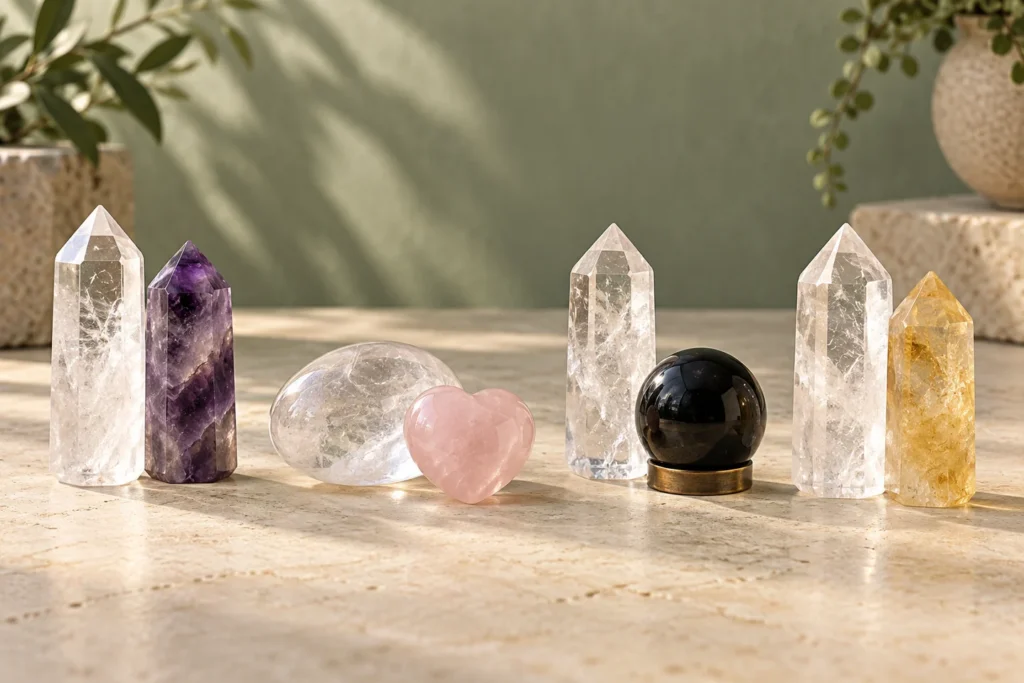
Before you place a bulk order on any combination set, it helps to understand why certain pairings consistently sell well, how product form changes the equation, and what procurement details to confirm with your supplier. Let me walk you through the logic we share with our B2B customers every day.
Why Does the "Best Pairing" Depend on Your Selling Scenario?
Most crystal pairing guides online give a single answer — usually amethyst or rose quartz — without explaining why. That advice may work for an individual buyer, but if you are stocking a retail shelf or building an ecommerce listing, the decision is more layered. A pairing that photographs beautifully may not ship well. A pairing that sells at gift shows may underperform in a metaphysical shop.
The best crystal paired with clear quartz depends on at least five factors: your target customer, the product form, the visual story you want to tell, your price tier, and whether you can consistently reorder that combination from your supplier.
Matching Pairings to Customer Segments
Different end customers respond to different combinations. Here is a simplified framework based on what we commonly see in our B2B orders:
| Customer Segment | Commonly Preferred Pairing | Why It Works |
|---|---|---|
| Gift buyers (general) | Clear quartz + rose quartz | Soft, approachable, easy to explain as a "love & clarity" set |
| Metaphysical / spiritual shoppers | Clear quartz + amethyst | Widely recognized "calming & clarity" combination |
| Male-oriented or minimalist buyers | Clear quartz + black tourmaline / obsidian | Strong visual contrast, "protection & clarity" narrative |
| Optimistic / manifestation-focused | Clear quartz + citrine | Bright, warm tones, associated with positivity and abundance |
| Collectors or display-focused buyers | Clear quartz + fluorite or labradorite | Unique color play, specimen-grade appeal |
This table is not exhaustive, but it illustrates the point: there is no single "best" pairing. There is the best pairing for your market.
The Merchandising Logic Behind Popular Pairings
From a pure merchandising perspective, crystal pairings need to do three things well:
- Create visual contrast or harmony that catches the eye in a photo or on a shelf
- Carry a simple, repeatable story that your staff or product listing can communicate in one sentence
- Sit within a workable price range so the set feels like a value, not an upsell trick
Clear quartz is often chosen as the "anchor" stone in a set because it is relatively neutral in color, widely recognized, and available across many product forms.2 It pairs visually with almost anything. The question is which second stone gives you the most commercial leverage.
Don't Overlook Reorder Consistency
A pairing might look stunning in a sample order, but if you cannot get consistent size, color saturation, or quality in future batches, it becomes a headache. This is particularly relevant for stones like citrine (where heated amethyst versus natural citrine varies dramatically in color) and labradorite (where flash quality differs from batch to batch).3 I always recommend asking your supplier upfront about batch consistency before committing to a specific combination for your core product line.
Is Amethyst the Most Popular Crystal to Pair With Clear Quartz?
Amethyst is arguably the most frequently chosen crystal to pair with clear quartz in retail settings. But "most popular" does not mean "best for everyone." It means the pairing has the broadest appeal and the lowest risk for a new product line.
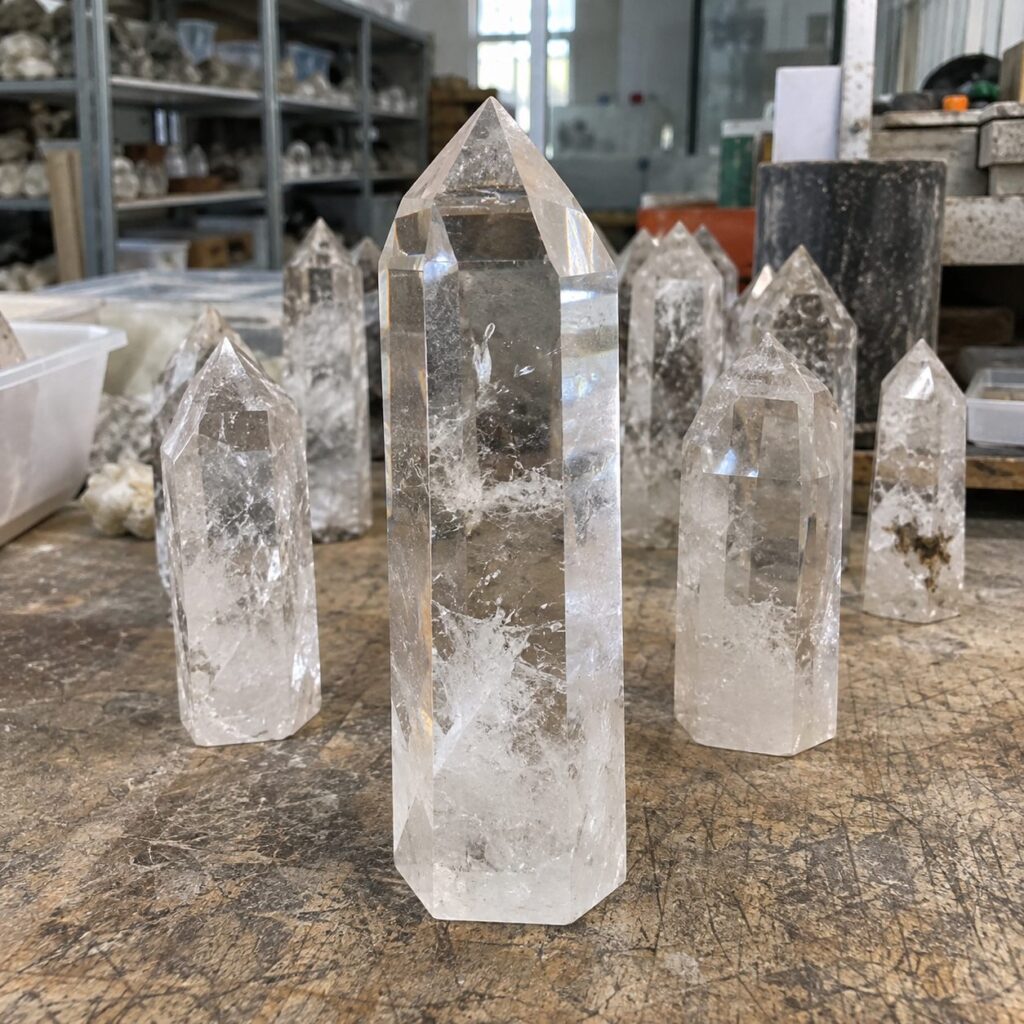
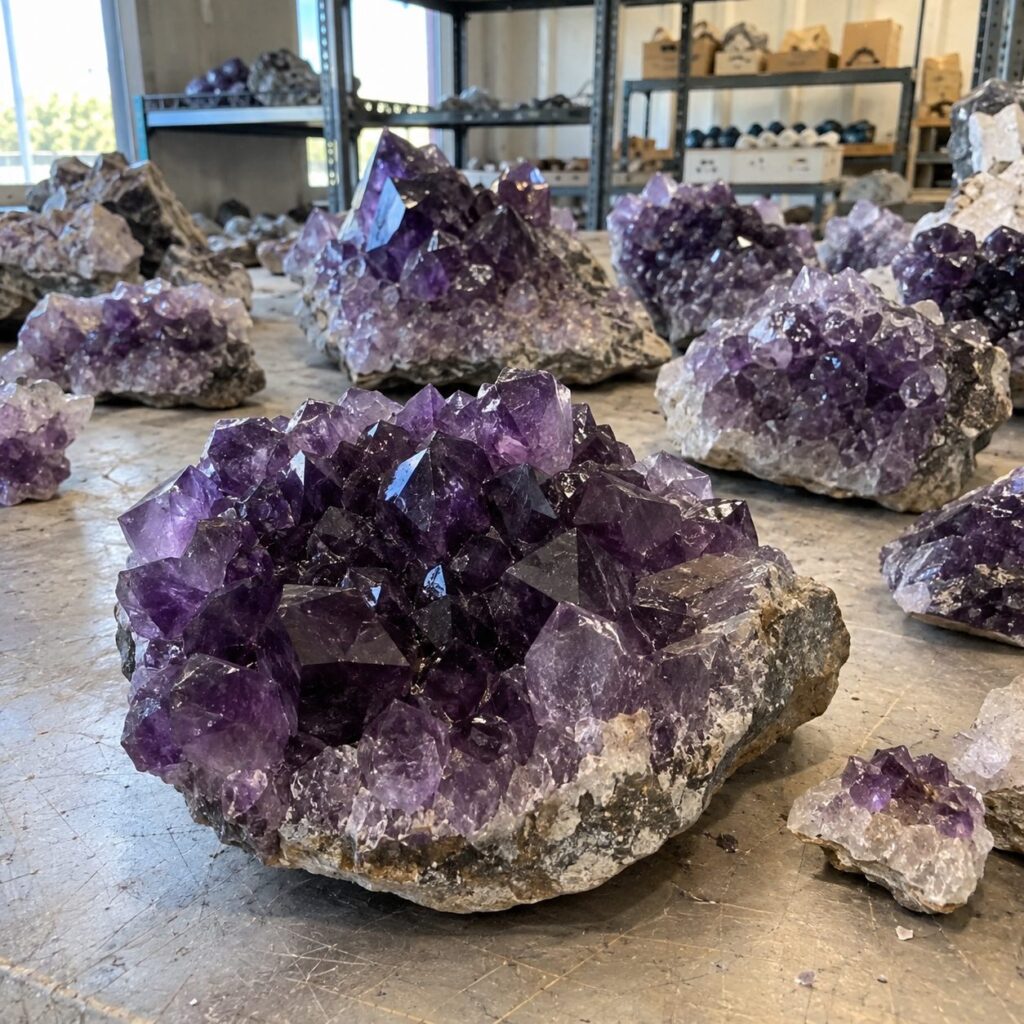
Amethyst paired with clear quartz is commonly chosen for retail crystal sets because the purple-and-clear color contrast is immediately appealing, the meaning narrative is simple ("calm and clarity"), and both stones are widely available in consistent quality across most product forms.4 It is often the safest starting point for sellers building their first combination sets.
Why Amethyst Works So Well Commercially
Let me break down the specific reasons this pairing dominates B2B orders:
- Color contrast: Purple against clear/white creates an instantly recognizable, photogenic combination. This matters enormously for ecommerce listings and social media content.
- Story simplicity: Even customers with no crystal knowledge understand "calming purple stone + clarity stone." Your product description almost writes itself.
- Supply stability: Both amethyst and clear quartz are among the most widely produced crystal products globally. This means relatively stable pricing, broad size availability, and predictable MOQs.
- Form versatility: This pairing works across towers, spheres, tumbled stones, bracelets, hearts, and carved pieces. You can build an entire product line around it.
Where Amethyst Falls Short
That said, amethyst is not always the right choice:
- In saturated markets, many competitors already offer this combination. If your crystal shop is in a competitive area or marketplace, amethyst + clear quartz sets may not differentiate your brand.
- For male-targeted or minimalist branding, the purple can feel too soft or "feminine" for some customer segments.
- In higher price tiers, the pairing can feel too common. Collectors and premium buyers may want something less expected.
Procurement Tip for Amethyst Pairings
When ordering amethyst to pair with clear quartz, confirm the color grade with your supplier. Amethyst color ranges from very pale lavender to deep, saturated purple.5 If your set features a beautifully clear quartz piece next to a washed-out, pale amethyst, the visual impact drops significantly. Specify the color saturation range you need, and ask for current batch photos rather than relying on catalog images.
How Does Rose Quartz Compare as a Clear Quartz Pairing?
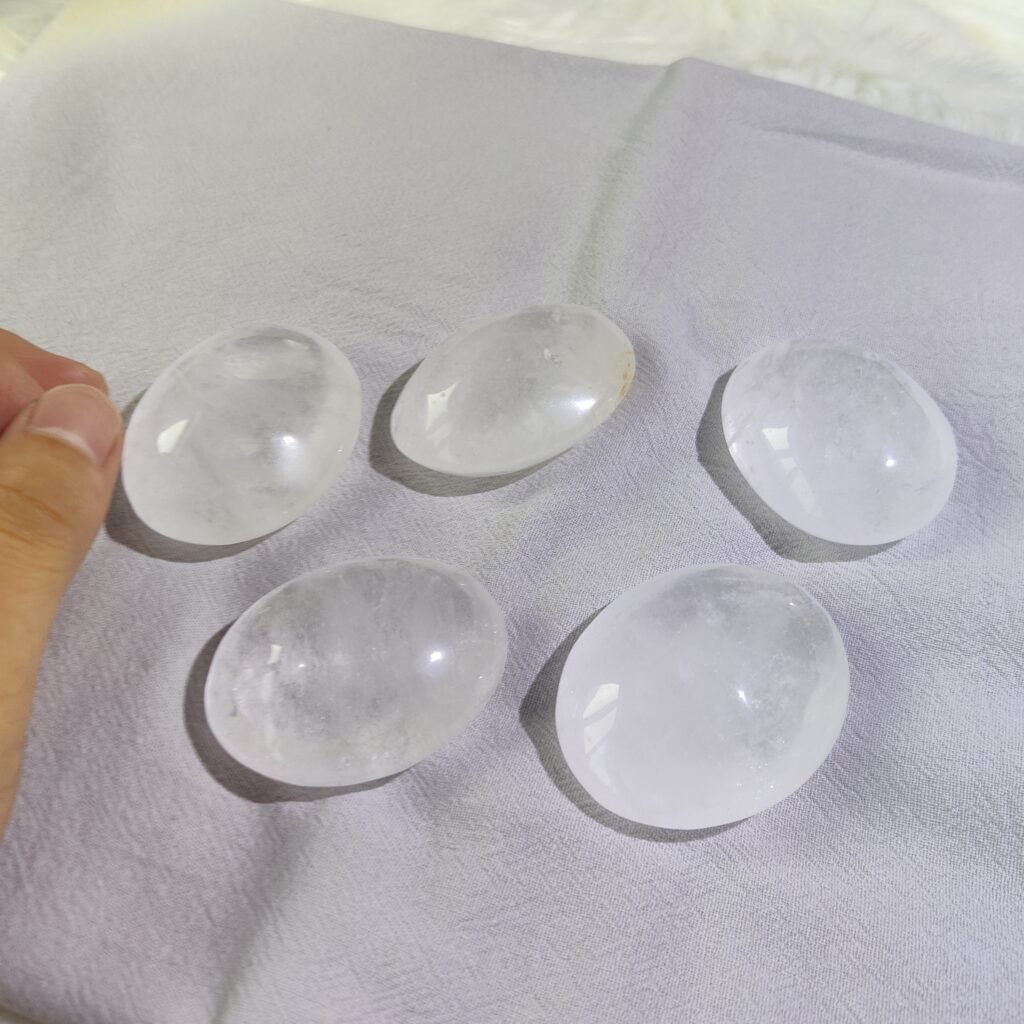
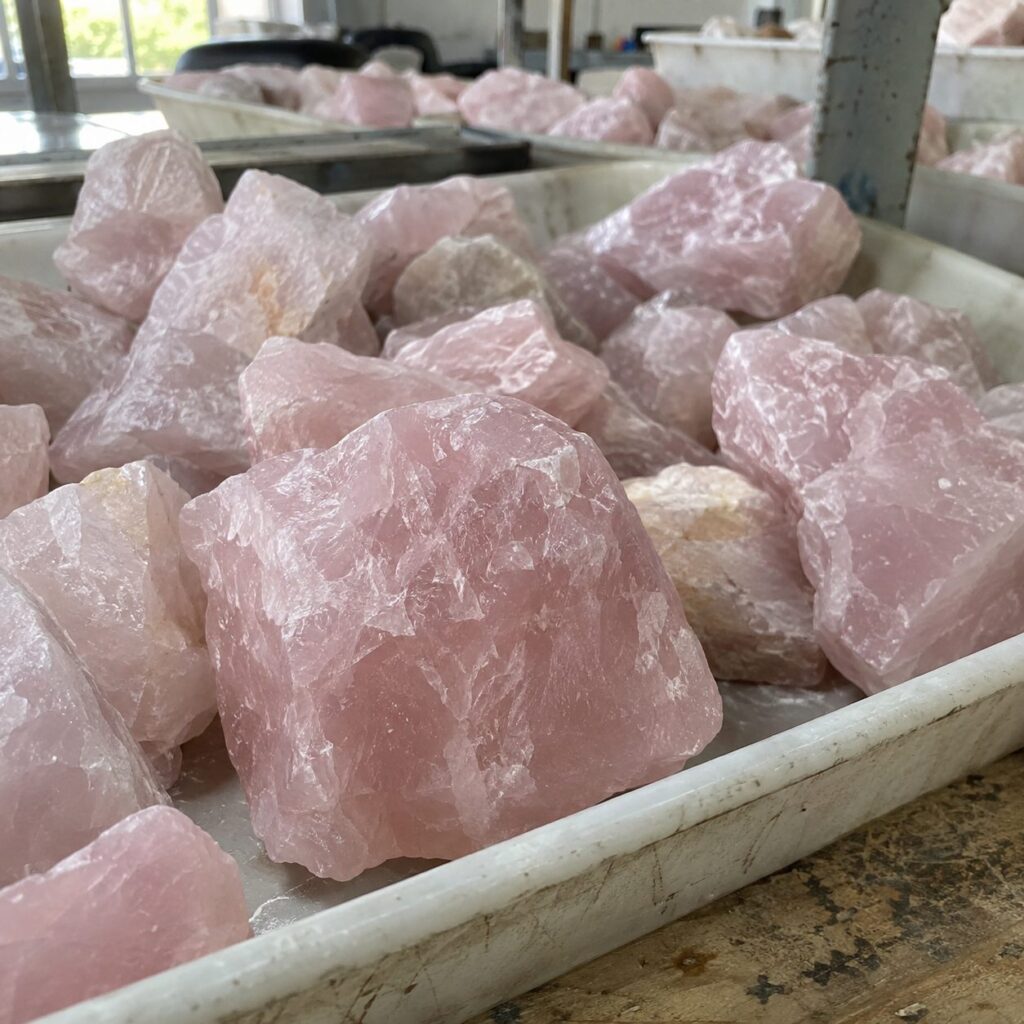
Rose quartz is the second most commonly requested pairing with clear quartz, and it dominates in one specific category: gift sets. If a significant portion of your revenue comes from gift buyers — Valentine's Day, Mother's Day, bridesmaid gifts, self-care packages — this combination deserves serious attention.
Rose quartz paired with clear quartz is often the top choice for giftable crystal sets. The soft pink and clear tones create a gentle, elegant aesthetic that appeals to gift buyers and self-care shoppers. This pairing is commonly associated with love and emotional clarity, making it easy to market for occasions and themed collections.
The Gift Market Advantage
Gift buyers behave differently from crystal enthusiasts.6 They are often:
- Buying for someone else, so they need the product to "make sense" without deep crystal knowledge
- Influenced heavily by packaging and visual presentation7
- Looking for a price point, not a specific stone
- Shopping seasonally or for occasions
Rose quartz + clear quartz checks every one of those boxes. The color palette feels universally appealing. The "love + clarity" narrative is intuitive. And the set photographs beautifully against neutral backdrops — a significant advantage for ecommerce sellers.
Form Considerations for Rose Quartz Sets
Product form matters even more with rose quartz pairings:
| Product Form | How the Pairing Works | Best Selling Context |
|---|---|---|
| Hearts (paired set) | Iconic "love" symbolism, compact | Gift shops, Valentine's Day, ecommerce bundles |
| Tumbled stones (pouch set) | Affordable, tactile, easy to ship | Starter kits, subscription boxes, wholesale to small shops |
| Spheres (display pair) | Elegant, premium feel | Home décor retailers, crystal boutiques |
| Bracelets (stacked pair) | Wearable, impulse buy | Fashion-adjacent retailers, markets, livestream sales |
| Towers (display pair) | Visual height, shelf presence | Crystal shops, metaphysical stores |
Notice how the same two stones serve entirely different markets depending on form. A rose quartz + clear quartz heart set is a gift product. The same stones as stacking bracelets are a fashion accessory. Your form choice directly affects your customer base, pricing, and packaging requirements.
Watch Out for Color Consistency
Rose quartz varies significantly in color intensity between batches and sources.8 Some batches lean almost white, while others have a rich, milky pink. For paired sets, the visual balance between the rose quartz and the clear quartz depends on that pink saturation. I recommend requesting a sample or at least current batch photos before placing a large order, and specifying a minimum color saturation when possible.
Are Black Tourmaline or Black Obsidian Good Pairings With Clear Quartz?
If your product line needs strong visual contrast or you are targeting customers interested in "protection" themes, black stones paired with clear quartz are often an excellent choice. The two most commonly used are black tourmaline and black obsidian.
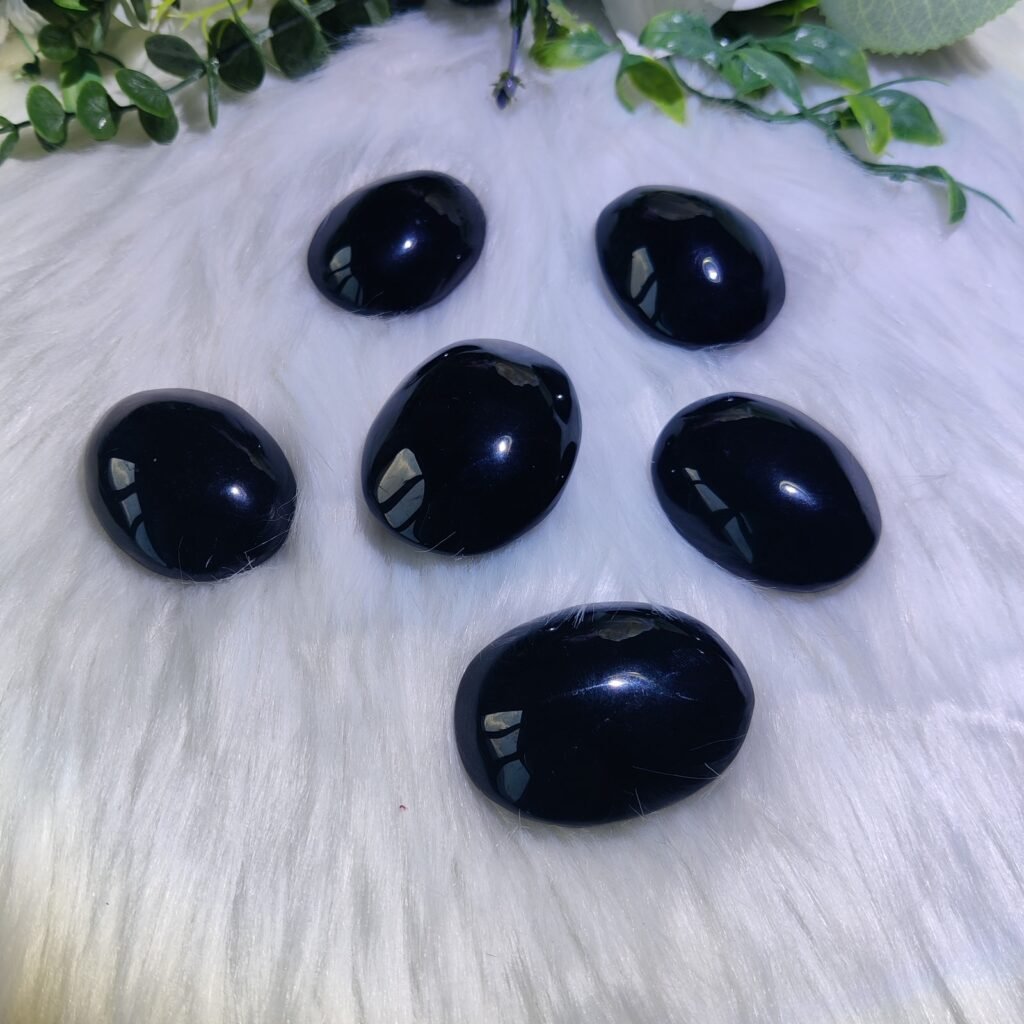
Black tourmaline and black obsidian are commonly chosen to pair with clear quartz when sellers want bold visual contrast and a "protection and clarity" theme. Black tourmaline offers a raw, textured look, while obsidian provides a sleek, polished surface. Both create striking product photography and tend to appeal to a slightly different customer base than softer pastel pairings.
Black Tourmaline vs. Black Obsidian: A Quick Comparison
These two stones are often grouped together, but they behave quite differently as products:
| Factor | Black Tourmaline | Black Obsidian |
|---|---|---|
| Surface texture | Rough, striated, often raw9 | Smooth, glassy when polished10 |
| Visual feel | Earthy, natural, "raw crystal" | Sleek, modern, "refined" |
| Product forms | Raw chunks, tumbled, some towers | Spheres, towers, carved pieces, mirrors, tumbled |
| Fragility during shipping | Moderate — can chip at striations | Low — relatively durable when polished |
| Price range | Generally affordable in bulk | Generally affordable in bulk |
| Customer appeal | Metaphysical shoppers, crystal collectors | Broader appeal including home décor buyers |
Why Contrast Sells
From a visual merchandising perspective, the black-and-clear combination is powerful. It creates immediate focal points on a shelf or in a product photo. For ecommerce sellers, this matters directly: listings with strong visual contrast tend to get more clicks.11 For physical retailers, a black-and-clear display section breaks up the pastel monotony that many crystal shops fall into.
This pairing also tends to appeal to customers who might not buy a "typical" crystal set. The bold contrast feels less "new age" and more "design-forward," which can help you reach customers shopping for home décor or minimalist accessories rather than spiritual tools.
Procurement Notes for Black Stone Pairings
- Black tourmaline quality varies widely. Low-grade pieces may crumble or shed fragments during shipping. If you are creating paired sets, confirm that your supplier grades for structural integrity, not just appearance.
- Black obsidian is generally more consistent, but check for surface scratches on polished pieces — obsidian shows every mark clearly against its glassy surface.
- For both, confirm whether you are receiving natural material or dyed/treated alternatives. This is less of an issue for these two specific stones than for others, but always worth verifying.
Does Product Form Change How You Should Pair Clear Quartz?
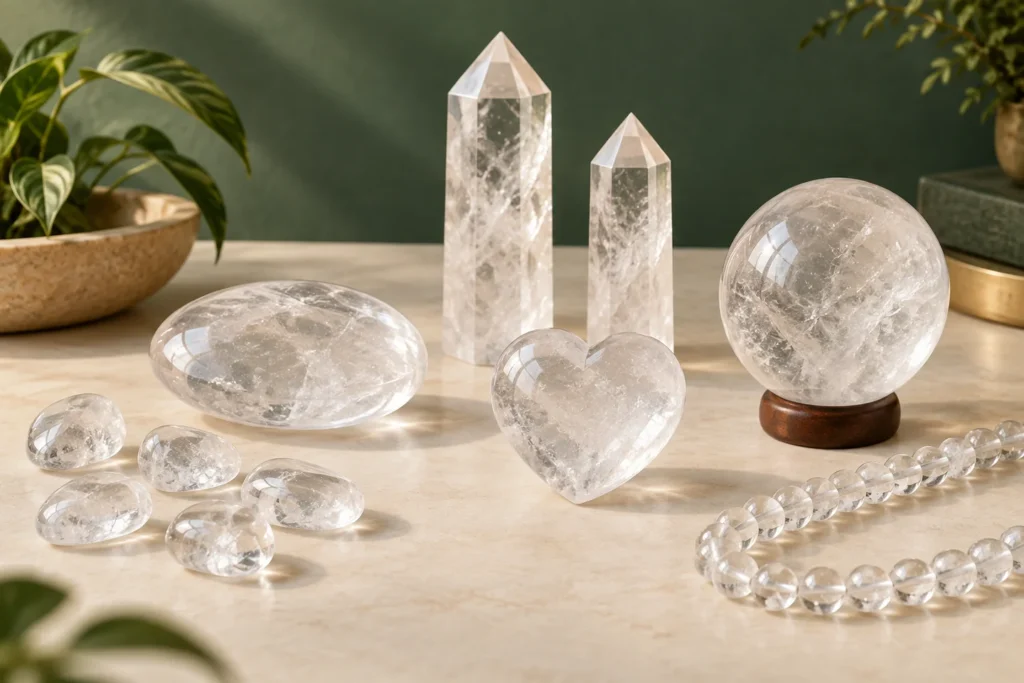
Absolutely. Product form is one of the most overlooked factors in crystal pairing decisions, and it is arguably more important than the stone choice itself for your bottom line. A clear quartz tower paired with an amethyst tower creates a very different product — in terms of price, display, shipping cost, and customer appeal — than clear quartz tumbled stones paired with amethyst tumbled stones.
The product form you choose for a clear quartz pairing directly affects pricing, display options, packaging, shipping logistics, and which customer segment the set appeals to. Retailers should decide on form before finalizing which stone to pair, not the other way around.
How Form Affects Every Decision
Let me walk through the practical implications:
Towers and points create the most dramatic visual displays. They photograph well and justify higher price points. However, they are fragile to ship, harder to size-match in pairs, and require more careful packaging. If you are selling paired tower sets, expect to pay more per unit and maintain tighter quality specifications with your supplier.
Spheres are elegant and popular for home décor contexts. They are easier to size-match than towers, but they require stands or holders, which adds packaging complexity. Sphere pairings work well for mid-to-premium price tiers.
Tumbled stones are the most versatile and the easiest to procure in bulk. They are forgiving in terms of size variation, cheap to ship, and work in pouches, boxes, or display bowls. If you are building a crystal pairing starter kit or subscription box, tumbled stones are usually the most practical form.
Hearts are niche but powerful for gift markets. Paired heart sets — one clear quartz, one rose quartz — are a consistent seller around Valentine's Day and Mother's Day. They are compact, easy to package, and carry an obvious meaning.
Bracelets turn the pairing into a wearable product with higher perceived value. Stacked bracelet sets (one clear quartz, one amethyst, for example) are popular with livestream sellers and fashion-adjacent retailers.
Chips and gravel serve a completely different market — DIY crafters, candle makers, resin artists, and terrarium builders. Pairing clear quartz chips with another stone's chips works for bulk, low-cost creative supply sets.
The Takeaway for Procurement
Decide on form first. Then choose the stone pairing that works best in that form for your customer base. Once you know the form, you can discuss specific dimensions, weight ranges, MOQs, mixed-batch options, and packaging with your supplier.
What Should You Confirm With Your Supplier Before Ordering Crystal Pairings?
This is where the conversation shifts from creative selection to practical procurement — and where many first-time buyers make costly mistakes. Choosing a beautiful crystal pairing means nothing if you cannot source it consistently at the right quality, size, and price.
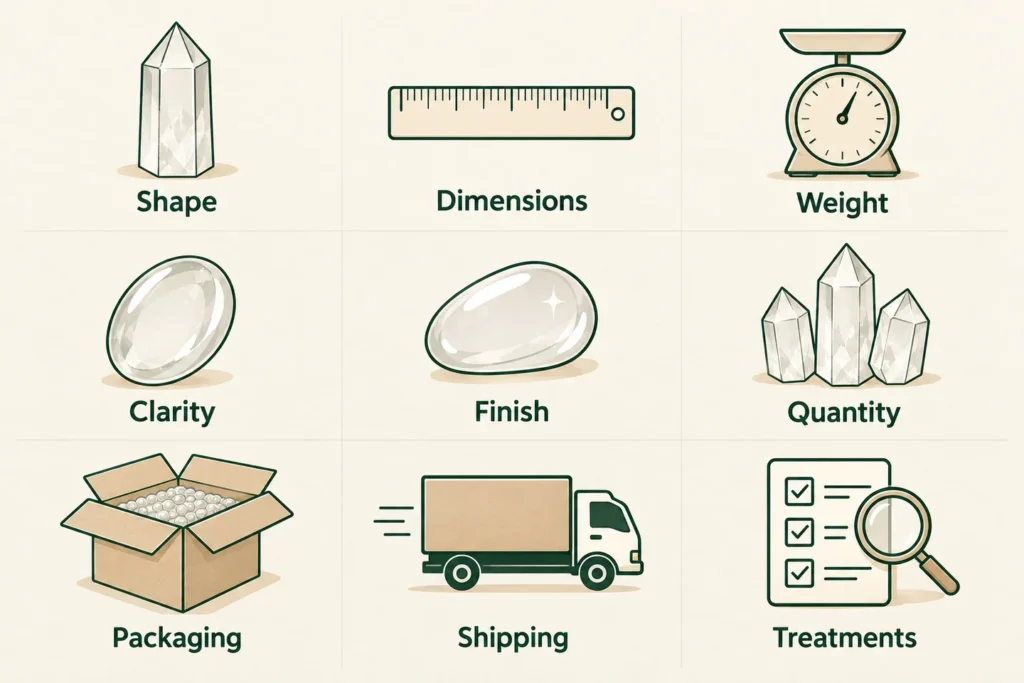
Before ordering crystal pairings in bulk, confirm the specific material and any treatments, the size and weight ranges for each stone in the set, the MOQ per item and for mixed assortments, packaging options, batch-to-batch consistency, and lead times. These details determine whether your pairing idea becomes a sustainable product line or a one-time experiment.
A Practical Procurement Checklist
Here is a checklist we commonly walk through with our B2B customers:
-
Material verification: Is the stone natural? Has it been heated, dyed, coated, or reconstructed? For example, much of the "citrine" on the market is actually heated amethyst.12 Both are legitimate products, but your listing should be accurate.
-
Size matching: If you are selling paired sets, can your supplier provide size-matched pairs? What is the acceptable size variation? This is especially important for towers and spheres.
-
Color and quality grading: What grade are you receiving? Can you specify a minimum color saturation for stones like amethyst or rose quartz?
-
MOQ and mixed-batch flexibility: Can you order a mixed batch — for example, 50 clear quartz tumbled + 50 amethyst tumbled + 50 rose quartz tumbled — or must each stone meet a separate MOQ?
-
Packaging: Will the pieces come individually wrapped, in bulk bags, or in set boxes? Do you need custom packaging for gift sets?
-
Reorder consistency: Can your supplier provide similar quality and sizing on repeat orders? Ask for this explicitly.
-
Lead times: Confirm current stock availability, production time, and the expected dispatch date before placing your order.
References
- "Development of an Assortment-Planning Model for", https://vtechworks.lib.vt.edu/bitstreams/020a17b3-782d-483e-98c5-ced810db5efd/download. Research on retail assortment planning identifies consumer segment, product attributes, pricing, and replenishment constraints as core variables in merchandising decisions; this supports the article's scenario-based framework, although it does not test crystal pairings specifically. Evidence role: general_support; source type: paper. Supports: Retail product-assortment decisions commonly depend on customer segment, product attributes, price architecture, and replenishment or supply constraints.. Scope note: Contextual support only; it supports the merchandising logic, not the specific stones named in the article. ↩
- "GIA Gem Encyclopedia | Complete List Of Gemstones", https://www.gia.edu/gem-encyclopedia. Gemological descriptions of quartz identify colorless rock crystal as a common quartz variety used in gem and decorative objects, supporting its role as a broadly available neutral material; the source does not address retail set design directly. Evidence role: general_support; source type: institution. Supports: Quartz, including colorless rock crystal, is a common and widely used mineral/gem material available in many forms.. Scope note: Contextual support only; availability and mineral recognition do not directly prove that retailers choose it as an anchor stone. ↩
- "Labradorite", https://en.wikipedia.org/wiki/Labradorite. Mineralogical studies of labradorite attribute labradorescence to light interference from internal lamellae and related structures, explaining why color flash can vary between specimens; this supports the article's procurement concern but not a measured batch-quality standard. Evidence role: mechanism; source type: paper. Supports: Labradorescence depends on internal microstructures and viewing conditions, which can cause variation in perceived flash among specimens.. Scope note: Contextual mechanism support only; it does not document variation in any specific supplier batch. ↩
- "Amethyst Quality Factors", https://www.gia.edu/amethyst-quality-factor. Gemological references describe amethyst as a widely used quartz variety and quartz as an abundant gem material, which contextualizes the claim that both are broadly available for commercial products; the source does not verify batch consistency for wholesale suppliers. Evidence role: general_support; source type: institution. Supports: Amethyst and quartz are widely known gem materials with established quality descriptors and broad availability.. Scope note: Contextual support only; it does not prove consistency across every supplier or product form. ↩
- "Amethyst Quality Factors", https://www.gia.edu/amethyst-quality-factor. Gemological descriptions of amethyst define it as purple quartz and note that its color may range from pale lilac or lavender to deep purple, supporting the article's statement about color grading. Evidence role: definition; source type: institution. Supports: Amethyst color varies from light lavender to saturated purple.. ↩
- "Experiential Gifts Foster Stronger Social Relationships than …", https://www.anderson.ucla.edu/sites/default/files/documents/areas/fac/marketing/mogilner/Chan%20Mogilner%20JCR%202016%20Experiential%20Gifts.pdf. Consumer-behavior research on gift giving shows that buying for another person involves recipient fit, symbolic meaning, and social relationship considerations that differ from ordinary self-purchase decisions; this supports the article's distinction between gift buyers and crystal enthusiasts. Evidence role: general_support; source type: paper. Supports: Gift purchases involve different decision criteria and social considerations than self-purchases.. Scope note: Contextual support only; it does not study crystal buyers specifically. ↩
- "The Impact of Visual Elements of Packaging Design on … – PMC", https://pmc.ncbi.nlm.nih.gov/articles/PMC11851823/. Studies of packaging and visual design find that package appearance, color, and presentation can affect product evaluation and purchase intention, supporting the article's emphasis on gift-set presentation; the evidence is general consumer research rather than crystal-specific data. Evidence role: general_support; source type: paper. Supports: Packaging and visual presentation can influence consumer purchase intention and product evaluation, including in giftable contexts.. Scope note: Contextual support only; it does not quantify the effect for crystal gift sets. ↩
- "Rose Quartz Gem", https://www.gia.edu/rose-quartz. Gemological references describe rose quartz as ranging from very light to stronger pink tones, supporting the article's concern that visual color intensity may vary between lots; the source does not document the author's specific supplier batches. Evidence role: general_support; source type: institution. Supports: Rose quartz is known to occur in varying shades and intensities of pink.. Scope note: Contextual support only; it supports known material variability, not a quantified wholesale batch-to-batch rate. ↩
- "Tourmaline", https://en.wikipedia.org/wiki/Tourmaline. Mineralogy references describe tourmaline as commonly forming prismatic crystals with longitudinal striations, supporting the article's description of raw black tourmaline as rough and striated. Evidence role: definition; source type: education. Supports: Tourmaline crystals commonly show lengthwise striations and a prismatic habit, which explains the rough, striated look of raw black tourmaline.. Scope note: Does not apply to all finished products, because tumbling or polishing can obscure the natural striations. ↩
- "Volcanic Glass (Obsidian) | U.S. Geological Survey", https://www.usgs.gov/media/images/volcanic-glass-obsidian. Geological descriptions identify obsidian as natural volcanic glass, which supports the article's characterization of polished obsidian as smooth and glassy; the source does not evaluate retail finishing quality. Evidence role: definition; source type: government. Supports: Obsidian is a natural volcanic glass, explaining its smooth, glassy appearance when polished.. Scope note: Directly supports the material property, but not the quality of polishing in commercial products. ↩
- "The influence of package design features on visual attention", https://www.academia.edu/16724679/Understanding_consumers_in_store_visual_perception_The_influence_of_package_design_features_on_visual_attention. Research on visual salience and online product presentation indicates that high-contrast visual features attract attention and can influence user interaction with listings, supporting the article's merchandising rationale; it does not provide click-through data for crystal products specifically. Evidence role: mechanism; source type: paper. Supports: Visual contrast and salience can draw attention in digital product displays and may influence click behavior.. Scope note: Contextual support only; it supports the attention mechanism, not a verified CTR increase for this category. ↩
- "Citrine Gemstone | Natural Citrine Stone", https://www.gia.edu/citrine. Gemological sources note that amethyst can be heat treated to produce citrine-colored quartz and that such treated material is common in the gem trade, supporting the article's labeling caution; the source may not quantify the exact share of all market citrine. Evidence role: general_support; source type: institution. Supports: Heat-treated amethyst is a common commercial source of citrine-colored quartz.. Scope note: Supports the general prevalence of treated material, but not the precise proportion implied by "much." ↩